
Interior Sec. Doug Burgum on Colorado River talks: ‘Everybody’s got to make some sacrifices’
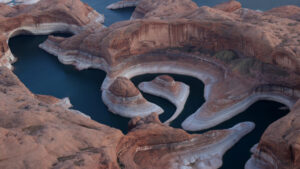
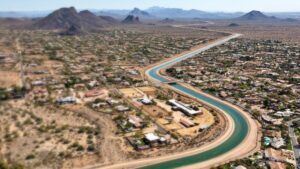
Interior Secretary Doug Burgum said Arizona and the other states that use Colorado River water need to make sacrifices as they divvy up a shrinking but crucial resource.


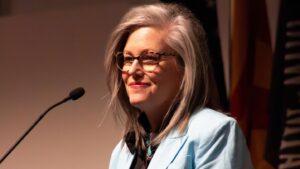
Interior Secretary Doug Burgum said Arizona and the other states that use Colorado River water need to make sacrifices as they divvy up a shrinking but crucial resource. (Getty Images photos)
(Getty Images photos)
PHOENIX – Interior Secretary Doug Burgum said Monday that Arizona and the other states that use Colorado River water need to make sacrifices as they divvy up a shrinking but crucial resource.
The seven Colorado River Basin states are working under interim guidelines that were implemented in response to drought conditions in 2007 and expire at the end of 2026. The original compact dates back to 1922.
“It was made during the time when it was a wet cycle. There was more water to distribute. So, everybody’s got to make some sacrifices. Use that word, that’s the key word,” Burgum told KTAR News 92.3 FM’s The Mike Broomhead Show.
As negotiations drag on, Colorado just had its worst winter snowpack since the state started keeping records in 1941. Snow accumulation peaked a month early and contained just half the average moisture.
“It’s one of the worst years in 20 years in terms of spring runoff. And it’s going to require everybody to dig in and take bigger cuts than they want, and we haven’t reached that spot yet,” said Burgum, who was planning to visit Saguaro National Park outside Tucson later Monday.
Secretary Doug Burgum hopes states can reach Colorado River water deal
The governors from six of the seven basin states, including Arizona’s Katie Hobbs, met in Burgum’s office in January to negotiate. California Gov. Gavin Newsom missed the meeting but sent representatives from his state, which is the largest user of Colorado River water.
The Lower Basin of Arizona, California and Nevada have blamed the Upper Basin states of Colorado, Utah, New Mexico and Wyoming for the impasse.
If they can’t reach a deal soon, the federal government will have to step in, something Burgum hopes does not happen.
“Meetings and negotiations continue,” Burgum said. “But if there’s no agreement, then we’ll have to have an operating plan set up for this year. … And then, I guess, the states themselves will be putting their fate in the hands of a judge, which I think is a horrible idea.”
As the states continue their talks, Burgum said the Bureau of Reclamation is working on a plan for releasing water from Colorado River dams, which generate electricity, to meet minimum obligations.
“It’s a complex thing to balance, but in the absence of an agreement, we will take input and try to just keep everything working. … It’s like a giant integrated machine, and if you release too much water from one place when you get … down in these dead pool levels, then you affect not just water operations, but power generation. So, a lot of variables to consider,” he said.
The Associated Press contributed to this report.
Related
 Arizona, other Colorado River basin states miss latest deadline on water use deal
 Gov. Hobbs on Colorado River negotiations: Agreement is not likely by Feb. 14 deadline
 Why the basin states' fight over Colorado River water is a big deal for Arizona
 Scottsdale considers new restrictions for large water users as demand rises
 Rep. Andy Biggs says ‘water’s No. 1’ as he hears from Arizonans during run for governor
 Amazon launches collaborative initiative to fund Colorado River Basin water projects

Comments
1 Comments
Since California has lost residents over this past decade AND they sit right next to the Pacific Ocean ( a great source for desalination). I'd say California should make some sacrifices.