
Arizona absorbs bulk of historic Colorado River cuts as Upper Basin states face none
The feds ordered the biggest water cuts the Colorado River has ever seen. Arizona will lose about half the Colorado River water that helps supply Phoenix and Tucson.

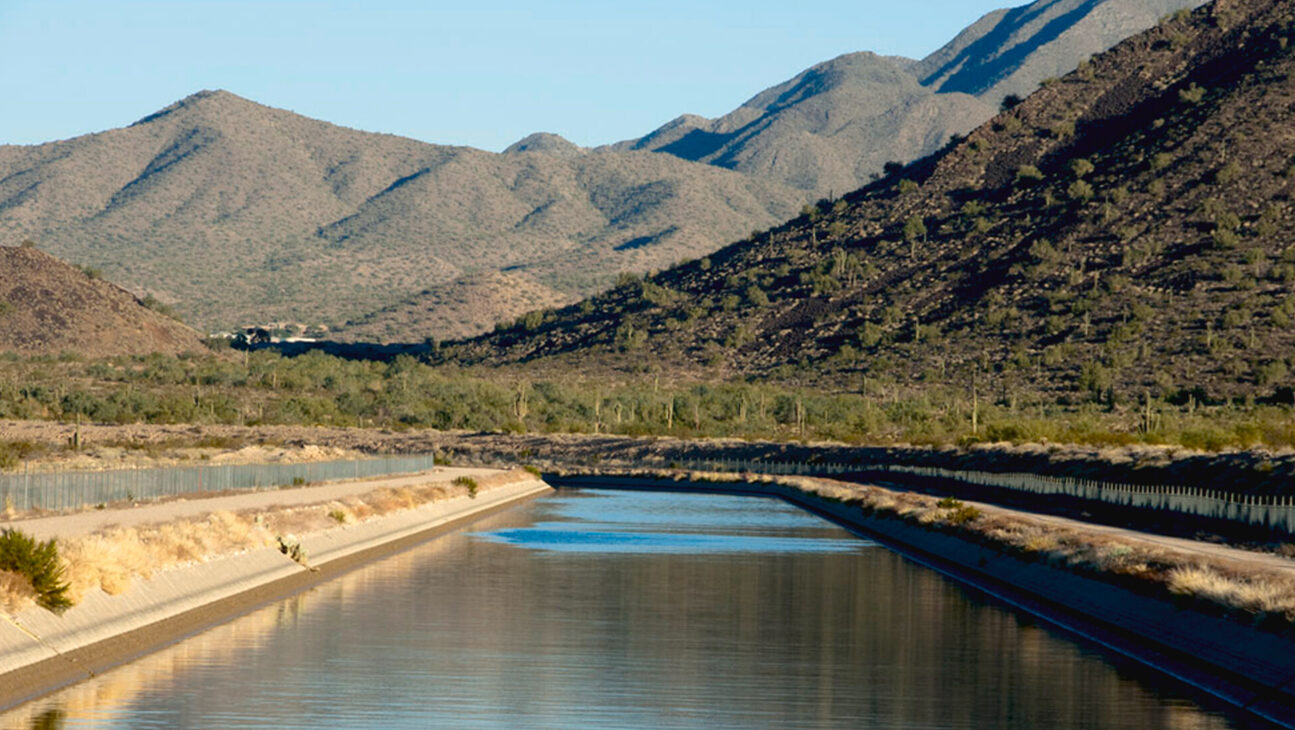
Arizona will lose roughly half its Colorado River water delivered through the Central Arizona Project after the federal government on Friday ordered the largest mandatory cuts in the river’s history.
The cuts are part of new two-year operating guidelines signed by Interior Secretary Doug Burgum, which require the three Lower Basin states, Arizona, California and Nevada, to collectively reduce their Colorado River use by 1.25 million acre-feet annually.
One acre-foot is roughly enough water for a family of four for one year.
Arizona will absorb about 61% of the total reductions. The state must cut 760,000 acre-feet, compared with 440,000 for California and 50,000 for Nevada.
On top of the mandatory reductions, the three states agreed to voluntarily leave an additional 700,000 acre-feet of water in Lake Mead over the two-year period to help stabilize the reservoir.
The Central Arizona Project canal delivers Colorado River water to Phoenix, Tucson and tribal communities across the state. It supplies about 30% of Phoenix’s water and roughly 70% of Tucson’s.
Sarah Porter, director of the Kyl Center for Water Policy at ASU’s Morrison Institute, said the deal reflects a major concession from California, which agreed to take significant cuts ahead of its place in the priority line.
“It means that there is a much bigger chance that there will continue to be water running in the Central Arizona Project canal,” Porter told KTAR News 92.3 FM.
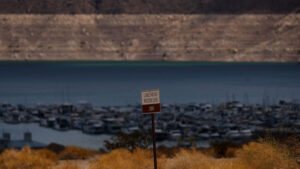
The decision comes as both Lake Powell and Lake Mead have dropped to record lows, driven in part by what the Bureau of Reclamation called the lowest snowpack on record during the most recent winter season.
Gov. Katie Hobbs says Arizona avoided ‘an unacceptable disaster’
Gov. Katie Hobbs framed the outcome as a painful but necessary win, saying Arizona avoided a far worse scenario that federal officials had considered earlier this year.
“The 77% cut to CAP’s water supply that the federal government considered in January would have been an unacceptable disaster,” Hobbs said in a statement. “Instead, we’ve united as a Lower Basin to deliver two years of stability that ensures Arizona families and businesses will have the water they need to thrive.”
The Upper Basin states, Colorado, Utah, Wyoming and New Mexico, face no mandatory reductions under the new plan.
Hobbs said the fight isn’t over.
“The Upper Basin’s refusal to negotiate any reductions to their water usage imperils the stability of the Colorado River system,” she said. “Arizona stands prepared to protect our water by any legal means necessary.”
U.S. Rep. Greg Stanton said the two-year deal only delays a larger crisis.
“A two-year reprieve is not a solution,” Stanton said in a statement. “Every two years, this same threat of ‘CAP to zero’ will hang over Arizona’s head. That’s no way to run a system millions of people depend on for water, power and food.”
CAP backs short-term deal, calls post-2028 framework ‘unlawful’
The Central Arizona Project said it backs the two-year guidelines but called the federal government’s longer-term plan for managing the river beyond 2028 illegal and unacceptable.
The federal plan gives the Bureau of Reclamation broad authority to impose even deeper cuts on the Lower Basin after 2028, reductions that could nearly double the current levels.
“Lake Mead should not be sacrificed to protect Lake Powell or other Upper Basin reservoirs, and every state that relies on the river should be part of the solution,” CAP General Manager Brenda Burman said in a statement. “The Colorado River needs to be treated as the system it is.”
CAP said a pending Lower Basin agreement to conserve at least 3.2 million acre-feet through 2028 may provide enough time to negotiate a long-term resolution.
Colorado River cuts could deepen mid-year, ASU water expert warns
Porter cautioned that even the current two-year deal may not hold if conditions worsen.
“The reality is conditions are so dire on the Colorado River that cuts could go deeper,” she said. “The Bureau essentially makes clear that if it needs to make deeper cuts, even mid-year, it’ll go ahead and do that.”
The new guidelines are the first under a 10-year decision framework that runs through 2036. Specific operating rules beyond 2028 have not been set, leaving Arizona’s long-term water future unresolved.
Still, Porter said Valley cities have stored groundwater for years as an emergency savings account and can absorb some level of cuts without immediately affecting the taps.
“Many cities have had more Colorado River water in their portfolios than they actually need to deliver,” she said.
The Associated Press and KTAR News 92.3 FM reporter Heidi Hommel contributed to this report.
Related
 SRP pulls back curtain on Mormon Flat Dam maintenance work at Canyon Lake
 Democrat says ‘Arizona got screwed’ in Colorado River water agreement
 Arizona joins lawsuit over Colorado River plan, warns of deep water cuts
 Is Arizona’s water supply getting boost from recent storms, El Niño?
 Arizona Cotton Growers Association honors lawmaker for service to agriculture industry
 Scottsdale considers new restrictions for large water users as demand rises

Comments
0 Comments