
Arizona’s wet fall buys time for largest Colorado River reservoirs
Lake Mead and Lake Powell water levels have risen since hitting all-time lows, but long-term drought conditions persist.

Watch: October rains lift water levels at lakes Powell and Mead | 1 min
Arizona’s wet October and early November provided a nice boost for Lake Mead and Lake Powell – the two largest Colorado River reservoirs — but long-term drought conditions persist.
The Lake Powell water level Tuesday was 3,533 feet, up 17 feet since it fell to its lowest level ever in mid-September.
“It’s going to put off dead pool for a little bit, right? We were getting dangerously low to that issue with Lake Powell. So, this actually creates a little bit more margin,” Mike Crimmins, climate science extension specialist at the University of Arizona, told KTAR News 92.3 FM on Friday, before the state saw widespread weekend storms.
How much have Lake Powell and Lake Mead risen?
At its lowest, Lake Powell’s water level was at 3,516 feet, which is 146 feet above dead pool, the point at which water can’t flow by gravity through Glen Canyon Dam.
That was just 26 feet from the minimum power pool mark, the level at which Glen Canyon Dam in Page, Arizona, can no longer produce hydropower.
Meanwhile, Lake Mead downstream of Lake Powell was at its all-time low on Oct. 22 but has risen 2 feet in under two weeks.
Lake Mead’s rise is smaller because it is managed by releases from Lake Powell.
“This is going to recharge that soil moisture and is going to improve those short-term drought conditions,” Crimmins said.
Crimmins said rain in Arizona’s high country is helping to turn around the effects of short-term drought, but the long-term drought persists.
“Water resources are different when you have droughts accumulate over years to many years. You really can’t just erase those deficits in a couple of weeks,” Crimmins said.
Fall rain will help with snowfall runoff later
Snowmelt runoff is what feeds the watershed in the spring. And the fall rain will allow more of that runoff to make it to the Colorado River watershed, Crimmins said.
“When you do fill up the soil moisture with rain in the fall, we do have research that suggests that does improve the runoff if you have snowpack later in the season,” he said.
Crimmins said he welcomes this week’s reprieve from the rain but is hoping for a big El Niño this winter.
“We can be optimistic, cautiously optimistic, but I do still think the issues that we’re struggling with on the levels in Lake Mead and Lake Powell are not going to be completely solved by the time we get to spring,” Crimmins said.
Related
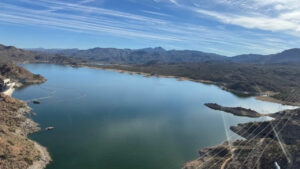 Central Arizona Project moves to join Colorado River lawsuit, warns of severe water cuts
 Arizona’s water challenges trickle down to real estate agents, who increasingly face questions about the viability of living in the desert
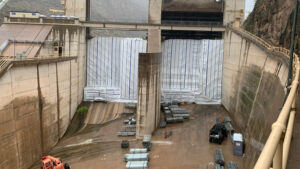 SRP pulls back curtain on Mormon Flat Dam maintenance work at Canyon Lake
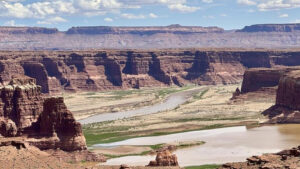 Democrat says ‘Arizona got screwed’ in Colorado River water agreement
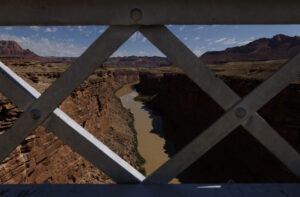 Arizona joins lawsuit over Colorado River plan, warns of deep water cuts
 Is Arizona’s water supply getting boost from recent storms, El Niño?

Comments
0 Comments