
ARIZONA REAL ESTATE & HOUSING NEWS
A Valley-led housing trend is at risk of grinding to a halt
A congressional bill on housing affordability could stall the rapid growth of BTR units, a rental housing trend Phoenix has helped lead nationwide.

Watch: A Valley-led housing trend is at risk of grinding to a halt | 1 min
PHOENIX — A booming real estate trend that started in Arizona is at risk of grinding to a halt over a bill in Congress aimed at tackling housing affordability.
Build-to-rent (BTR) communities have become a staple in high-demand cities such as Phoenix, offering an alternative for people who are unable to afford homeownership but are looking for something more than an apartment.
Phoenix continues to lead the nation in BTR popularity. The city completed more than 7,500 units in 2025, which is more than 40% of the total number of units in the entire West region, according to a new report from Northmarq.
How is Congress impacting BTR units in Phoenix?
However, a provision in the U.S. Senate’s version of the 21st Century Road to Housing Act, a bipartisan measure that looks to lower housing costs by increasing supply, would force large investors who own more than 350 properties to sell new BTR units within seven years of completion.
The move is causing a major ripple effect among investors, according to Doug Ressler, manager of business intelligence at the real estate data firm Yardi Matrix.
“What we’re seeing is this hesitancy right now to be able to commit funds to the BTR market,” Ressler said.
While he commends most of the bill for effectively seeking to address housing supply, he worries it could end up doing the exact opposite by scaring off investors and hampering the construction of new units, causing prices to increase dramatically.
“It is definitely a barrier to capital flow because capital doesn’t like risk; markets don’t like risk; developers don’t like risk,” Ressler said.
Fueling the uncertainty surrounding the industry is which units would be included in the seven-year sell-off mandate. While existing units would be immune, there is confusion over whether projects that have been started but not completed would also be grandfathered in.
However, while the Senate’s version of the bill contains the BTR provision, the version in the House contains no such provision, so investors are in limbo while they wait to see whether the mandate makes it into the final version.
Related
 201-unit build-to-rent community opens in Apache Junction
 Construction begins on 80-unit affordable senior rental community in Phoenix
 Build-to-rent communities surge in Phoenix amid high home interest rates
 13-acre commercial development taking shape in Cave Creek
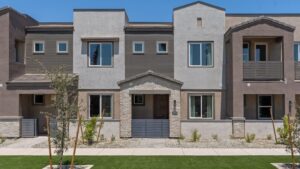 New luxury townhome rental community open in Goodyear
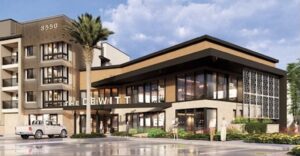 376-unit apartment complex proposed near IKEA in south Tempe

Comments
2 Comments
Nothing about this law increases housing supply. It looks like it is going to chase away builders. Cities need to be zoned to include homes of all sizes in every development.
If you can afford to rent, you can afford to buy. When you rent, you have to pay the guy that has a mortgage on the home plus he needs to make a profit after all repairs year after year. As a renter you are paying for ALL of that plus the landlord's profit.