
Ian Mitcham found guilty on first degree murder, sexual assault, burglary
A Maricopa County jury found Ian Mitcham guilty on all counts in the 2015 murder of Allison Feldman, a 31-year-old Scottsdale woman found beaten to death and sexually assaulted inside her home more than 11 years ago.

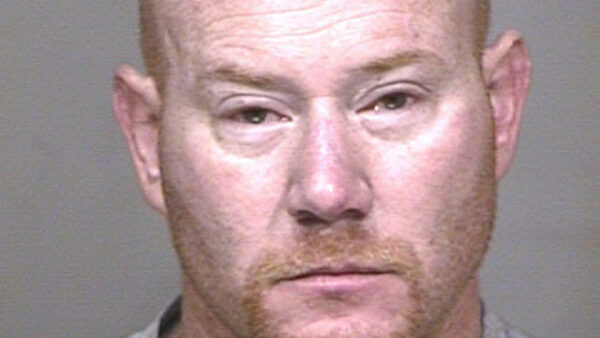
Ian Mitcham arrest photo (Scottsdale Police Department Photo)
(Scottsdale Police Department Photo)
PHOENIX — A Maricopa County jury on Thursday found Ian Mitcham guilty to all counts in the 2015 murder of Allison Feldman, a 31-year-old Scottsdale woman found beaten to death and sexually assaulted inside her home more than 11 years ago.
The Maricopa County Superior Court jury read the verdict at 3:20 p.m. Mitcham was found guilty of first-degree murder, sexual assault and burglary.
The case marked the first in Arizona where familial DNA testing was used to identify a murder suspect and triggered a years-long legal battle over whether DNA evidence could be presented to a jury.
The verdict comes more than a decade after the crime
Feldman was found dead on Feb. 18, 2015 in her home near Loop 101 and Pima Road by her boyfriend. She was covered in a sheet. Court documents said she died of asphyxiation with blunt force trauma. Detectives found no sign of forced entry.
Police said they could find no connection between Mitcham and Feldman. Mitcham denied knowing Feldman or having been in her home.
Over two days of closing arguments, prosecutors and defense attorneys laid out sharply different narratives of Mitcham’s role in the killing, according to the Arizona Republic.
Prosecutors supported their case primarily with forensic evidence, arguing that Mitcham’s DNA was found in multiple locations inside Feldman’s home, placing him at the scene the night she was killed.
The DNA trail that led investigators to Mitcham
Police initiated a familial DNA investigation in 2017 using evidence found at the scene. That process identified Mitcham’s incarcerated brother as somebody closely related to the suspected killer.
Investigators then discovered a blood sample taken from Mitcham after a January 2015 DUI arrest. Without acquiring a warrant, police used the sample to create a DNA profile and found in April 2018 that it matched DNA found at the scene.
Mitcham, then 42, was arrested in April 2018 on suspicion of murder. A week later, a grand jury indicted him for first-degree murder, sexual assault and second-degree burglary. He was held on $5 million bond.
The legal battle over DNA
In 2022, Mitcham pleaded guilty to two felony counts in the DUI case. That same year, his defense team moved to suppress the warrantless DNA evidence as well as swab evidence collected at his 2018 arrest.
The trial court agreed that Mitcham’s Fourth Amendment protections against unreasonable search and seizure were violated and ruled the DNA evidence inadmissible.
The Arizona Supreme Court reversed that decision in December 2024. While the high court concurred that Mitcham’s Fourth Amendment rights were indeed violated, it unanimously determined the “inevitable discovery” exception applied, meaning his DNA profile would have been created after his 2022 felony convictions.
“This is certain, not speculative, so it easily satisfies the preponderance standard,” Chief Justice Ann Scott Timmer wrote in the opinion.
The Associated Press contributed to this report.
Related
 Scottsdale police announce arrest made in 3-year-old murder case
 Arizona Supreme Court OKs disputed DNA evidence in 2015 Scottsdale murder case
 Work completed on Scottsdale Road bike lane project in Tempe
 Andy Biggs pushes beyond GOP voters in final stretch of race against Gov. Katie Hobbs
 Rep. Andy Biggs calls for end to threats, says he’s been targeted during run for governor
 Tornado watch in effect for northern half of Arizona

Comments
0 Comments