
Arizona first responders struggling with PTSD can benefit from mental health support
Arizona mental health advocates say that one in three first responders will experience post-traumatic stress disorder (PTSD) at some point.
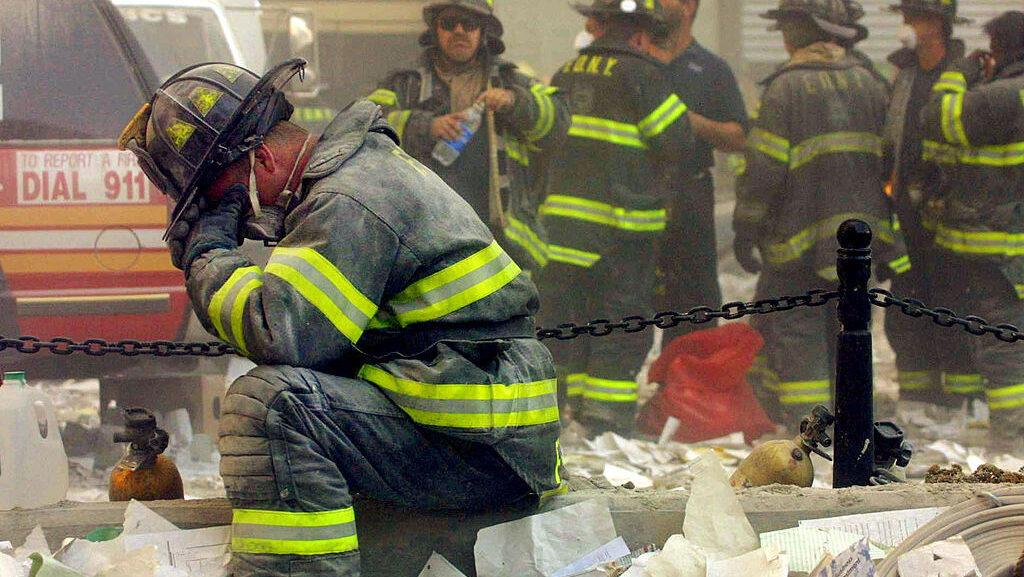
One in three first responders will experience posttraumatic stress disorder (PTSD) at some point, according to mental health advocates. (Photo by Mario Tama/Getty Images)
(Photo by Mario Tama/Getty Images)
PHOENIX — Arizona mental health advocates say that one in three first responders will experience post-traumatic stress disorder (PTSD) at some point.
Gary Nolte, a Phoenix firefighter, and Melissa Kowalski, the CEO of 100 Club of Arizona, joined KTAR News 92.3 FM’s The Mike Broomhead Show on Tuesday to shine a light on May’s status as Mental Health Awareness Month.
How does PTSD affect first responders?
Nolte said his PTSD manifested as anger, but there are several other signs a first responder is struggling.
“Once a firefighter maybe starts calling out sick more often, fear, trying to avoid certain places or people, anger issues, just not acting right,” Nolte said.
Uncontrollable frustration is a red flag that someone is experiencing trauma, he added.
“I thought I could handle it myself. I needed more sleep, maybe more supplements, working out,” Nolte said.
However, he found the help he needed through 100 Club of Arizona.
How can first responders get help for PTSD?
The nonprofit provides mental health support, such as individual counseling and financial assistance, to first responders and their families.
“We know that about 38% of first responders have suicidal thoughts,” Kowalski said.
Her organization provides various services that help first responders feel safe and supported. People can use the programs anonymously, which Kowalski says is important due to the stigma around mental health struggles.
“Stigma is what’s killing firemen,” Nolte said. “We’re afraid to go get help, afraid of other people finding out to where, once we come forward with it, other members start talking about it as well.”
Nolte said he worries about his son, who is also a fireman. In addition to regularly checking in with his son, he has also educated his daughter-in-law on PTSD because a first responder’s spouse is often the first one to see the signs.
“I can tell you when we go on calls with customers having PTSD, I’ll tell you I never, never understood it,” Nolte said. “I didn’t know anything about it, but once I actually have gone through it myself, it does make me a better person, it’s made me a better fireman, it’s made me a better husband, a better father.”
Related
 100 Club of Arizona unveils apps to help first responders with mental health issues
 8 fallen Arizona firefighters honored as part of national tribute
 Donald Trump plans Oct. 14 rally in Bullhead City as Arizona votes early
 Vandals target border wall contractor Fisher Industries’ Tempe office
 Lochiel protest moves to tree in Mexico after border agents clear U.S. cottonwoods
 Two arrested in burglary of MLB player Daniel Johnson’s Phoenix storage unit

Comments
0 Comments