
Arizona beekeeper spreads hive safety awareness after deadly swarm in Scottsdale
A local beekeeper wants to spread awareness about hive safety in light of the recent fatal bee attack in north Scottsdale.


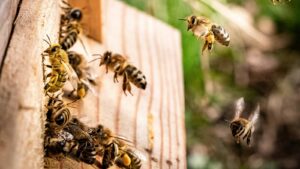
(Pixabay photo)
(Pixabay photo)
PHOENIX — An Arizona beekeeper wants to spread awareness about hive safety in light of the recent fatal bee attack in north Scottsdale.
Three workers were attacked by bees Monday morning while working on the roof at a senior living facility. One of the victims died at the hospital, while two others are recovering.
Alex Garcia, who co-owns Southwest Honey and Bee Removal, said moving swarms of bees generally don’t pose a danger to humans. Venturing too close to an active hive is where the danger occurs.
Tips to know after fatal Scottsdale bee attack
Bees can be more agitated in the summer months as they also deal with high heat, and less rain means less food for the insects, Garcia said.
He advised people to follow these steps in case of a bee attack:
- Cover your face, ears and eyes with an item or your hands.
- Remain as calm as possible.
- Move away from the hive and get into an enclosed area, such as a car or building.
If there is an emergency situation regarding a bee attack, call 911.
Dealing with a backyard hive
People with active but non-aggressive hives on their property should avoid calling pest control or the fire department, as those services typically kill the bees rather than relocate them, Garcia said.
He advises Arizonans dealing with calm hives to contact professional beekeepers for safe swarm removal.
“It’s less work for us, less bees as well,” Garcia said.
Arizonans can reach out to professionals through the Southern Arizona Beekeepers Association and Arizona Apicultural Society.
However, Garcia emphasizes that if a hive appears dormant, don’t ignore it. Take action before it becomes a problem.
“If you decide to not take care of it, those bees are going to keep building (the hive) in your walls,” he said. “They can get pretty large.”
Most bee populations in the Valley carry some level of the gene that makes them “Africanized” — a specific breed of honeybee known for being more aggressive than native species.
“When we’re talking about Africanized bees, most of the time, about half of the hive goes out on attack mode,” Garcia said.
He also warns that these bees defend a much larger area around their hive than typical honeybees, stressing the importance of contacting a professional immediately if you discover one on your property.
Related
 Man who died in bee attack at Scottsdale senior living facility identified
 SAFE Alert issued for missing 73-year-old man last seen in Glendale
 Suspect outstanding after Phoenix shooting that left man seriously injured
 Details for 2026 Phoenix Pride Festival and Parade revealed
 Man dead after shooting involving Phoenix police officers
 Storms bring scattered showers, dust to Valley causing delays at Sky Harbor and power outages

Comments
0 Comments