
Arizona Chamber leader says computers should join state’s five C’s
Arizona Chamber CEO Danny Seiden says computers should join Arizona's five C's as one of the state's economic pillars.

Watch: Arizona's Five C's need a new member: computers, top business leader says | 1 min
Arizona’s economy has long been defined by the “Five C’s”: copper, cotton, cattle, citrus and climate.
Now, the head of the state’s largest business group says it’s time to add a sixth: computers.
Danny Seiden, president and CEO of the Arizona Chamber of Commerce and Industry, made the case after technology publisher Visual Capitalist reported that computer equipment is now Arizona’s top international export.
“Those five C’s aren’t just marketing. We all learned about them as school kids, and they’re the actual economy that built this state,” Seiden told KTAR News 92.3 FM’s Arizona’s Morning News on Tuesday. “Computers as a sixth C really is telling the world we’ve built the 21st century on top of it.”
Seiden said the rise of the semiconductor industry in Arizona was no accident, pointing to decades of policy decisions and the state’s history with chipmakers including Motorola, Intel and Taiwan Semiconductor Manufacturing Co., which is building a sprawling complex in north Phoenix.
“We’ve already been doing semiconductors since the ’40s,” Seiden said. “We knew this was the blueprint for us, and we executed on it.”
While the Arizona chamber champions data centers, the public is wary
Part of the computer growth comes from data centers, like those being built around the Phoenix Valley.
A March 2026 Gallup poll found that 71% of Americans oppose building AI data centers in their local area, including 48% who are strongly opposed. Environmental concerns, particularly water and energy use, are the biggest factors driving opposition.
The chamber leader acknowledged growing public pushback against data centers. He hopes to correct some of what he labels as foreign misinformation. Seiden explained newer data centers use closed-loop cooling systems and that utilities such as APS and SRP require the facilities to pay for their own infrastructure.
“There are foreign governments actually spending money on these campaigns against data centers in the U.S. because it’s a national security and an economic competition issue,” Seiden said.
Seiden also addressed Arizona’s slowing population growth. Maricopa County added more than 35,000 residents last year, but that figure represents a roughly 40% drop from peak growth, driven largely by a decline in immigration.
“This is something we’ve traditionally solved through legal immigration,” Seiden said. “Now that we’ve seen a more secure border, I think it is time to get back in and talk about how do we increase the lanes of legal immigration.”
Asked whether artificial intelligence might eliminate the need for more workers, Seiden dismissed the idea as part of a centuries-old debate.
“AI is going to transform our economy, and you want Arizona to be the place that’s leading in it,” he said.
Related
 Data centers would see larger rate increase than households under proposed APS hike
 Which Arizona cities, counties, law enforcement agencies have stopped using Flock cameras?
 Phoenix-based Honeywell Aerospace to pay $2M for allegedly violating False Claims Act
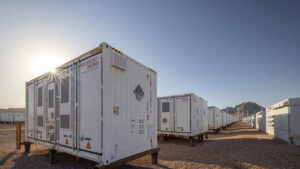 Arizona leads nation in battery storage growth, overtaking Texas
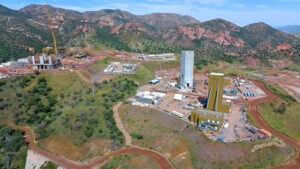 Arizona’s Hermosa mine becomes first in US to finish new fast-track federal permitting
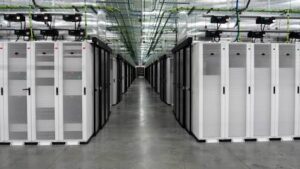 AG Kris Mayes calls for pause on new data centers, citing Arizona’s water and power crunch

Comments
2 Comments
Wouldn't "chips" be a better word?
Why are my comments being hidden????
They promoted getting this built by saying how many jobs this would create for Arizonans. Now they have flipped and want to bring in people from foreign countries to work and run this plant. And don't get me started on the millions of gallons of water it will take to set this plant up. I SAY SHUT IT DOWN NOW!