
Small bites from the UN: Defiance, fiery language and a cold building

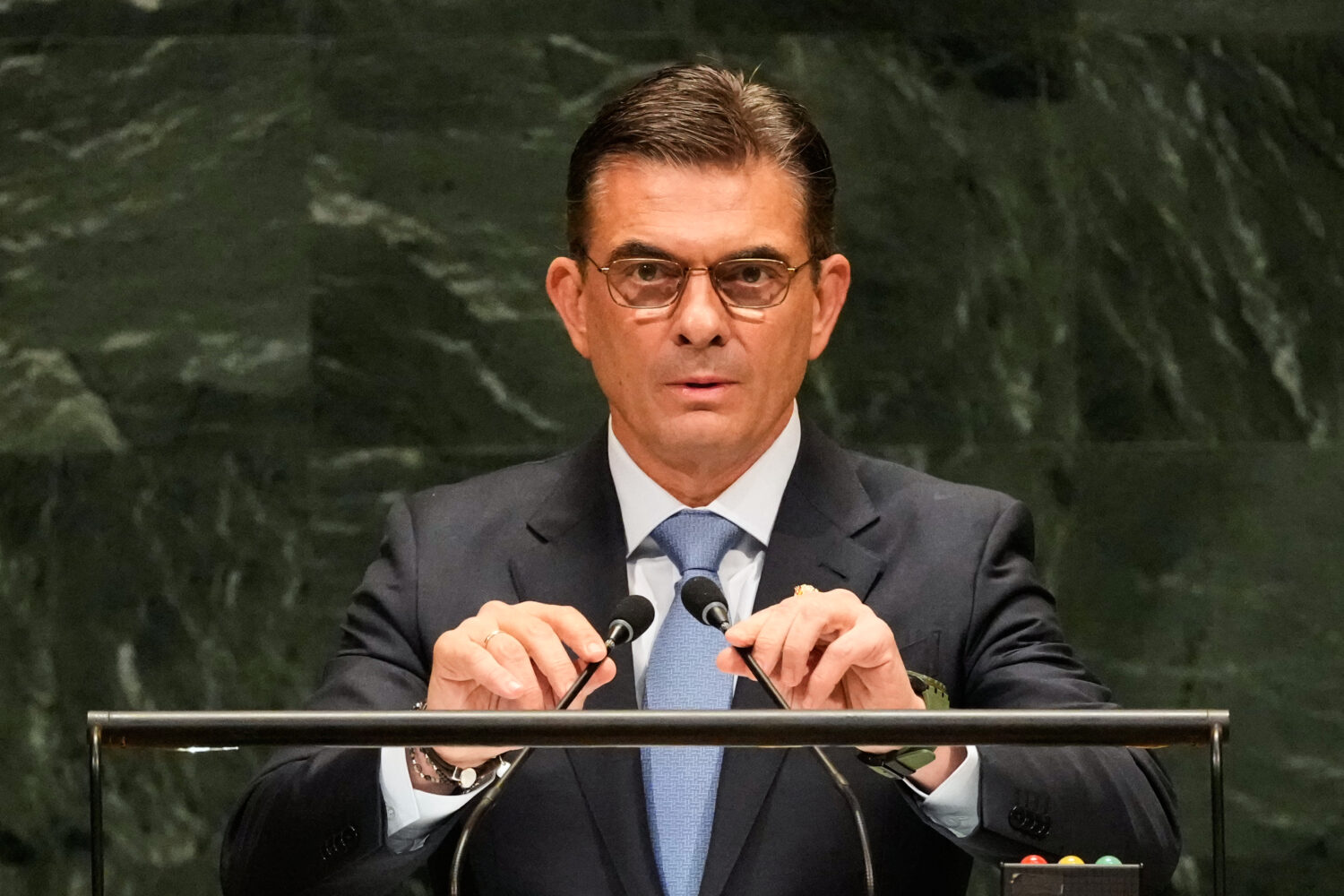
Bolivia's President Rodrigo Paz Pereira speaks during the 81st session of the United Nations General Assembly at United Nations headquarters, Thursday, Sept. 24, 2026. (AP Photo/Seth Wenig)
Credit: AP Photo/Seth Wenig
(AP Photo/Seth Wenig)
UNITED NATIONS (AP) — Competing speeches from Benjamin Netanyahu and Mahmoud Abbas commanded attention at the United Nations on Thursday, even though the Palestinian leader wasn’t there in person: The United States denied him a visa.
Plenty of other stories unfolded Thursday that affect all parts of the world, as presidents and leaders and kings stand up, one after another, to speak to the U.N. General Assembly meetings. Here are a few:
___
Thursday marked Colombian President Abelardo de la Espriella’s first chance to address the gathering of world leaders.
He passed it up.
De la Espriella, who took office last month, promised on the campaign trail that if he won, he would forgo foreign trips so he could focus on the country’s internal problems, especially urban crime and the violence caused by illegal armed groups.
So on Thursday, Vice President Jose Manuel Restrepo took the rostrum to deliver a speech in his president’s stead. He said it was the president’s own words that he would present.
The speech began by hailing Colombia’s resilience in the wake of a powerful earthquake that killed at least 289 people last month.
On topics including security, economic growth, the leaders are trying to change the course of “a country that is well aware of its difficulties but also of its enormous potential.”
“Believe in Colombia,” De la Espriella said, via Restrepo. “I don’t promise you a perfect country, but I assure you that I am working tirelessly to build a nation that is safer, more prosperous and with more opportunities for its people.”
___
Only 10 months into his presidency, Bolivia’s Rodrigo Paz Pereira has faced turmoil at home. Many of his originally appointed ministers are gone after political ruptures, corruption scandals and street protests. His efforts to shore up Bolivia’s scarce fuel supplies backfired when contaminated gasoline damaged more than 10,000 vehicles. The seat of his government came under siege for almost eight weeks as demanded his resignation.
But on Thursday, Paz struck a defiant tone. He said the economy is improving, they are successfully managing fuel shortages, and people are looking to the future.
Socialism “does not put food on the table” he said. Instead, he said, in electing him, Bolivia “decided to engage in a change and a transformation and to not turn back to the past.”
He ended his speech with might be the quote of the assembly so far: “Long live the fatherland, damn it! Long live Bolivia.”
___
Ghana President John Dramani Mahama seemed to reference Donald Trump’s speech on Tuesday when the U.S. president suggested he might “annihilate” Iran.
Said Mahama: “No human civilization deserves to be annihilated, and certainly not a member of the United Nations,.”
He touted recognition of a resolution to recognize the crimes of transatlantic slave trade, thanking 123 nations that voted to affirm it. Ghana, formerly the Gold Coast, was a key slave trafficking port in the 1600s and 1700s.
“No race is superior. No nation is inferior. No child’s life is worth less because of the language they speak, the faith they profess, the color of their skin or the land of their birth,” he said. “This is the unyielding moral foundation upon which the United Nations must stand.”
___
As a cost-saving measure, U.N. Secretary-General kept the temperature in the sprawling U.N. headquarters complex warmer than some staffers would have liked in the summer heat.
But with fall just arriving and temperatures in New York significantly lower on Thursday, there were complaints during a press conference on the state of global education that the press briefing room felt like an icebox. One correspondent — yes, ours — went to get a shawl. Others closed their jackets. Everyone left with cold hands.
U.N. deputy spokesman Farhan Haq, who moderated an event in the room laughed and said of its very chilly temperature: “It’s whatever the weather is like outside – and more.”
___
During his speech to the U.N. General Assembly, Paraguayan President Santiago Peña spoke about the conflict in the Indo-Pacific region and reiterated his country’s support for the island of Taiwan.
“Paraguay stands, and I say this loud and clear, with Taiwan,” he said.
Paraguay is the only country in South America to recognize Taiwan and one of just 12 worldwide. Beijing considers Taiwan its own territory and has ramped up a campaign over the past few years to lure away Taiwan’s diplomatic allies, in addition to increasing military pressure around the island.
Taiwan is the global hub of microchip manufacturing and, according to Peña, conflicts in the region impact the microchips that “drive industry, defense, and artificial intelligence.”
“What happens there is not merely a regional matter … It affects Japan, all of East and Southeast Asia, and, above all, it affects the global economy,” he said. “Anyone who pretends that this is far away or too distant simply has not understood the 21st century.”
__
Jennifer Peltz and Edith M. Lederer at the United Nations and Astrid Suárez in Bogotá contributed.
Related
 Shooting near Bass Pro Shops in Mesa sends 1 to hospital
 Election-year backlash clogs Scottsdale’s water recycling plan
 Border wall crews damaged ancient Arizona geoglyph now dated to 6,500 years
 Trump’s state dinner for Xi to feature sea bass and a long list of tech titans
 In their words: From across the world, leaders call for action on climate change at the UN
 SAFE Alert issued for missing 76-year-old Phoenix woman
Comments
0 Comments