
Appeals court reverses convictions in kidnapping and terrorism case involving 3-year-old boy’s death

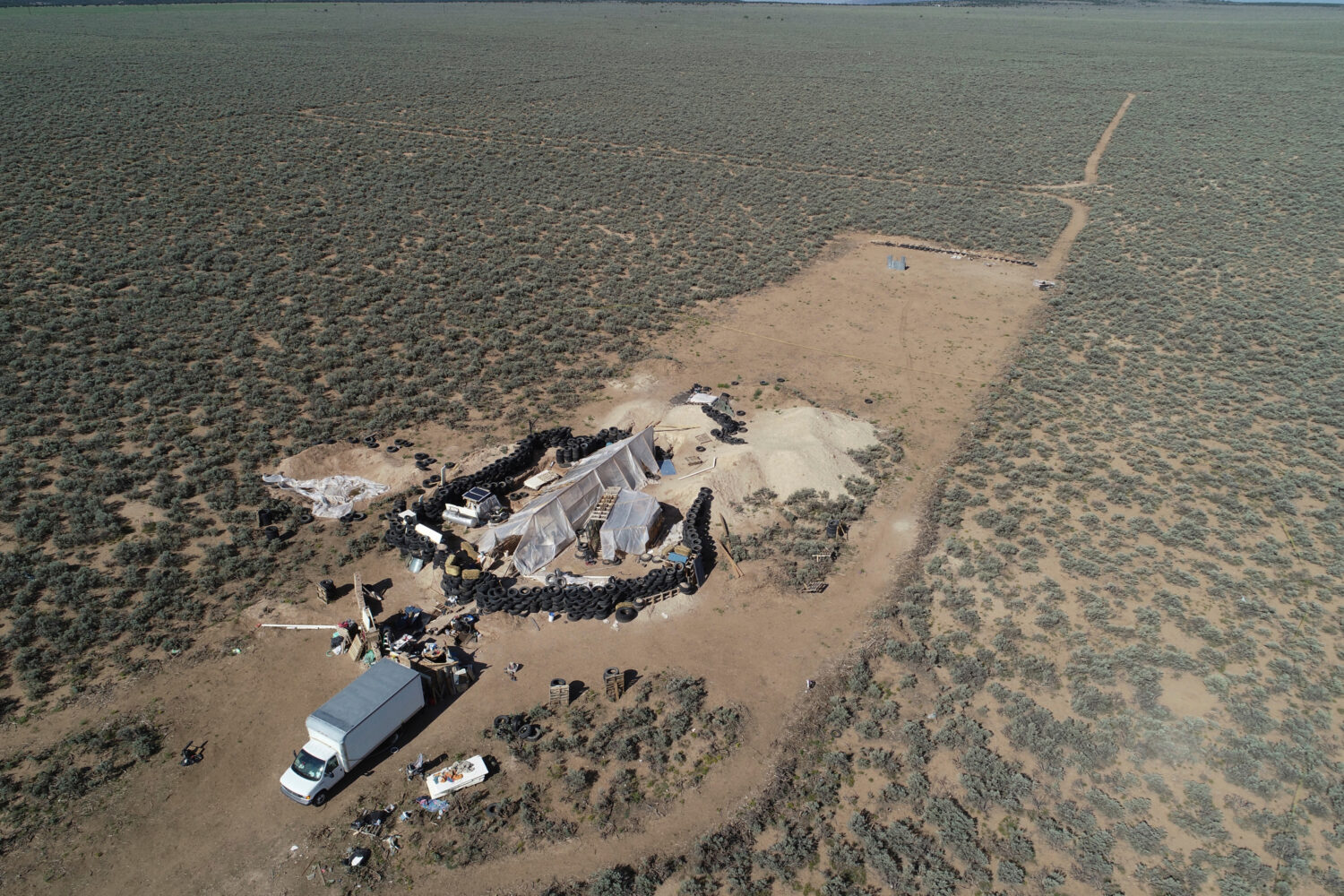
FILE - An aerial view of a makeshift compound is seen in the desert area of Amalia, N.M., Aug. 10, 2018. (AP Photo/Brian Skoloff, File)
Credit: AP Photo/Brian Skoloff
(AP Photo/Brian Skoloff, File)
ALBUQUERQUE, N.M. (AP) — A federal appeals court has vacated kidnapping convictions in a case involving the death of a 3-year-old boy who went missing from Georgia in 2017 and later turned up dead at a squalid compound in New Mexico.
The boy’s father and other family members were sentenced to life in prison in 2024 after jurors convicted them in what prosecutors described as a “sick end-of-times scheme.”
A panel of the U.S. 10th Circuit Court of Appeals wrote in a decision issued Tuesday that there was no evidence of a federal kidnapping crime when the family took the boy, noting that no court order or state law made it illegal for Siraj Ibn Wahhaj to take his son.
The group already was living in New Mexico when a Georgia juvenile court issued a pickup order for the boy after his mother petitioned for emergency custody. The appellate panel took issue with jury instructions that implied the mother’s lack of consent could satisfy the unlawfulness element under the federal kidnapping statute.
“This instructional error was not harmless,” the panel wrote. “Had the court correctly instructed on the law, the jury couldn’t have found unlawfulness based on the government’s evidence.”
The family members can’t be retried on the kidnapping charges, the panel ruled.
The appeals panel also vacated convictions stemming from accusations that Wahhaj and his brother-in-law were preparing for attacks against the government. It said the two men, who had represented themselves during the trial, had been excluded from bench conferences with the judge about notes jurors had sent during deliberations.
The court remanded that part of the case back to the district court, clearing the way for new trials for the men if prosecutors opt to pursue the case.
“What happened at the Taos compound was horrific. We are reviewing the case and assessing what further action may be appropriate,” the U.S. attorney’s office for the district of New Mexico wrote in an email Wednesday.
During the three-week trial in 2023, the defendants suggested that the case was the product of “government overreach” and that they were targeted because they are Muslim.
A fifth defendant — Jany Leveille, a Haitian national — avoided the trial by pleading guilty to conspiracy to provide material support to terrorists and being in possession of a firearm while unlawfully in the United States. She was sentenced to 15 years in prison.
Prosecutors alleged that it was under Leveille’s instruction that the family fled Georgia with the boy, ending up in a remote stretch of the high desert where they conducted firearms and tactical training to prepare for attacks against the government. Prosecutors said it was tied to a belief that the boy would be resurrected and then instruct the family which corrupt government and private institutions needed to be eliminated.
In a complex case that took years to get to trial, jurors heard weeks of testimony from children who had lived with their parents at the compound, other family members, firearms experts, doctors and forensic technicians.
Authorities raided the compound in 2018, finding 11 children and dismal living conditions. They also found 11 firearms and ammunition that were used at a makeshift shooting range on the property near the Colorado state line.
The remains of Wahhaj’s son, Abdul-Ghani Wahhaj, were found in an underground tunnel at the compound. Testimony indicated that the boy died just weeks after arriving in New Mexico and that his body was kept for months with Leveille promising the others he would be resurrected.
An exact cause of death was never determined amid accusations that the boy, who had frequent seizures, had been deprived of crucial medication.
Related
 Next phase of I-10 widening between Phoenix and Casa Grande begins
 Scottsdale police make case for keeping Flock cameras: ‘ALPR saves lives’
 Federal Reserve officials expect another rate hike will be needed this year, according to minutes
 Trump’s $90 Medicare rebate rolls out, but millions are left out. Critics say it’s a political stuntFBI says it thwarted an attack on the Mall of America by a teen it supplied with an assault rifle
 Trial begins for a man accused of killing UNC student Faith Hedgepeth 14 years ago
Comments
0 Comments