
Activist Mahmoud Khalil asks Supreme Court to let US judges quickly reverse immigration detentions

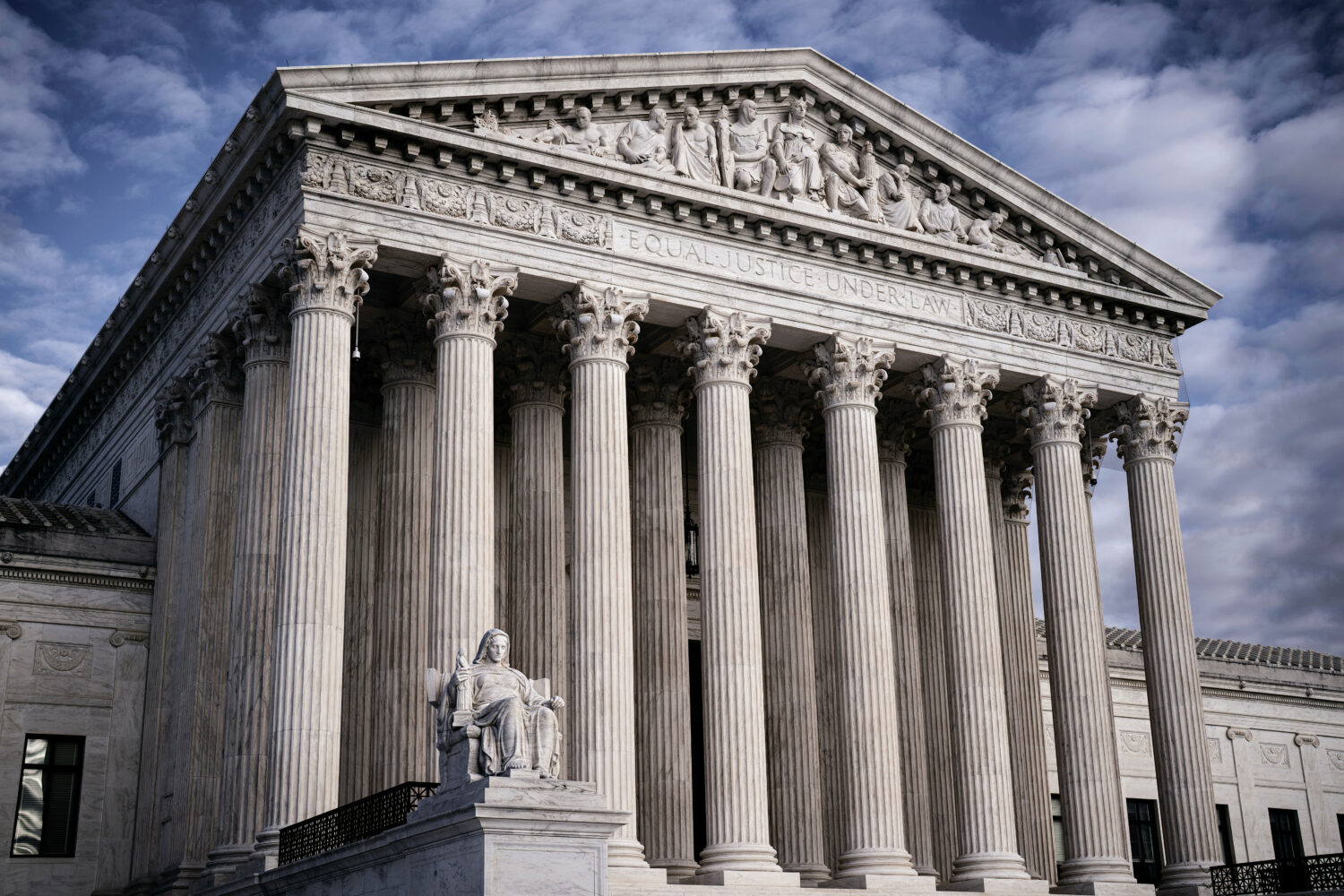
The Supreme Court is seen in Washington, Sept. 29, 2026. (AP Photo/J. Scott Applewhite)
Credit: AP Photo/
(AP Photo/J. Scott Applewhite)
WASHINGTON (AP) — Palestinian activist Mahmoud Khalil asked the Supreme Court on Monday to let federal judges quickly determine the legality of immigration-related detentions so that individuals cannot be held for months or years without judicial oversight.
In papers filed with the high court, Khalil asked it to overturn a ruling earlier this year by the 3rd U.S. Circuit Court of Appeals in Philadelphia that found federal courts do not have jurisdiction to review the legality of the detentions until immigration courts had fully considered each case.
Khalil, a lawful permanent U.S. resident, was detained by immigration authorities last year because of his participation in pro-Palestinian demonstrations at Columbia University in the spring of 2024.
The U.S. government argued at the time that Khalil’s presence in the U.S. was harmful to the country’s foreign policy interests.
As a result, the former Columbia graduate student spent over three months in detention before a federal judge in New Jersey ordered him freed after finding that the federal government had acted unconstitutionally.
In a statement Monday, the U.S. Department of Homeland Security said: “It is a privilege to be granted a visa or green card to live and study in the United States of America. The Trump Administration acted well within its statutory and constitutional authority with respect to Khalil, as it does with any alien who advocates for violence, glorifies and supports terrorists, harasses Jews, and damages property. We would encourage him to use the CBP Home app and self-deport.”
The 3rd Circuit has put its ruling on hold so that Khalil could appeal to the Supreme Court. He remains free.
Although the Supreme Court typically agrees to grant only a small percentage of appeals requests, the U.S. government has already asked the high court to overturn a federal appeals court decision that upheld a judge’s decision to release Georgetown University scholar Badar Khan Suri. That ruling by the 4th U.S. Circuit Court of Appeals in Richmond, Virginia, directly conflicted with the 3rd Circuit decision in the Khalil case.
Sometimes, conflicting appeals court rulings can increase the chances that the Supreme Court agrees to hear a case. If it does, oral arguments before the justices would likely occur sometime next year.
Related
 Former pro baseball player helps lease Tempe property for training facility
 Supreme Court to hear case on race in middle school admissions
 US and Cuba clash at UN as Washington seeks to sway annual vote on economic embargo
 Phoenix police open homicide investigation after death of woman found injured under carEditorial Roundup: United StatesCanadian man who took a bird from Las Vegas’ Flamingo casino could face prison if convicted
Comments
0 Comments