
How human-made Tres Rios Wetlands fits into Valley’s wastewater recycling process
The human-made Tres Rios Wetlands serves three purposes in the Valley's wastewater recycling process.

Watch: How human-made Tres Rios Wetlands fits into Valley’s wastewater recycling process | 1 min
PHOENIX — Half of the water from the 91st Avenue Wastewater Treatment Plant is sent to the human-made wetlands known as Tres Rios before it can be reintroduced into the environment.
Tres Rios is a partnership among the five cities who own the treatment plant through their Sub-Regional Operating Group (SROG) — Mesa, Tempe, Scottsdale, Glendale and Phoenix — and the Army Corps of Engineers.
It covers nearly 700 acres of land near 91st Avenue just north of the Salt River. It sits just west of the 91st Avenue Wastewater Treatment Plant, which can treat up to 230 million gallons of sewage water a day.
The SROG saved over $300 million dollars in upgrades that would have been needed for the plant had the wetlands not been built from 2007 to 2012. The cost of the $100 million dollar project was split between the SROG and the Army Corps of Engineers.
Phoenix Assistant Water Services Director Nazario Prieto said the wetlands serve three purposes: as flood control, habitat restoration and a buffering zone before treated wastewater is released into the Salt River.
How Tres Rios provides flood control
When the Phoenix area gets excess rain and Salt River Project needs to release water into the Salt River, nearby homes would experience flooding without Tres Rios, Prieto explained.
“There were flooding issues downstream on the Salt River and what the wetlands did is we raised the grade to protect the homes that are downstream,” he said.
Tres Rios was built at a higher elevation to capture excess water. It acts as a sponge to prevent flooding on the Salt River downstream.


Habitat benefits from human-made wetlands
Tres Rios also acts as a home for a wide variety of wildlife, including animals you might not expect to see in the Valley.
Prieto said it doesn’t seem like you’re in the Sonoran Desert “when you see beavers and you see bobcats and you see pelicans out there.”
There are also fish in Tres Rios, but their origin is a bit of a mystery because it isn’t stocked. One theory is that fish eggs got stuck on birds’ feet and then were deposited in the wetlands before they hatched.
Back to nature with wastewater
The water coming into the wetlands from the treatment plant eventually overflows into the Salt River. Tres Rios acts as a buffer for the treated wastewater before it’s recycled back into the environment.
There is no danger to the public putting 91st Avenue Wastewater Treatment Plant effluent into the river, Prieto said.
“We’ve been required by the federal government to treat wastewater to a certain standard in order to make it safe for the environment,” he said.
Portions of Tres Rios are open to the public for hiking, birdwatching and fishing, although a permit is required.
“We always say it’s our crown jewel. We want people to come and look at it,” Prieto said.
Related
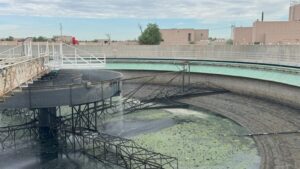 How a Valley wastewater treatment plant cools nuclear power plant, feeds Salt River
 Lawsuit questions if Arizona city has enough groundwater for large housing development
 Proposed data center prompts Tucson to regulate large water users, require conservation
 SRP pulls back curtain on Mormon Flat Dam maintenance work at Canyon Lake
 Democrat says ‘Arizona got screwed’ in Colorado River water agreement
 Arizona joins lawsuit over Colorado River plan, warns of deep water cuts

Comments
3 Comments
Sometimes, Blundt cracks himself up.
hEhE
Blundt smells something fishy here...
aholehole!?!
"Does Tres Rios have an Epstein Island we can visit and rape children being trafficked, just like Donald Trump, our religous savior?"
-Mainstream Republican Voters