
Arizona university researchers study how to increase shrinking groundwater supplies
The Arizona Tri-University Recharge Project used satellite-based methods to find where the most water is being lost.

Watch: Arizona Tri-University Recharge Project aims to increase groundwater recharge | 1 min
The Arizona Tri-University Recharge Project recently released the findings of a study on how to capture water and use it to increase groundwater recharge.
Researchers from Northern Arizona University, Arizona State University and the University of Arizona used satellite-based methods to collect data on rain, snowpack, soil moisture and more to find where the most water is being lost.
The project found that a massive amount of water is lost through soil and plants, a process known as evapotranspiration, or ET.
“It’s literally millions of acre feet of water, so many, many feet of water across the state, that go back up into the sky because of evapotranspiration,” Kathy Jacobs, a retired environmental science faculty member at the University of Arizona and director of the Center for Climate Adaptation Science and Solutions, told KTAR News 92.3 FM.
How does evapotranspiration deplete Arizona’s groundwater?
The study found that ET has been depleting the state’s groundwater supplies.
“As it gets warmer, there is more water loss into the atmosphere from both the land and from plants. And what we’ve seen is, as it’s gotten hotter and drier across the state we’re actually pulling water out of the groundwater basins and we’re getting a net loss of water across the state,” Jacobs said.
The researchers also learned that land management solutions can be used to get water into the ground more quickly by slowing it down.
“There are studies that show that forest thinning can reduce the amount of water that is evapotranspired from that forest and also improve forest health along the way,” Neha Gupta, an assistant research professor at the Arizona Institute for Resilience at the University of Arizona and affiliate faculty member with the Department of Hydrology and Atmospheric Sciences, told KTAR News.
Forest thinning can enhance snow cover duration and potentially increase groundwater recharge.
Managing floodwaters can also be done in a way to get water underground more quickly instead of losing it to evaporation by “thinking about the roles of our natural channels, our ephemeral channels that only run when it rains,” Gupta said.
Recapture would be most effective on the Mogollon Rim
The project found that these solutions would be most effective to recharge groundwater on the Mogollon Rim, as the area gets the most rain in the state with more than 20 inches a year.
Jacobs said city planners should integrate recharge objectives into land management such as forest thinning, flood mitigation and road building.
“When you save just a small percentage of that volume [lost], it actually can be a big change in the water availability for an individual basin across the state,” Jacobs said.
The project was recommended by the Arizona Department of Water Resources, which now has the findings, and was funded by the Arizona Board of Regents.
Related
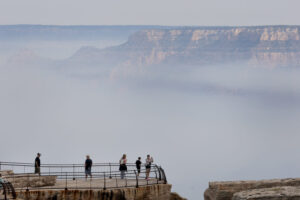 How did last year's Dragon Bravo Fire impact Grand Canyon water supply?
 Amid other struggles, Arizona farmers brace for more Colorado River water cuts
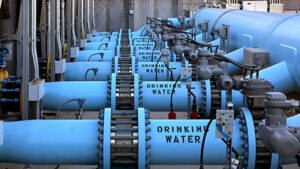 Arizona agencies take step to buying desalinated ocean water from California
 Scottsdale considers new restrictions for large water users as demand rises
 Rep. Andy Biggs says ‘water’s No. 1’ as he hears from Arizonans during run for governor
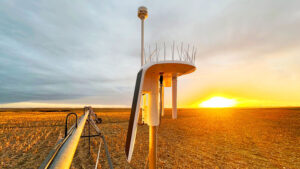 Amazon launches collaborative initiative to fund Colorado River Basin water projects

Comments
2 Comments
I do not believe those Data Centers are draining the aquifer. I've been in some, not all of these and there is no water usage as described
For almost 80 years I've been impressed with Arizona's attitudes and successful developments with our Water sources. The central Arizona Project canal was/is "Absolut Genius" and should be used across the entire Western USA?---Imagine a Canal from Alaska/Canada to Mexico? (& there are plans for just THAT)
Try studying the actual cause. Arizona has approximately 160-180 operating data centers draining the underground aquifer.