
Arizona’s tribal, rural communities will bear the brunt as Colorado River plan fails to stabilize
Water policy expert expects legal challenges and warns Yuma's winter vegetables are at risk as tribal and rural communities face the deepest impacts.

Watch: Water Watch: CO River framework doesn't provide enough certainty for lower basin says water expert | 1 min
The federal framework for the Colorado River doesn’t provide enough certainty for lower basin states, according to Sarah Porter, director of the Arizona State University Kyl Center for Water Policy.
She told a SciLine webinar on Thursday that the final environmental impact statement, or FEIS, is focused on protecting water infrastructure and the ability to produce hydropower.
However, she said it doesn’t resolve conflict between the upper and lower basins.
“It doesn’t achieve the things the basin really needs at this point,” Porter said. “It doesn’t place the basin on a path to stabilizing the system at all. It really sort of tells how we’ll manage things when they get really bad, as they are right now.”
She expects legal challenges from the lower basin about the administrative process the U.S. Bureau of Reclamation used to establish cuts.
Porter also expects what’s known as a compact call to compel the upper basin to meet its obligations of sending water downriver as spelled out in the 1922 Colorado River Compact.
In the meantime, lower basin cities will work to mitigate the cuts through conservation and investments in water reclamation.
“Those cities are making massive investments in advanced water purification to treat reclaimed water to potable [standards] to reduce reliance on annual deliveries of Colorado River water,” Porter said.
She believes disruptive impacts will fall on tribal and rural communities in the lower basin, especially when it comes to agriculture.
“We’ll all notice that winter vegetables are harder to come by because the Imperial Irrigation District, the Palo Verde Irrigation District and Yuma County are the places where the nation’s winter vegetables are grown,” Porter said. “We probably won’t be eating as many salads because that’s where all the winter lettuce … it’s all grown in Yuma.”
She believes the FEIS has created less consensus among the seven basin states because the lower basin is on the hook for 3 million acre-feet of water cuts, while the upper basin remains untouched.
“We really need to figure out a way collectively to be reducing demand in the Colorado River by at least 3 million acre-feet out of the 15 million and that probably can’t all fall on the lower basin. The lower basin didn’t agree to be junior to the upper basin,” Porter said.
Related
 Arizona Cotton Growers Association honors lawmaker for service to agriculture industry
 Scottsdale considers new restrictions for large water users as demand rises
 Rep. Andy Biggs says ‘water’s No. 1’ as he hears from Arizonans during run for governor
 Amazon launches collaborative initiative to fund Colorado River Basin water projects
 Election-year backlash clogs Scottsdale’s water recycling plan
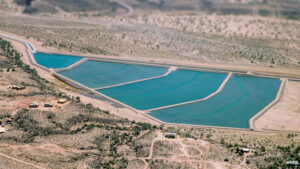 With Colorado River cuts looming, Peoria commits $104 million to bolster water supply

Comments
4 Comments
Move back to the east coast.
Tribes will suffer while new luxury homes are still being built in Scottsdale. Not cool
Not too impressed by Arizona's romaine lettuce crop. Moved here recently from the east coast, where romaine leaves stayed crisp and edible for at least 3 weeks. The leaves from AZ romaine are wilted out the bag, and they start to turn black within 2 weeks.