
Northern Arizona highway improvement projects to look forward to in 2026
Motorists in northern Arizona have a lot to look forward to in the new year as a number of highway improvement projects will not only be started but also completed in 2026, according to the Arizona Department of Transportation (ADOT).

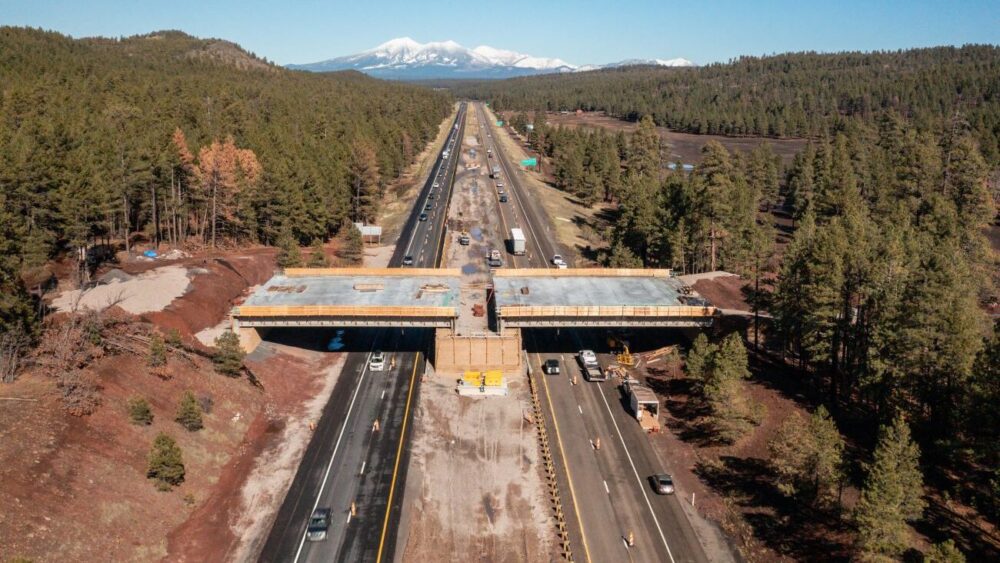
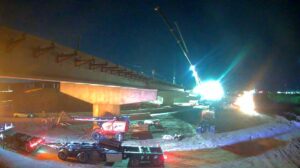
Motorists in northern Arizona have a lot to look forward to in the new year as a number of highway improvement projects will not only be started but also completed in 2026, according to the Arizona Department of Transportation (ADOT). (Photo via ADOT)
(Photo via ADOT)
PHOENIX — Motorists in northern Arizona have a lot to look forward to in the new year as a number of highway improvement projects will not only be started but also completed in 2026, according to the Arizona Department of Transportation (ADOT).
At the top of the traffic authority’s list was the Interstate 17 wildlife overpass, which is 12 miles south of Flagstaff and meant to reduce the risk of collisions with animals.
Construction on the 100-foot-wide overpass began in May near Willard Springs Road. When crews return from the winter shutdown and resume work this spring, they will install new wildlife fencing along 8 miles of the I-17 and add a layer of soil to the overpass before planting native grass and other vegetation.


The wildlife overpass is being constructed through a partnership between ADOT and the Arizona Game and Fish Department that costs $15.8 million and is expected to completed in fall 2026.
What other northern Arizona highways projects are happening in 2026?
Another project that ADOT expects to complete in the coming year is a new Interstate 40 interchange at Rancho Santa Fe Parkway. The $4-million project will not only accommodate the growth happening in the east Kingman area, but also allow for better access to the Kingman Airport and the adjacent airpark.
The I-40 interchange is expected to be open for drivers by the middle of 2026.
While that project is wrapping up, work will continue on the I-40/US 93 interchange in Kingman. Work on the $106-million project, which started in mid-2024, is more than halfway done and is expected to be ready for use in 2027, according to ADOT.
The interchange is designed to allow motorists to bypass a traffic signal where Beale Street converges with I-40 and get rid of the delays caused by it on the main route between Las Vegas and the Grand Canyon State.
The US 93 is also expected to see a $80.6-million project be completed at some point in 2026. It will widen a 4-mile stretch of the highway at Cane Springs north of Wikieup and transform it from a two-lane undivided highway into a four-lane divided highway.
The widening project is part of ADOT’s long-term vision to modernize US 93 and create a four-lane divided highway for the entire 200-mile stretch of road between Wickenburg and Nevada. The traffic authority’s Five-Year Transportation Facilities Construction Program for 2026-2030, which was approved by the State Transportation Board in June, has two additional projects for fiscal years 2026 and 2027 to work toward that goal.
In the ponderosa pine forest area of northern Arizona, State Route 260 will see the $109-million Lion Springs widening project start by midyear in the Star Valley area, which is east of Payson.
This is the final section of highway between Payson and the Mongollon Rim that needs to be widened from two lanes to four. The work on the 4-mile stretch will also add wildlife crossings and is expected to be completed in 2029.
In Payson, a two-year project to resurface State Route 87 from Green Valley Parkway to Crackerjack Road, is also expected to be complete in 2026. In addition to replacing the pavement, the $19.8 million is also going toward making stormwater drainage, signage and traffic light improvements.
Closer to the metro Phoenix area, but still benefitting those traveling to and from northern Arizona, a project to replace the Queen Creek and Waterfall Canyon bridges, which are east of Superior, on US 60 will continue as well.
Related
 New projects to expect on metro Phoenix freeways in 2026
 ADOT now over halfway done with Loop 202 Santan Freeway widening project in East Valley
 State Transportation Board approves update to 5-year construction program
 Plenty of construction planned between metro Phoenix and Las Vegas in 2025
 Detours, Devils and dirndls: How to navigate Tempe closures this weekend
 Phoenix freeway closures: How to steer clear of roadwork this weekend

Comments
1 Comments
Adding more lanes is not an "improvement". There is no solution to traffic congestion other than viable alternatives to driving.
Make public transit more enjoyable and make cars inconvenient. How? Buses should pull into plazas like every other vehicle for boarding and unloading, go down every street just like a school bus, frequencies should be 15 minutes or less, and the main hub should be like an airport with services and amenities. It would be less expensive than car ownership and less burdening on the climate.