
Katie Hobbs says Arizona data center tax freeze will save $57M, warns of more restrictions ahead
Gov. Katie Hobbs says a three-year freeze on data center tax exemptions will save Arizona $57 million, funding childcare, food aid and rural hospitals.


Glendale data center: PHX-13 one of four upcoming facilities (Photo via Aligned Data Center)
(Photo via Aligned Data Center)
Gov. Katie Hobbs said Tuesday that a three-year freeze on new data center tax breaks will save Arizona $57 million, money her administration says is helping fund childcare, rural hospitals and food assistance in this year’s budget.
She also warned the state isn’t done reining in data centers, pledging action on energy costs and water use even as data center developers continue to build across the state.
“Arizona is a partner in progress. We are not a blank check,” Hobbs said at a news conference. “A state that puts servers before citizens is building for the future but forgetting the people that have to live in it.”
Hobbs, who voted for the original tax exemption as a state senator in 2013, said the incentive achieved its purpose.
Arizona now ranks in the top 10 nationally for data centers, with 98 facilities operating and 86 planned or under construction. A Goldwater Institute study ranked Phoenix as the No. 2 market in the country for planned data centers.
The governor initially wanted to undo the exemption entirely and add a fee on data centers’ water use. Neither survived budget negotiations with the Republican-controlled Legislature.
“I proposed a full repeal. There were others who proposed a full repeal. This is the compromise we arrived at in our negotiated budget,” Hobbs said. “Nobody got everything that they wanted.”
Katie Hobbs signaled she wants more state limits on data centers
“We must take action to make sure data centers aren’t hiking energy bills for Arizonans,” she said. “We must protect our water from unchecked pumping, and we must listen to Arizonans’ concerns about data centers in their neighborhoods.”
Senate Democratic Leader Priya Sundareshan called the moratorium the longest of its kind in the nation.
“When Republicans whined and asked, ‘Won’t someone think of the poor data centers?’ We stood firm,” Sundareshan said of monthslong budget negotiations. “These profitable mega corporations do not deserve or need a data center tax giveaway, a sales tax exemption that the rest of us pay.”
Hobbs said savings from the moratorium helped fund $44 million for childcare, $4 million for food assistance and investments in rural hospitals.
Jesse Gruner of Pinnacle Prevention, which runs Arizona’s Double Up Food Bucks program, said the budget offers a lifeline as federal nutrition programs face cuts.
“Facing devastating and historic federal cuts to SNAP, Medicaid and COVID-era programs, we were all reaching to our state for lifelines, despite an incredibly tight budget environment,” Gruner said.
Asked about protecting ratepayers from rising energy costs driven by data center demand, Hobbs pointed to recommendations from her energy task force and said she plans to work with the Arizona Corporation Commission.
“Nobody’s talking about a moratorium on data centers themselves,” Hobbs said. “There are places where they make sense, where they provide economic opportunity and where they’re not sucking the groundwater and overtaxing the utilities.”
Subscribe to the KTAR Political Brief newsletter to get our top political stories, exclusive guest interviews and more to your email inbox.
Related
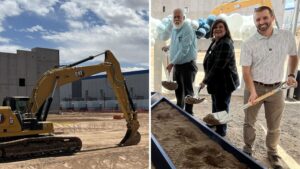 Aligned Data Centers breaks ground on West Valley campus
 Firm linked to data centers signs 1.1 million square-foot West Valley lease
 Maricopa County supervisor calls for inquiry into recorder’s claim of Phoenix mail facility closure
 Sine Kerr calls John Giles’ debate absence ‘absolutely disgraceful’
 What’s on your ballot? Prop 141 would ban vehicle miles traveled taxes in Arizona
 Greg Stanton, Zudhi Jasser trade blame on affordability in 4th Congressional District debate

Comments
2 Comments
This information posted on a web site that is more than likely hosted on a data center.
Why even bother at this point? Arizona is already home to between 150 and 190 operational data centers, ranking as the 7th largest state market in the U.S.