
Regulonix: We may have eventual answer to opioid crisis
Research is in the early stages, but there could be a nonaddictive painkillers that could ease the opioid crisis, an Arizona pharmacology professor said.
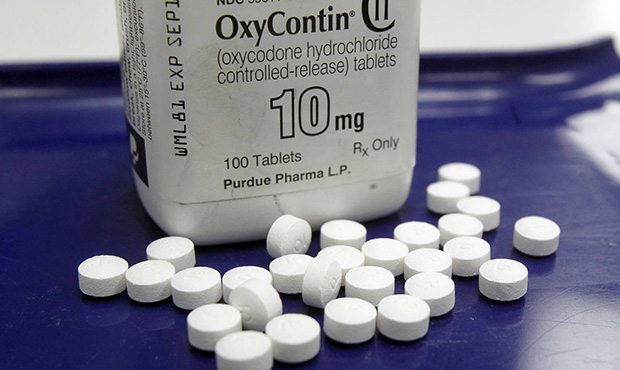
(AP Photo/Toby Talbot, File)
(AP Photo/Toby Talbot, File)
PHOENIX — A Tucson company says it might have an answer to slow the opioid crisis.
Regulonix is studying some non-opioid compounds as an alternative to opioid painkillers. Rajesh Khanna, Ph.D, is an associate professor of anesthesiology and neuroscience at the University of Arizona’s pharmacology department.
He also is a part owner of the compounds.
“In pre-clinical animal models, we see very nice efficacy in terms of pain relief across the board – and in a variety of pain scenarios,” Khanna said.
He said the compounds are more effective than morphine, non-addictive, and non-toxic at high doses.
“Chronic pain is widely prevalent, and opioid misuse and overdose constitute major public health crises,” Khanna said. “While opioids are unlikely to go away anytime soon, our task is to arm physicians with viable alternative options.”
The Regulonix compounds do not focus on cells’ opioid receptors. Instead, they focus on the Nav1.7 sodium channel — a part of the nerve cell membrane that has been linked to human pain disorders. Khanna said the compounds affect the channel indirectly, so there are very few negative effects, if any.
“Opioids have their place, but definitely not for chronic pain sufferers,” Khanna said. “Perhaps one of the advantages of our compounds could be – eventually –taken with opioids. And, perhaps, [the patient] could taper down or use less of the [opioid] … and eliminate the risk of tolerance, and dependence and addiction.”
The research is in its early stages and any useful medications from this won’t appear for at least three years, perhaps five, Khanna said realistically.
According to the U.S. Centers for Disease Control and Prevention, 78 Americans die each day from an opioid overdose. Arizona Gov. Doug Ducey declared a public-health emergency in June due to opioid use and overdose throughout the state.
Related
 4 people rescued from top of car after getting caught in flood in Yavapai County
 SARMS Pharm owner heads to prison, Phoenix company ordered closed
 Justin Heap to reinstate ballot access for 25 citizens after mediation with Arizona officials
 6 arrested after alleged $1.4M Walmart fraud ring busted in Peoria
 ‘Amen,’ then a roar: Arizona church takes shelter amid tornado warning
 Phoenix events calendar: Things to do this weekend and beyond

Comments
0 Comments