
Pfizer’s COVID vaccine less effective at preventing infection in younger children, new study finds
A new study shows the Pfizer-BioNTech COVID-19 vaccine is less effective at reducing the risk of infection among younger children compared to older age groups.
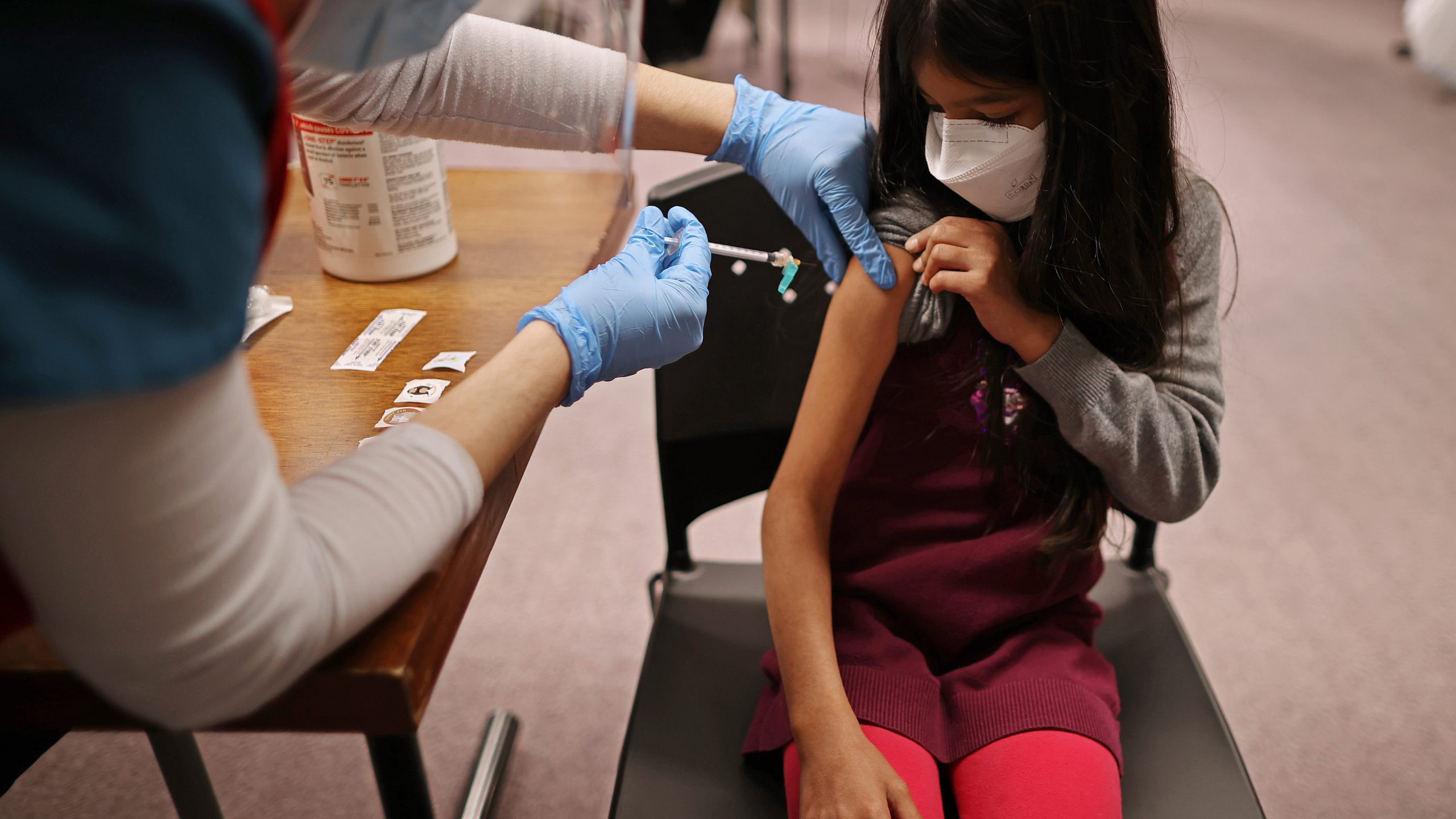
(File Photo by Chip Somodevilla/Getty Images)
(File Photo by Chip Somodevilla/Getty Images)
PHOENIX — A new study shows the Pfizer-BioNTech COVID-19 vaccine is less effective at reducing the risk of infection among younger children compared to older age groups.
University of Arizona Health Sciences researchers contributed to the Centers for Disease Control and Prevention’s ongoing PROTECT study. The latest findings were published Friday.
It shows the two-dose vaccine reduces the risk of infection from the omicron variant by 31% for children ages 5 to 11. Vaccine effectiveness among 12- to 15-year-olds nearly doubles, at 59%.
“While this is not as high as we would like to see it as scientists, it does imply that vaccination is one strategy that can lower risk,” said Kate Ellingson, an infectious disease epidemiologist with the University of Arizona who worked on the study.
Ellingson pointed to several possible reasons why the study shows the vaccine is more effective at reducing infection among younger children.
“One reason to consider is the dosing,” she said. “Those 12 and up received an adult dose of the Pfizer vaccine, which is about 30 micrograms, whereas kids in the 5 to 11 age group received 10 micrograms, so it’s a third of the dose.”
Fully vaccinated children ages 5 to 15 who did get infected with COVID-19 spent on average one-half day less sick in bed than did unvaccinated children who got sick.
The findings are based on weekly COVID-19 testing among 1,363 children from four states: Arizona, Florida, Texas and Utah. The vast majority of the participants live in Arizona.
The study also looks at the effectiveness of the vaccine when delta was the dominant variant versus omicron.
It finds the vaccine was 87% effective at preventing infection among adolescents ages 12 to 15 when delta was the dominant variant, compared with 59% for the omicron variant.
For Ellingson, the major takeaway from the study is that, though moderately, the COVID-19 vaccine does work to lower the risk of infection and disease among children.
“It’s one very important tool of many that we have at our disposal to help end this pandemic and to help reduce risk for not just kids, but of families and communities,” she said.
Related
 Flu down for second year in Arizona; reason may be as plain as the mask on your face2 Arizona counties see change in community COVID levels, 1 better and 1 worse
 Man pronounced dead at scene of early-morning shooting in Chandler
 Phoenix helicopter used for mountain rescues taken out of service for maintenance

Comments
0 Comments