
NASA, UA scientists to use real asteroid to simulate impact with earth
University of Arizona scientists and NASA are using a real asteroid to simulate an impact with earth to test just how prepared we are.
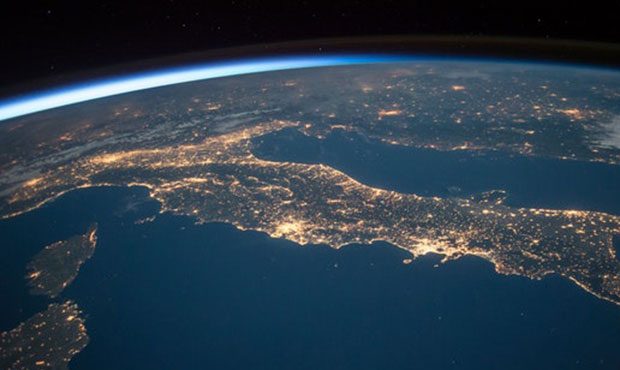
PHOENIX — University of Arizona scientists and NASA are using a real asteroid to simulate an impact with earth to test just how prepared we are.
“This is more of planetary defense than pure science,” said Vishnu Reddy, assistant professor at the Lunar and Planetary Lab at the University of Arizona.
NASA’s already practiced scenarios including deflection, evacuations, and disaster relief, but only using hypothetical asteroids. Reddy thought why not practice on a real asteroid, like the one passing close by Earth on October 12?
“And try and see what we can learn about this object in a short period of time,” he said. “And then exercise the whole system in a real sense.”
Scientists will observe the asteroid from around the world, which will improve coordination and communication as well as generate a much better idea of its trajectory and orbit.
“It has a huge uncertainty on where this object is going to be when it comes close to the Earth,” he said. “How would you use that information to make a decision on what needs to be done?”
Information would certainly be vital for an asteroid that actually has a chance of hitting Earth. It’s not clear exactly how close the asteroid in October will come to the Earth, but estimates are it will pass as close as 6,800 kilometers (4,200 miles) above the Earth’s surface.
“We use that opportunity to see what our strengths are in characterizing this object,” he said. “And what are the areas we need to improve.”
Related
 US restricts travel, activities in Nogales citing threat information
 Man flees DUI stop, crashes into Mesa apartment complex before being arrested
 Efforts underway to recover body from Tempe Town Lake
 Tempe developing first-of-its-kind dementia- and age-friendly park within Kiwanis Park
 Camelback Colonnade redevelopment clears hurdle, eyeing rezoning
 Motorcyclist dies after collision involving car near overpass in Phoenix

Comments
2 Comments
Why not use the asteroid that is going to pass the Earth on Sept. 1, 3122 Florence (1981 ET3) is a little more than 3.3 miles in diameter. Although it is suppose to pass Earth at 18.5 LD (lunar diameters) I have noticed the JPL website recently changed the date of close approach from Sept. 2nd to the 1st. but not the nearest approach? The JPL website says they are sure within 1 sec of the time of nearest approach, so was wondering how they change the date by 1 day without it being a big deal?
Of course they're going to SAY it's only a simulation.