
Is air travel safe? Arizona industry insiders, policymakers, passengers weigh in
Air travel safety is an issue on the minds of Arizona flight industry insiders, policymakers and passengers.

Watch: Air travel safety is on minds of Arizona industry insiders, policymakers, passengers | 4 mins
PHOENIX — Air travel has long been thought of as the safest way to get around the country. However, a series of high-profile plane crashes has some wondering whether it’s safe to fly.
It’s an issue on the minds of Arizona flight industry insiders, policymakers and passengers.
One of them is a Valley air traffic controller who sat down to discuss what really goes on in the control tower.
The controller, who wished to remain anonymous, brought detailed flight maps and an air traffic control manual several inches thick. With them, he outlined how a small change in a single word or phrase can make the difference between a smooth flight and one that ends tragically.
“I’m focused on a 2D type of environment, but I have to think in three dimensions. … There are days where my mouth can’t keep up with my brain. It’s so busy and I’m working so fast,” he said.
On average, the Federal Aviation Administration (FAA) oversees more than 45,000 flights carrying 2.9 million passengers across more than 29 million square miles of airspace daily.
The agency says air travel in the U.S. is the most complex and safest in the world.
Arizona air travel presents unique safety challenges
While the anonymous controller repeatedly emphasized his belief that air travel is safe, he called his workplace “a procedural nightmare.”
In addition, Arizona has unique challenges with its mountainous terrain and extensive flight training industry. The skies over the Grand Canyon State are filled with commercial planes, student pilots and military aircraft.
According to FAA data, Arizona has the fourth-most certified active pilots in the country with more than 30,000. More than 40% of those are student pilots.
The controller described the Valley’s flight space as a beehive. And, for better or worse, human beings are responsible for keeping it all buzzing safely.
“The human element here is the one that prevents, and, unfortunately, can cause some of these events,” he said.
Safety is always on minds of pilots, before and during flights
While more people around the country are struggling with their personal confidence in U.S. air safety, some pilots are wrestling with the same concerns.
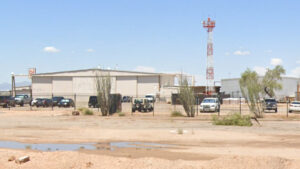
Cody Bowman operates a flight school called Noble Aire Aviation out of Marana Regional Airport, near Tucson. It’s the same airport where two people died in a midair collision in February. The tragedy hit close to home both figuratively and literally.
“I do know that it has affected quite a few students,” he said.
Bowman understands the apprehension. He said a lot of things go into the decision to fly a plane, and there’s no such thing as being “too safe.”
Each flight starts with a preflight checklist that requires the pilot to be part-mechanic, part-meteorologist and part-psychologist.
“You’re checking brake lines. You’re checking fuel levels. You’re checking the quality of the fuel,” Bowman said.
Then there’s the personal checklist.
“Is there stress? Is there fatigue? Did I get enough sleep? Am I taking medication? … Is anything that’s happening personally going to affect my ability of flying this aircraft safely?” Bowman said.
Once in the air, pilots must constantly be aware of everything around them. That involves a process Bowman called “staying ahead of the aircraft” — looking well beyond the plane’s immediate surroundings.
Aviation disasters reverberate through industry
The aviation community is a tight-knit one — with everyone sharing the responsibility for keeping each other safe as well as the feeling the guilt when there is a mishap.
“Make no mistake about it: When something does go wrong, and … whether I had anything to do with it or not, I feel horrible,” the anonymous controller said.
He said his “heart just sank” when he read about the January midair collision near Ronald Reagan Washington National Airport that claimed the lives of 67 people
“I’ve seen accidents with my eyes over the years. … The stuff sticks with you,” he said.
Air traffic control is a high-stakes job where both stress and boredom can be dangerous. Despite all the precautions, mistakes do happen.
“I catch them every day. I make mistakes myself all the time. Assign an incorrect altitude, I catch it and I solve it. Or there have been times I make a mistake, and somebody overhears it. … It goes back and forth all day long,” the controller said.
He believes that’s proof of a system that works, but who makes up that system has been a hotly debated item as of late.
When flight safety becomes politicized
After the deadly crash near the national airport, President Donald Trump wondered publicly whether diversity, equity and inclusion efforts created a system where the seats in the tower weren’t filled by the right people.
Arizona U.S. Rep. Greg Stanton, who serves on the House Subcommittee on Aviation, vehemently disagreed with Trump’s questioning and accused the president of spreading a false narrative for political reasons.
“Literally, there were bodies still in the river that hadn’t been recovered at the time he made those horrific statements. … As a leader, people are looking to you for thoughts and analysis. You owe it them to say, ‘Hey we need to fully investigate this before jumping to conclusions,’” Stanton said.
The Valley Democrat argued that the issue isn’t the quality of air traffic controllers, it’s the quantity.
Stanton said that while the U.S. remains the gold standard when it comes to air safety, more needs to be done to keep it that way. He said the federal government can help by hiring more air traffic controllers, supporting airport growth to keep up with travel demands, and investing in the latest and greatest safety technology.
This comes as the Trump administration is working to cut costs by shrinking the federal workforce. In fact, the FAA fired 352 probationary employees in February, although Transportation Secretary Sean Duffy said none of those positions were critical to safety.
What do passengers think about flight safety?
While Stanton remains bullish on the system, the traveling public may not be. Nearly 50% of Americans say they’re losing confidence in the safety of air travel, according to a recent Ipsos Consumer Tracker survey.
Some, like Jeffrey Williams, have never been a fan.
“I have a lot of trepidation around getting on planes. … And then to hear there’s been crashes doesn’t make it any better,” Williams, who is from the San Francisco area, said recently after arriving at Phoenix Sky Harbor International Airport.
Despite the fears, Williams said he doesn’t necessarily feel like air travel has become more dangerous. And his concerns haven’t stopped him from flying about 10 times a year.
To make him feel better, he has a routine that he describes as superstition.
“I pull out the card in front, I read about the airplane, and I do that religiously,” he said.
As the plane heads down the runway, he says a prayer for the crew and any children on board.
“I just put my faith in the pilot that’s flying the plane and the people that’s doing the PMCS (Preventative Maintenance Checks and Services) on the plane prior to us taking off, because once you’re in the air, you’re in God’s hands,” Williams said.
Bottom line: Flying is ‘safer than safe’
Despite the headlines, there actually have been significantly fewer fatal aviation incidents in the U.S. this year than at the same point last year.
As of Wednesday, there had been 23 fatal crashes nationwide this year, according to data from the National Transportation Safety Board. In 2024, there were 50 by the end of March and 275 by the end of the year.
The anonymous controller wants to reassure the traveling public that flying remains incredibly safe.
“We care so much about the safety and the integrity of the system and the people in those aircraft and on the ground,” he said. “We are making sure this airspace is safer than safe every single day.”
Related
 2 people killed in plane crash at southern Arizona airport
 1 killed, 3 injured in Scottsdale Airport runway crash involving Mötley Crüe singer's plane
 Fasten your seatbelt: Phoenix Sky Harbor flew more passengers than ever before in 2024
 Camelot Homes to build 19-home gated enclave at Peoria’s Saddleback development
 Maricopa residents urged to boil tap water after preliminary testing indicates E. coli
 What’s on your ballot: Prop 320 would force certain schools to spend more in classrooms

Comments
0 Comments