
Is the ‘Incredibles 2’ causing people with epilepsy to have seizures?
Some scenes in the new Disney-Pixar movie "Incredibles 2" is reportedly causing some people with epilepsy to have seizures. A Phoenix doctor said it is certainly possible that a film can trigger seizures in some people.
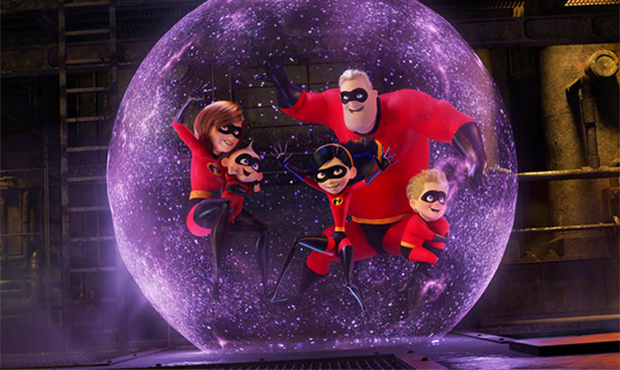
This image released by Disney Pixar shows a scene from "Incredibles 2." (Disney/Pixar via AP)
(Disney/Pixar via AP)
PHOENIX — Some scenes in the new Disney-Pixar movie “Incredibles 2” is reportedly causing some people with epilepsy to have seizures.
A series of tweets by user Veronica Lewis went viral over the weekend, warning moviegoers that the film is “filled with tons of strobe/flashing lights that can cause issues for people with epilepsy, migraines and chronic illness.” The film also reportedly did not have any type of trigger warning.
These scenes are also spread out across the movie and often come without warning. My descriptive audio device warned me about the larger scenes, but other times it was light strobe lights came out of nowhere for no reason.
— Veronica Lewis (@veron4ica) June 15, 2018
Many other users have said the film caused them to have issues or that they witnessed other people have seizures during it.
TO ANY FRIENDS WHO HAVE EPILEPSY, SEIZURE DISORDERS OR LIGHT SENSITIVITY: please be careful if you’re seeing The Incredibles 2. I unfortunately had an issue and don’t want this happening to anybody else ❤️
— Princess Rapunzel🌸 (@katieeemj) June 15, 2018
Update: I was just watching Incredibles 2 in theatres tonight when a fellow patron collapsed in a seizure. PLEASE HEED THIS WARNING — THIS ACTUALLY OCCURRED. Stay safe! https://t.co/OhYj5HRDxi
— Emma 🌻 (@emma_ml_lohman) June 16, 2018
Just saw Incredibles 2. It was awesome! However, someone in our theater had an epileptic seizure due to some visual effects. Be safe.
— ther2dude (@ther2view) June 15, 2018
Angus Wilfong, the associate director of the Barrow Neurological Institute at Phoenix Children’s Hospital, said it is certainly possible that a film can trigger seizures for people with epilepsy.
“Certain frequencies of flickering or flashing lights — this has been known for a very long time,” he said.
“If the flashing light is particularly bright, or occupies a lot of the…screen, then it’s more likely to trigger a seizure.”
Red lights, Wilfong said, seem to be the biggest problem. And “flashing lights faster than three per second are the most likely to trigger seizures.”
According to Variety, Disney has “been notified of the situation and asked all theaters that are showing ‘Incredibles 2’ to notify patrons of the scene in question.”
In a webpage dedicated to the issue, The Epilepsy Foundation said “photosensitive epilepsy is more common in children and adolescents, especially those with generalized epilepsy and a type known as juvenile myoclonic epilepsy. It becomes less frequent with age, with relatively few cases in the mid-20s.
“Many people are unaware that they are sensitive to flickering lights or to certain kinds of patterns until they have a seizure.”
The foundation also offered several tips for people with epilepsy to reduce their seizure potential in theaters, home, and work.
Those tips included avoiding exposure to certain kinds of flashing lights, wearing polarized sunglasses while viewing television to reduce glare and turning video games off if strange or unusual feelings or body jerks develop.
Related
 NIH gives Barrow Neurological Institute another $25.3M for ALS study
 Boil water advisory in Maricopa canceled after negative E. coli tests
 US Supreme Court won’t stop court-ordered takeover of Arizona prison healthcare
 Trump announces that all 50 states are joining Medicaid drug pricing model
 Arizona health officials issue orders to preserve timely access to flu and COVID vaccines
 Tempe developing first-of-its-kind dementia- and age-friendly park within Kiwanis Park

Comments
0 Comments