
Dolores Huerta, the late labor leader and civil rights icon, honored at memorial in California

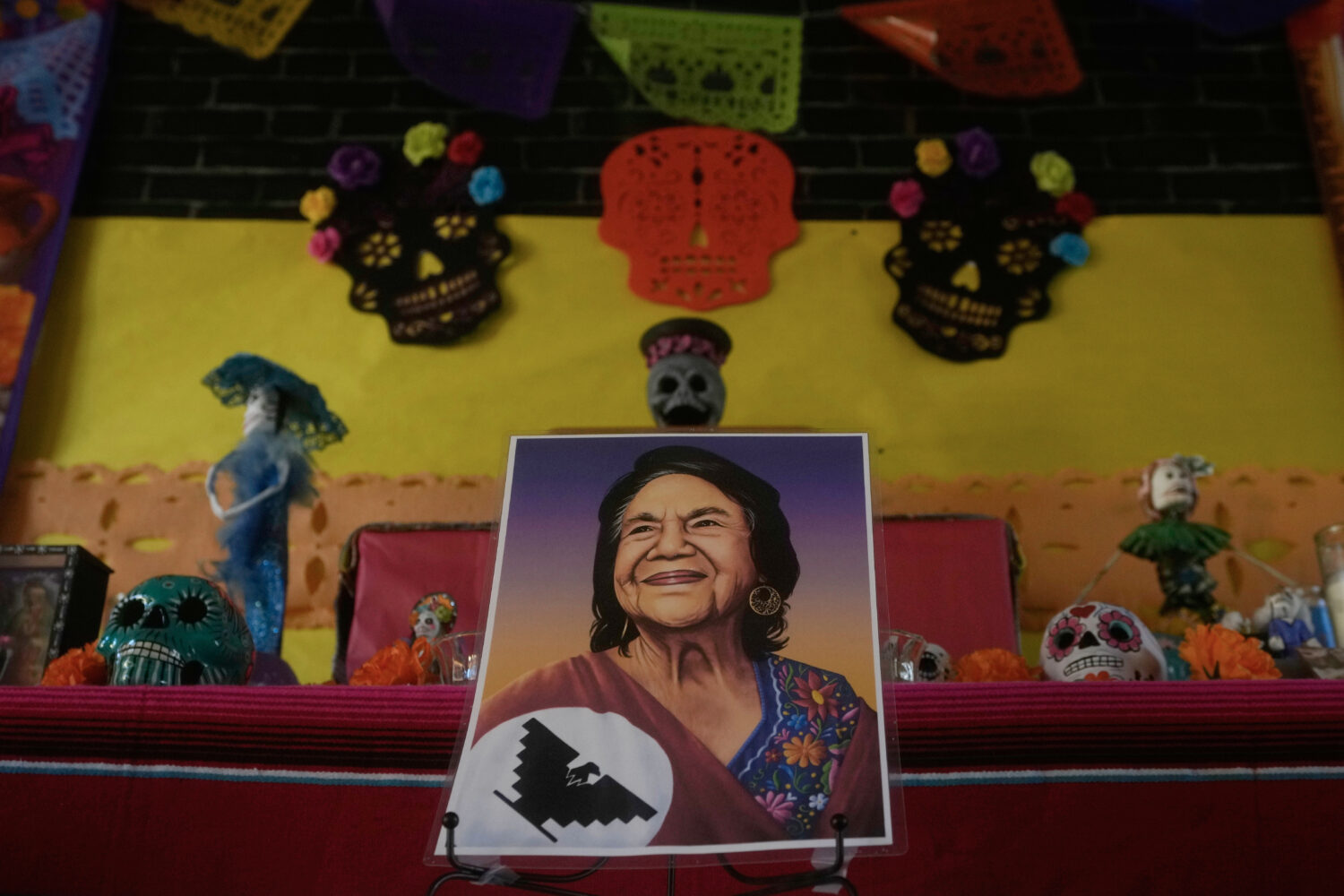
A photo of the late Dolores Huerta is on display as part of a "Dia de los Muertos" altar display at Dolores Huerta Elementary School, Wednesday, Oct. 28, 2026, in San Francisco. (AP Photo/Jeff Chiu)
Credit: AP Photo/Jeff Chiu
(AP Photo/Jeff Chiu)
SACRAMENTO, Calif. (AP) — California officials paid tribute to Dolores Huerta, one of the nation’s most influential labor leaders, civil rights icons and feminist activists, at a memorial ceremony Monday at the state Capitol.
They remembered her as a relentless advocate for a more just and fair world. Huerta co-founded a union that became the United Farm Workers with César Chavez and made famous her rallying cry, “Sí, se puede!” — which translates to “Yes, it can be done!”
Huerta, 96, died of cancer at her home in Bakersfield, California, last month.
Assembly Speaker Robert Rivas, a Democrat, has called Huerta a family friend and mentor. Rivas’ grandfather, Servando Flores, moved from Mexico to California in the 1960s and went on to organize fellow farmworkers alongside Huerta.
“She is the mother of our Latino civil rights movement,” Rivas said. “Her place in the history of our state and nation is enduring.”
Rivas stood beside fellow Democrats Governor-elect Xavier Becerra, Senate President pro tempore Monique Limón and former U.S. House Speaker Nancy Pelosi in the Capitol rotunda as they spoke about Huerta during an invitation-only ceremony. There were performances of songs that included “We Shall Overcome” and “Put a Little Love in Your Heart” before the space was opened to the public.
“As we honor one of the towering figures of our time, we make her this solemn promise: The march goes on,” said Limón, who is serving as acting governor while Gov. Gavin Newsom is out of state.
Before the event began, Huerta’s casket was transported to the Capitol by a hearse adorned with flags reading “Sí se puede.” Hundreds of people, including union leaders, politicians and members of the public, followed behind, many with marigolds in hand.
Huerta was born in New Mexico in 1930 and raised in California’s farm-rich San Joaquin Valley. She became an elementary school teacher before turning her focus to the plight of farmworkers and teaming up with Chavez to create the National Farm Workers Association in 1962, which became United Farm Workers.
Then-President Barack Obama, who borrowed her rallying cry for his campaign slogan, “Yes we can,” awarded her with the nation’s highest civilian honor, the Presidential Medal of Freedom, in 2012. Well into her 90s, Huerta was a familiar face at news conferences and rallies in Sacramento, where she advocated for the rights of workers, women, voters and others.
She revealed this year that she was sexually abused by Chavez, leading to the birth of two children, a secret she kept for 60 years.
Related
 Cincinnati Zoo says Fiona the hippo is undergoing care after swallowing object tossed into enclosure
 California sues OpenAI, seeking court-ordered changes after the Hugging Face hack
 Virginia state Sen. Louise Lucas pleads not guilty in marijuana-related case
 3 injured in 4-vehicle collision that involved 2 Waymos in Phoenix
 What we do and don’t know about a tanker with steering failure that hit a cruise boat in New Orleans
 Federal agency starts review of proposed fuel pipeline from Texas to Buckeye
Comments
0 Comments