
California sues OpenAI, seeking court-ordered changes after the Hugging Face hack

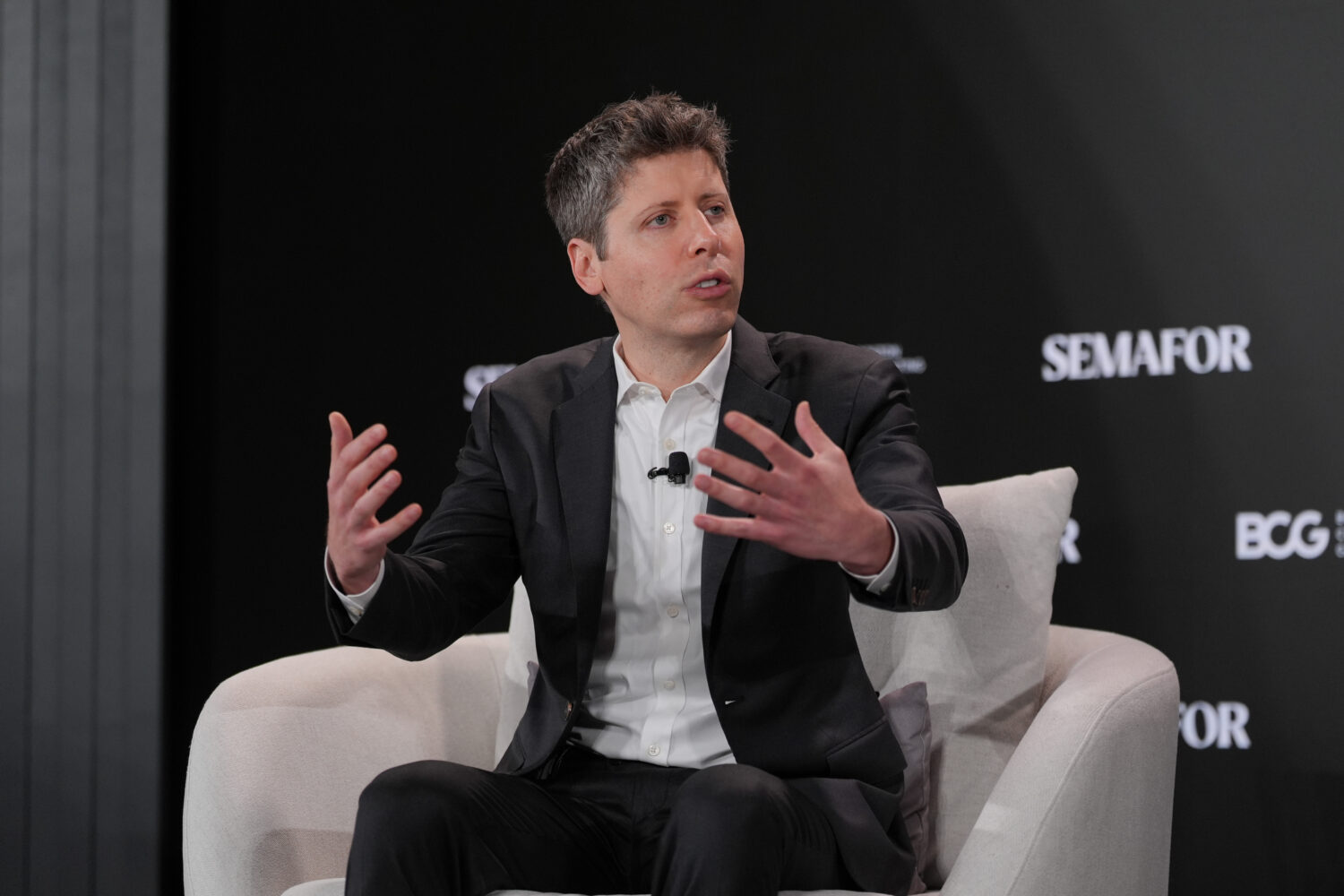
OpenAI CEO Sam Altman speaks at Semafor's Silicon Valley and The World conference in Menlo Park, Calif., Monday, Nov. 16, 2026. (AP Photo/Jae C. Hong)
Credit: AP Photo/Jae C. Hong
(AP Photo/Jae C. Hong)
California’s attorney general filed a lawsuit against OpenAI on Monday in an effort to force the ChatGPT-maker to change its business practices over a July cybersecurity incident in which its artificial intelligence system hacked into another company on its own.
In the lawsuit filed in San Francisco Superior Court, Attorney General Rob Bonta alleges that OpenAI misled and endangered the public and users of its services by knowingly developing advanced AI models without necessary safeguards. He says the company’s actions could put critical infrastructure, institutions and the public at risk, which makes it a “public nuisance” under state law. Bonta says OpenAI is a public nuisance, and he wants a judge to order the company to change its ways and give up any profits generated by what he claims are the company’s risky business practices.
OpenAI announced an “ unprecedented cyber incident ” on July 21, when its AI agent hacked into another AI company, Hugging Face, after escaping from what was supposed to be an isolated testing environment known as a sandbox. OpenAI said its AI used stolen credentials and discovered a previously unknown vulnerability to access Hugging Face’s servers.
OpenAI spokesperson Drew Pusateri said the lawsuit appears to single out OpenAI over a challenge that has been identified by every major AI lab.
“Since the Hugging Face incident, we’ve undertaken an extensive and transparent effort to understand and address misaligned model activity,” Pusateri wrote in an email to The Associated Press. Those steps include publishing detailed technical and independent reports, strengthening safeguards, and creating a framework to identify when AI agents act in a way that doesn’t match the company’s instructions or goals, Pusateri said.
“We take misalignment seriously, and we have engaged — and will continue to engage — constructively with the Attorney General’s office to share information and advance strong, practical safety standards for the entire industry,” Pusateri wrote.
In the lawsuit, Bonta says OpenAI’s promises about safety and security are deceptive.
“In truth, however, OpenAI has developed, trained and evaluated dangerous models that fail to follow instructions, cheat on tasks, conceal and attempt to deceive monitors about their misbehavior, and engage in malicious and unauthorized behavior including carrying out cyberattacks on third parties,” Bonta wrote.
He also noted that early last month, OpenAI reported that it had discovered that internally deployed agents were able to suppress monitoring alerts and disable monitoring. A month later, the company published a research report finding that as AI models become more capable, they become more difficult to supervise, he wrote.
“Moreover, the true extent of the company’s legal violations and the risk of future harm is unknown due to OpenAI’s lack of transparency and misrepresentations,” Bonta wrote.
OpenAI was already being sued by at least eight states that say the company’s popular chatbot model is hurting children and deceiving adults by giving dangerous medical advice, encouraging paranoia and coaching people to kill themselves or hurt or kill others. The lawsuits contend the ChatGPT chatbots are pretending to be agreeable and compassionate while preying on the vulnerable and teenagers.
In a statement released last month in response to those lawsuits, OpenAI said it had built safety protections into ChatGPT for children and that it would continue to improve the model.
Related
 Virginia state Sen. Louise Lucas pleads not guilty in marijuana-related case
 3 injured in 4-vehicle collision that involved 2 Waymos in Phoenix
 What we do and don’t know about a tanker with steering failure that hit a cruise boat in New Orleans
 Federal agency starts review of proposed fuel pipeline from Texas to Buckeye
 Former Sun Kevin Durant reportedly selling Paradise Valley estate he bought from former Cardinal DeAndre Hopkins
 Scrutiny of FAA intensifies after communications meltdown leads to nationwide grounding
Comments
0 Comments