
NIH gives Barrow Neurological Institute another $25.3M for ALS study
The new funding boosts total NIH investment in the Access for All in ALS (ALL ALS) Consortium to $76.5 million.

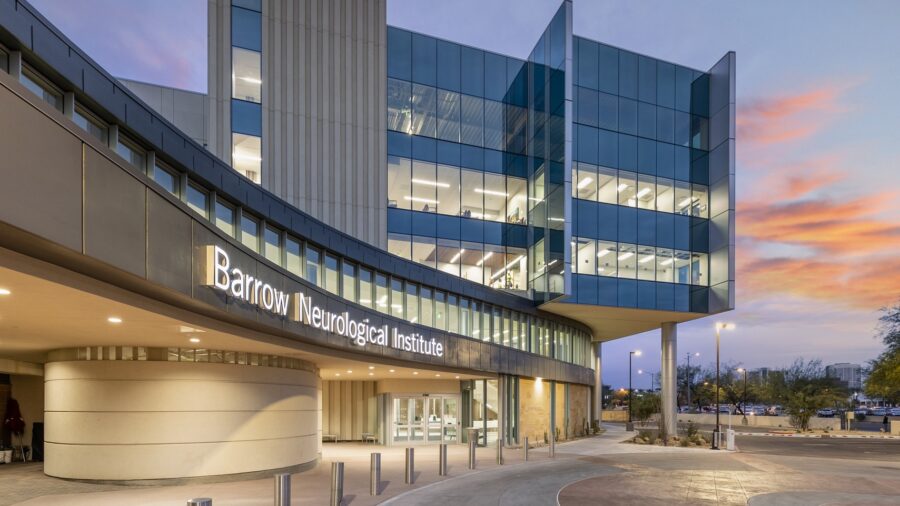
(Facebook Photo/Barrow Neurological Institute)
(Facebook Photo/Barrow Neurological Institute)
Barrow Neurological Institute was given another $25.3 million from the National Institutes of Health to extend its landmark amyotrophic lateral sclerosis research initiative for an additional two years.
The new funding boosts total NIH investment in the Access for All in ALS (ALL ALS) Consortium to $76.5 million, marking the largest externally funded research grant in the Phoenix institute’s 64-year history.
Established in 2023, the consortium aims to transform ALS research through an open-science model that makes clinical data and biological samples widely accessible to researchers across the country to accelerate drug development.
Barrow acts as the West Clinical Coordinating Center for ALL ALS, managing 19 of the 37 clinical research sites across the nation. The East Clinical Coordinating Center, led by Dr. James Berry, oversees the remaining 18 sites.
ALS, commonly known as Lou Gehrig’s disease, is a progressive, fatal neurodegenerative disorder. Patients typically have an average survival time of about three years following diagnosis. While available medications can modestly slow disease progression and supportive therapies improve quality of life, no treatments currently exist to reverse or halt the disease.
“We built ALL ALS around the idea that accelerating research and drug development in ALS requires broad participation, collaboration and easy access to high-quality clinical data and biological samples,” Dr. Robert Bowser, chief scientific officer at Barrow and principal investigator of the ALL ALS West Clinical Coordinating Center, said in a statement.
“The additional funding support from the NIH allows us to continue building an unprecedented resource, which scientists across the country and around the world can use to better understand this disease and identify new drug targets for developing more effective treatments.”
Since enrolling its first participant in summer 2024, the consortium has expanded rapidly to reach 2,000 participants. The group is actively fulfilling research requests through the ALS Knowledge Portal and has begun sharing its initial sets of biofluid samples with the scientific community.
The initiative tracks longitudinal data, including clinical outcomes and biological samples, from individuals living with ALS as well as healthy control participants in its ASSESS Study. A second arm, the PREVENT Study, focused on individuals with an elevated genetic risk of developing ALS.
To expand reach beyond major medical centers, ALL ALS includes a remote participation model, allowing individuals in rural and geographically isolated communities to contribute to the research efforts.
While enrollment for the PREVENT Study has officially wrapped up, recruitment for the ASSESS Study is scheduled to run through February 2027.
Those interested in learning more about participating in or supporting the research can contact the consortium via email at Info@ALL-ALS.org.
Related
 Boil water advisory in Maricopa canceled after negative E. coli tests
 US Supreme Court won’t stop court-ordered takeover of Arizona prison healthcare
 Trump announces that all 50 states are joining Medicaid drug pricing model
 Arizona health officials issue orders to preserve timely access to flu and COVID vaccines
 Tempe developing first-of-its-kind dementia- and age-friendly park within Kiwanis Park
 State’s 1st primary care medical clinic for autism opens in Phoenix

Comments
0 Comments