
What to know about hospital deals with the Trump administration to avoid treating transgender minors

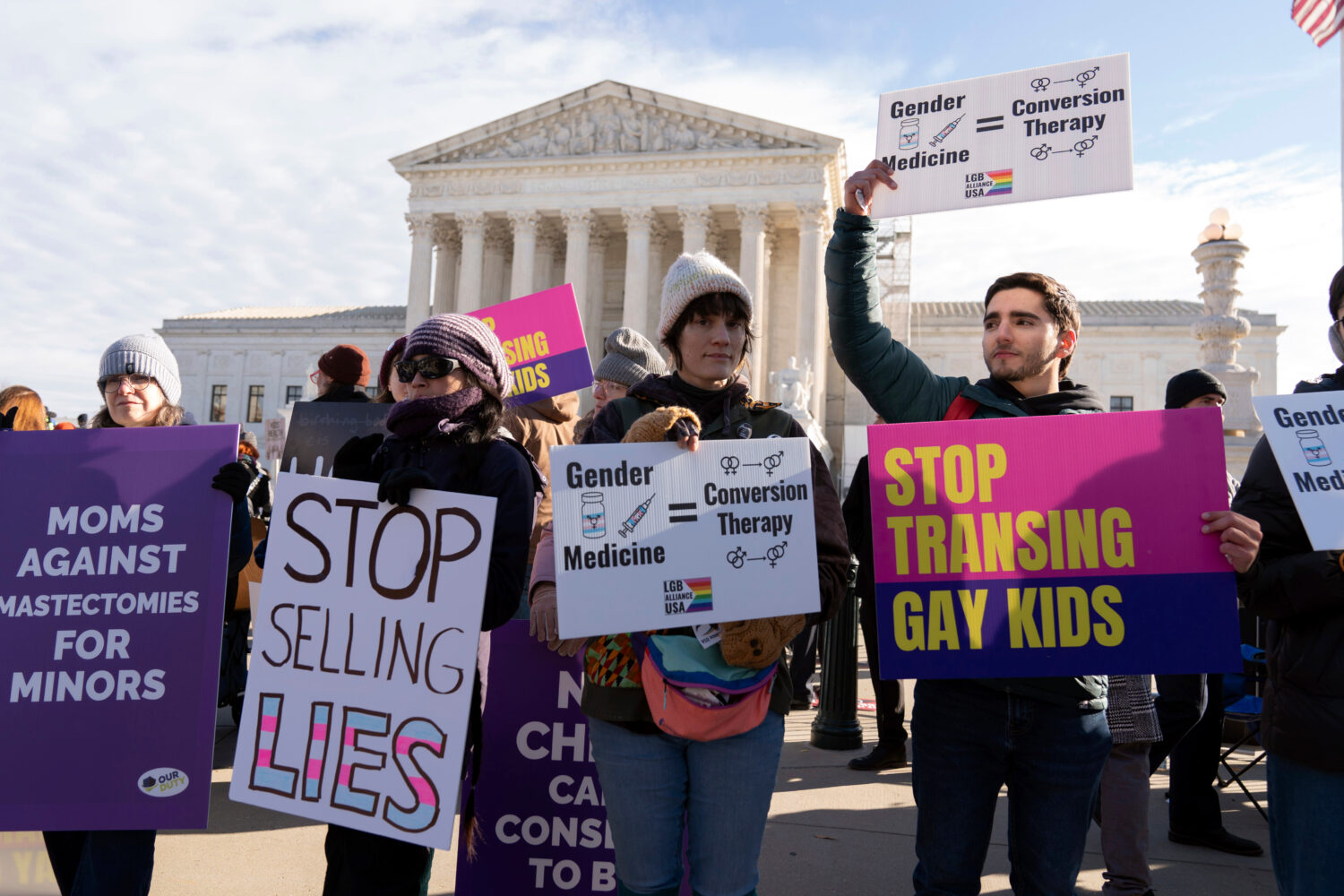
FILE - Demonstrators against transgenders rights protest during a rally outside of the Supreme Court, Dec. 4, 2024, in Washington. (AP Photo/Jose Luis Magana, File)
Credit: AP Photo/Jose Luis Magana
(AP Photo/Jose Luis Magana, File)
At least six major hospitals have agreed to refuse gender-affirming hormones and surgery for transgender young people and agreed instead to make payments to the federal government for patients who want to reverse gender transitions, according to deals with the Department of Justice.
The most recent agreements came last week.
Most of the hospitals had already stopped offering the treatments because of state bans or previous pressure from President Donald Trump’s administration.
The DOJ agreements end investigations into care previously provided and stop the possibility of hospitals being forced to turn over patient records. The Justice Department says some providers have also agreed to help pay medical costs for children to “detransition.”
The hospitals have not admitted to doing anything wrong.
“It’s a really dangerous precedent when the federal government is allowed to politicize any one group of people’s care and end it,” said Eliel Cruz, a cofounder of the Gender Liberation Movement.
Here’s a look at the situation:
The Justice Department announced settlements last week with New York University Langone Hospitals and the University of Pittsburgh Medical Centers. The hospitals agreed not to provide puberty blockers, hormones or gender-affirming surgery — all of which the administration calls “sex-rejecting procedures” — for patients under 19.
“The Department of Justice is fighting to protect our nation’s children and working tirelessly to reach agreements with hospitals to end so-called ‘gender-affirming care’ for minors,” U.S. Attorney General Todd Blanche said in a statement last week.
NYU agreed to pay the federal government $8.5 million and UPMC agreed to pay $950,000 in the deals, which followed similar settlements reached since May with Cleveland Clinic, Connecticut Children’s Hospital, Mount Sinai Health System in New York and Texas Children’s Hospital.
The hospitals have said the deals will not impact how their pediatric mental healthcare programs treat transgender children.
The Trump administration last year published a review urging only therapy and not broader gender-affirming care for youth. But most major medical organizations, including the American Medical Association and the American Academy of Pediatrics, support keeping treatment available.
Mount Sinai is the only one of the six institutions to strike deals so far that had not previously announced its decision.
The hospitals in Texas and Ohio had already stopped care under state bans. The others had announced their policy changes since Trump returned to office in January 2025 and initiated a series of steps targeting the care. He signed an executive order in January 2025 calling to cut federal support for gender transitions for those under 19, and the administration has barred federal Medicaid dollars from covering the treatment.
The care is still available at a variety of hospitals, and clinics and through individual physicians.
One key action from the administration was to subpoena hospitals — first announced in July 2025 — requesting information on gender-affirming care for children, including patients’ names.
NYU Langone said in a statement that agreeing to the settlement protects patients and their families because it removes “the threat that NYU Langone would have to provide the confidential information previously demanded about patients under 18 who received gender-affirming care at our institution.”
Several hospitals have asked courts to block them from being forced to turn over the records, and most prevailed in district courts.
But a ruling last month from an appeals court gave the government’s case a boost.
A 2-1 ruling from the San Francisco-based 9th U.S. Circuit Court of Appeals found that the administration’s goal of ending gender-affirming care for youth is not improper and cannot be used as an argument to stop the subpoenas.
At least 27 states have laws restricting or barring gender-affirming care for minors.
Additionally, more than two dozen hospitals, health systems and clinics in the states without bans have stopped offering the care since last year — including some in states with specific legal protections for it. A group of Democratic state officials have sued the Trump administration over that, saying its efforts unlawfully intimidate medical providers.
Transition surgery for people under 18 is rare, but many transgender youth receive hormones to block puberty or to trigger development of sex-linked characteristics consistent with their gender identity.
Cruz’s Gender Liberation Movement has protested hospitals that have ended the care. Cruz said some families have moved to other states for access to treatment, only to find providers stop it there. Some, he said, have left the country.
He said the agreements with the Trump administration show “who has the courage to do what their calling and education calls them to do — which is do no harm — and those (who do) not.”
Related
 Fat Bear Week opens for Alaska’s heavyweight crown. Can Chunk, the 1,200-pound champ, win again?
 Why retirement planning should start before you retire
 Andy Burnham seeks common ground with Trump at the UN and pitches the UK as a major AI player
 A timeline of US President Donald Trump’s interest in Greenland
 Chandler Fashion Center expanding dining lineup with La Popular Cocina Mexicana
 Messy, troubled, unpredictable: Diplomats describe a world in turmoil as UN opens annual meeting
Comments
0 Comments