
Charlie Kirk murder suspect faces potential death penalty as judge sends case to trial
A Utah judge on Tuesday sided with prosecutors who said they had “overwhelming” evidence that suspect Tyler Robinson shot Charlie Kirk once in the neck as he spoke to a crowd of thousands last September in Orem, Utah.

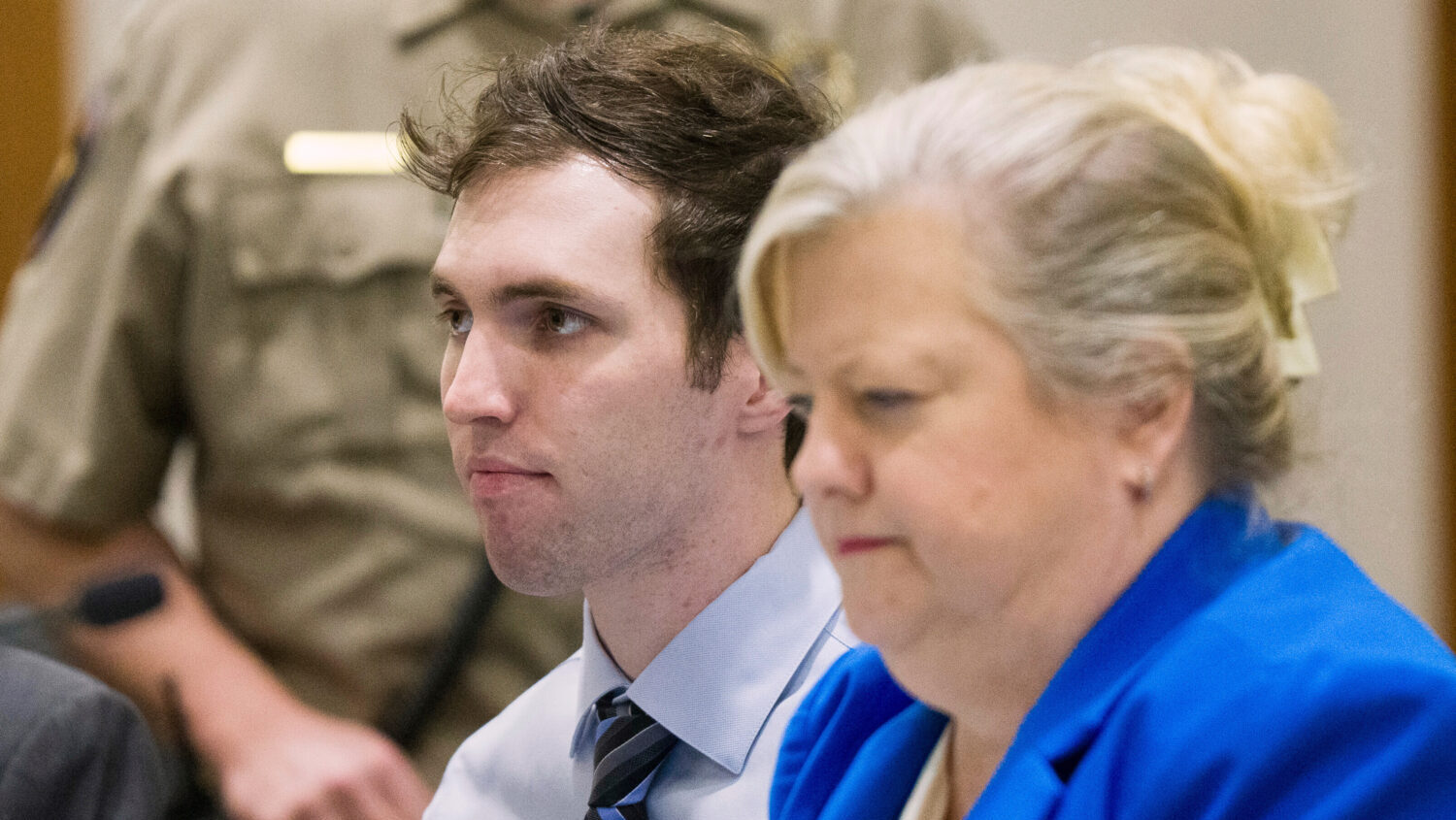
FILE - Tyler Robinson, who is accused of fatally shooting Charlie Kirk, sits beside defense attorney Kathryn Nester during a hearing in 4th District Court in Provo, Utah, on Jan. 16, 2026. (Bethany Baker/The Salt Lake Tribune via AP, File)
Credit: Bethany Baker/Pool The Salt Lake Tribune via AP
(Bethany Baker/The Salt Lake Tribune via AP, File)
PROVO, Utah (AP) — The murder case against the Utah man accused of assassinating conservative activist Charlie Kirk last year is headed for trial, and the defendant could face the death penalty if he’s convicted.
Utah District Judge Tony Graf on Tuesday sided with prosecutors who said they had “overwhelming” evidence that suspect Tyler Robinson shot Kirk once in the neck as the ally of President Donald Trump spoke to a crowd of thousands last September in Orem, Utah.
Robinson’s lawyers tried to block a trial, arguing that prosecutors failed to give enough evidence to show Kirk’s shooting endangered people around him. That’s an aggravating factor under the law that makes Robinson eligible for the death penalty.
Prosecutors said Robinson shot Kirk from a rooftop more than 400 feet (122 meters) away and could have easily missed, injuring or killing other people.
A key factor in charging aggravated murder is whether the shooter knowingly created a risk of death to anyone else as he carried out the killing.
“These circumstances support a reasonable inference that defendant was aware that other individuals were positioned near Mr. Kirk when he fired,” the judge said.
Graf had the option to send the case to trial on a lesser charge of murder, which carries a minimum sentence of 15 years and a maximum of life in prison, said Steve Burton, director of the Utah Defense Attorney Association.
The hearing Tuesday in state court came after prosecutors in July spent five days presenting what they said was “overwhelming” evidence that Tyler Robinson killed the conservative activist while he was speaking at an open-air event on a college campus.
The 23-year-old defendant turned himself in a day after the shooting at Utah Valley University last September. He has not yet entered a plea, and his lawyers have not offered alternative theories for Kirk’s death. They’ve focused instead on blocking the case from proceeding to trial and trying to get the death penalty taken off the table.
Heavy security surrounds the courthouse
Kirk’s parents, Robert and Kathryn Kirk, entered the heavily secured facility arm in arm before the hearing at the Fourth Judicial District Courthouse in Provo. Erika Kirk was seated beside them. The family stepped out during part of a prosecutor’s argument that described the shooting.
A few local members of Kirk’s organization, Turning Point USA, arrived with signs expressing their support for Erika Kirk but were told by security that they could not have them on the court property.
Robinson had no visible reaction to the arguments. His mother, Amber Robinson, watched from the courtroom gallery and his father, Matt Robinson, listened with his head bowed.
Defense says others were not endangered
A “mountain of evidence” shows that Robinson was the killer, including DNA, messages with his romantic partner and posts Robinson made on the communications platform Discord, McBride said.
One of Robinson’s attorneys, Staci Visser, argued that the state was trying to “shoehorn” the case into Utah’s aggravated murder statute. Prior case law requires prosecutors to show that there was a high probability — not merely a possibility — that other people could have been killed, she said.
Kirk was seated on a stage in an elevated position, not immediately near anyone else, when he was shot from a rooftop more than 400 feet (122 meters) away, she noted.
“There is one shot. There is one bullet. There is one victim,” Visser said. “There is zero evidence that there was any action taken towards other people.”
The judge said he would rule from the bench at 5 p.m. local time.
Robinson also faces potential sentencing enhancements if prosecutors can show he targeted Kirk for his political beliefs.
Prosecutors allege a political motive
Before his death, Kirk and the organization he co-founded, Turning Point USA, galvanized the conservative youth vote to help President Donald Trump win a second term.
Prosecutors have argued that an engraved bullet found in the suspected murder weapon shows that Kirk was targeted for how the defendant perceived his politics. The inscription “Hey Facist! CATCH!” is an “overt political reference,” they argued in court documents.
A handwritten note that prosecutors allege Robinson left for his romantic partner read in part, “I had the opportunity to take out Charlie Kirk, and I took it.” They also allege Robinson wrote in a text message about Kirk: “I had enough of his hatred. Some hate can’t be negotiated out.”
Robinson’s attorneys have argued that prosecutors do not have strong enough evidence to prove a political motivation.
In July, investigators presented DNA analyses that they said linked Robinson to the suspected murder weapon — a bolt-action rifle with one spent round — and a tool he allegedly used to engrave the bullet cartridges.
Robinson’s reported romantic partner, Lance Twiggs, told investigators in a recorded interview that Robinson said the day after Kirk was killed that “he wishes he hadn’t done it.” Later that same day — and only about an hour before turning himself in — Robinson posted “it was me at UVU yesterday” in an online chat room, according to investigators.
Defense attorneys challenged the reliability of DNA tests and unsuccessfully fought against the public release of the Twiggs interview, warning prosecutors would characterize it as a confession. Twiggs said in the interview that he never heard Robinson talk about Kirk before the shooting.
Related
 Dave Ramseys says: Teachable moments and rewards
 Famous hip-hop artist Ye set to perform at State Farm Stadium in November
 Sine Kerr ties Katie Hobbs’ veto record to pay-for-play probe
 Burglars swipe bronze name plates from Phoenix cemetery, items from nearby church
 Coffee chain 7 Brew wins auction for shuttered Salad and Go sites, beating Dutch Bros
 Specialized Border Patrol unit joins search for last person missing after Grand Canyon flooding
Comments
0 Comments