
Iranian-backed Houthi rebels renew attacks on key port city, and other developments in the Mideast

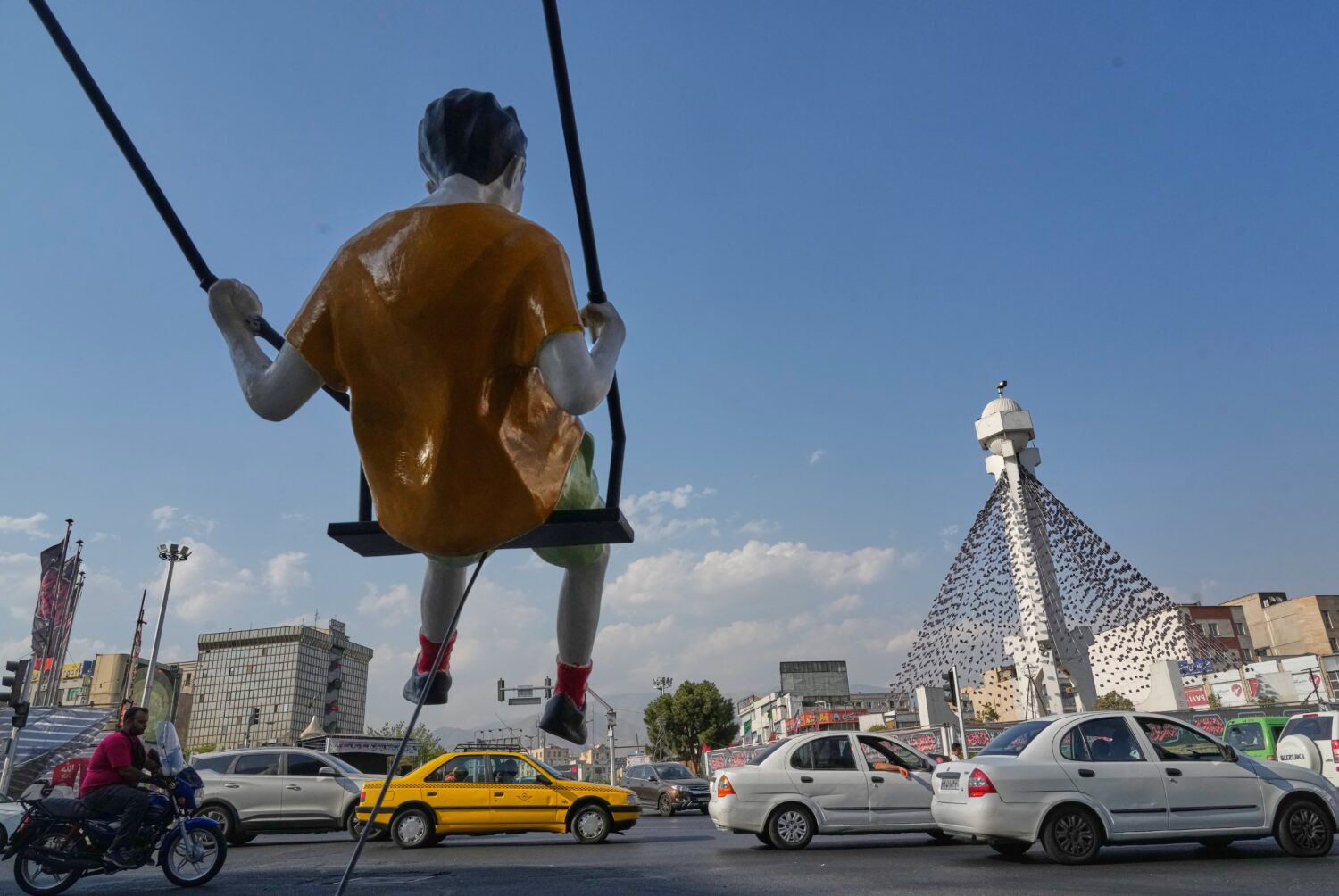
Vehicles drive past a statue of a swinging boy at a square in Tehran, Iran, Monday, Aug. 10, 2026. (AP Photo/Vahid Salemi)
Credit: AP Photo/Vahid Salemi
(AP Photo/Vahid Salemi)
Iranian-backed Houthi rebels renewed their attacks Tuesday on government-controlled areas in Yemen as ongoing violence threatened to reignite the country’s civil war and raised fears over new threats to shipping lanes.
Iran’s foreign minister, meanwhile, underscored Tehran’s stance against reopening the Strait of Hormuz until the U.S. meets its conditions, in comments that came after U.S. President Donald Trump said he was now demanding compensation from Iran “for all of the people that they have killed” in the past.
Here’s a look at the latest developments in the Iran war and the wider Middle East. Full coverage can be found here.
Iranian-backed Houthi rebels in Yemen attacked the government-held port city of Mokha on the Red Sea coast and other areas of the country, deepening fears over threats to strategic shipping routes and a potential return to civil war.
Yemen’s military said the rebels targeted both Mokha and the central province of Marib with missiles and drones but did not provide further details.
The Houthis struck Marib and the eastern province of Hadramout last week, killing dozens of government troops and civilians. They hit Mokha with missiles and drones over the weekend and killed at least seven people, including three troops, according to the Yemeni military.
Mokha is a main port under Yemen’s internationally recognized government and has been renovated to handle shipping to avoid the Houthi-held port of Hodeida.
The strikes came as part of a recent escalation by the Houthis against government forces in Yemen and oil facilities in neighboring Saudi Arabia, which supports the internationally recognized Yemeni government, and the kingdom’s shipping in the Red Sea.
With the Strait of Hormuz effectively shut down by Iran, there has been a renewed focus on the Red Sea and Bab el-Mandeb Strait at Yemen’s southern tip, which is an alternate route for Saudi Arabia to ship its oil to open oceans.
The Houthi attacks could reignite Yemen’s civil war after a four-year hiatus following a 2022 truce, and open a new front in the Middle East war.
Iranian Foreign Minister Abbas Araghchi told reporters in Iran that the country had “astonished the whole world” in the war against the United States and Israel, proving “that it is a tough and invincible power.”
Iran has refused to back down on its demands that the U.S. end its blockade of Iranian ports and fulfill other conditions before Tehran will consider reopening the Strait of Hormuz.
Iran shut down the strait after Israel and the U.S. attacked the country on Feb. 28. The closure of the key waterway — through which roughly one-fifth of the world’s traded oil supplies passed before the war — has kept energy prices a major focus of U.S. politics ahead of November’s midterm elections.
Araghchi said on his Telegram channel that in a call with German Foreign Minister Johann Wadephul late Monday, he had “emphasized that making the Strait of Hormuz secure requires an end to the United States’ aggressive actions and unlawful interventions, including the naval blockade and other violations of U.S. obligations.”
Wadephul said on X that he had emphasized “the Strait of Hormuz needs to be opened unconditionally ensuring free and safe navigation for all.”
Trump said in a social media post he was directing his negotiators to include “compensation from Iran, for all of the people that they have killed and gravely wounded with their roadside bombs and many conflicts.” That was after Iran demanded compensation for the devastation caused to the country by the U.S. and Israeli bombardment over the past five months.
The U.S. president also claimed Monday in an Oval Office exchange with reporters that the U.S. has “100% control” of the Strait of Hormuz, but that the situation remains complex.
He said the U.S. Navy’s blockade of the strait is preventing Iran from selling its oil on the international market, a move that is effectively choking the Iranian economy.
“Now, can they make trouble? Yeah, they can make trouble, but they’re broke,” Trump said. “They have no money. You know, Iran is broke, totally broke. And they’re not paying their soldiers.”
Related
 Thunderstorms outside Valley bring dust, winds to Phoenix metro area
 Police investigating homicide after man dies being detained during southeast Phoenix fight
 Republicans pick nominee for Alabama US House district they redrew after Supreme Court ruling
 Connecticut Democrats weigh generational change as US. Rep. John Larson, 78, faces primary fight
 What to watch Tuesday: Primaries in Wisconsin and Minnesota showcase Democratic divide
 Trump pivots back to sanctions for Iran as other strategies to end his war fizzle
Comments
0 Comments