
What to watch Tuesday: Primaries in Wisconsin and Minnesota showcase Democratic divide

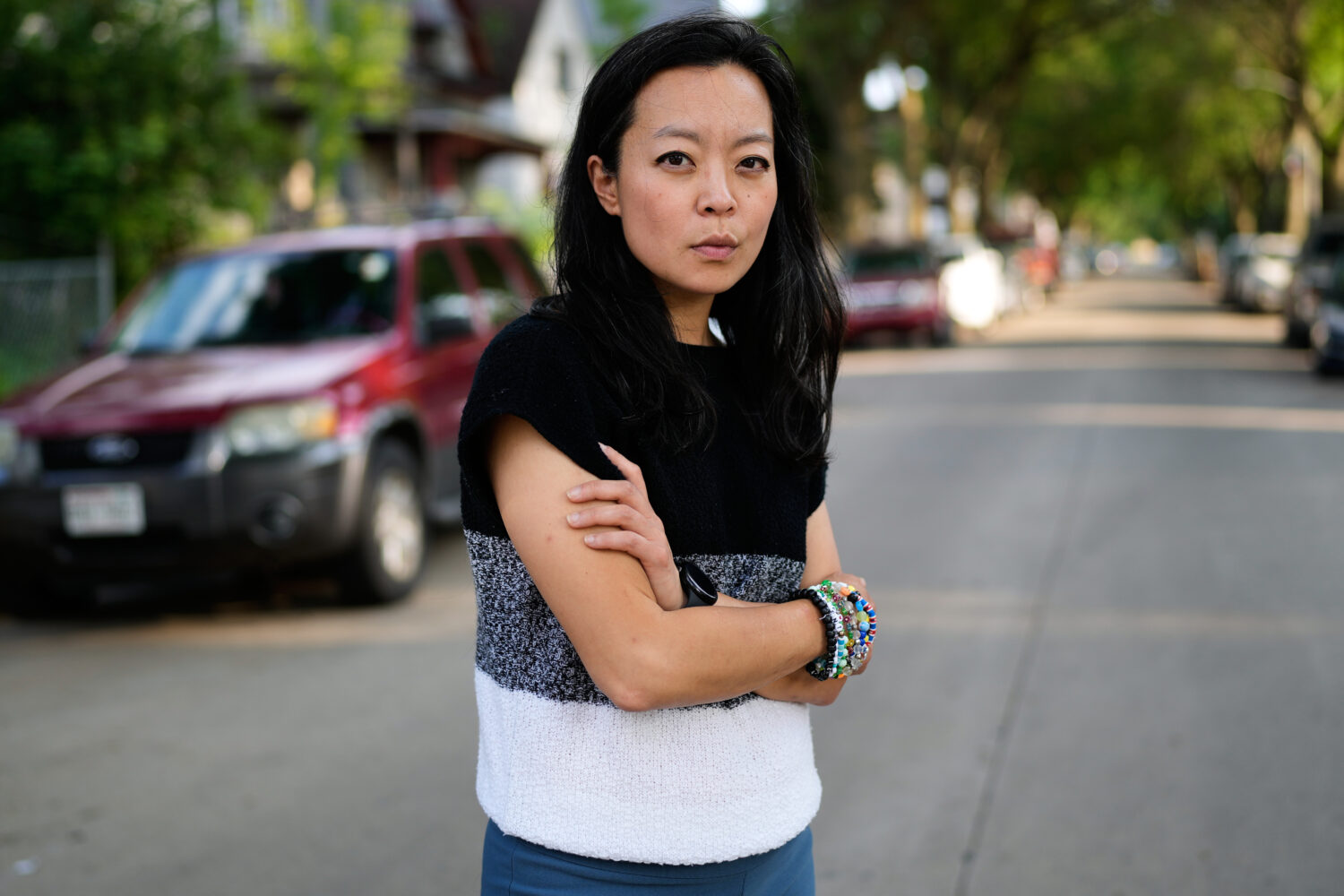
Democratic gubernatorial candidate Francesca Hong poses for a photo Friday, July 24, 2026, in Milwaukee. (AP Photo/Nam Y. Huh)
Credit: AP Photo/Nam Y. Huh
(AP Photo/Nam Y. Huh)
The latest battle over the Democratic ideological divide this year shifts to the upper Midwest on Tuesday as nominating contests for governor in Wisconsin and U.S. senator in Minnesota pit left-wing candidates against more traditional ones.
In Wisconsin, state Rep. Francesca Hong, a self-described democratic socialist, is the front-runner for the party’s nomination for governor in a swing state where winning the governor’s mansion is central to Democrats’ hopes for 2028 and beyond. In Minnesota, Lt. Gov. Peggy Flanagan is running for the nomination for an open Senate seat against centrist Democratic Rep. Angie Craig.
The left vs. center theme is on display in Democratic primaries in multiple states voting Tuesday, with other significant races in places like Alabama and South Carolina.
Here’s what to watch Tuesday night.
Left-leaning candidates have consistently won primaries, capitalizing on Democratic voter frustration at party leadership. Most wins came in reliably liberal urban areas, ranging from New York Cityto Denver. But last week, progressive candidate Abdul El-Sayed broke new ground by winning the party’s nomination for a competitive Senate race in swing state Michigan.
Now Hong and, to a lesser extent, Flanagan are trying to claim even more purple terrain for the left.
President Donald Trump won Wisconsin in 2024 and its state legislature has long been in the hands of the GOP, but Democrats have been bullish about reversing that trend. Hong has maintained a steady lead in public polls against Milwaukee County Executive David Crowley, despite his endorsement by the state’s current governor, Democrat Tony Evers. Hong is also helped by the presence on the ballot of multiple more traditional candidates who will split votes against her, including former Lt. Gov. Mandela Barnes, who dropped out of the race late last month.
Hong has a trail of controversial statements, including vocal support for defunding the police in 2020, a position she now disavows. Prominent Democratic strategists fear that she can win the primary by appealing to the party’s base but is a risk in the general election. The winner of the Democratic primary will face Republican Rep. Tom Tiffany in November.
The stakes are high in the race for Democrats nationally, not just Wisconsin residents. Democrats are hoping to win control of the state legislature, and the governor’s mansion would give them an ability to redraw Wisconsin’s map to counter the edge the GOP built up in this year’s mid-decade redistricting. Without that, their path to a House majority in 2028 becomes challenging.
Democrats will also likely need to win Wisconsin to retake the White House in 2028, and the governor will have a key role in certifying the winner of the election. In 2020, Trump tried to claim Wisconsin despite it being won by Joe Biden, only to be blocked in part by Evers. Tiffany, who has been endorsed by Trump, supported the president’s attempt to overturn the election.
Democrats have reliably won Minnesota during the Trump years, but by shrinking margins, and Republicans believe they have a shot at claiming the open Senate seat given the primary battle there. Craig represents a swing district and has taken more moderate stances, and Flanagan has slammed her for being supported by establishment Democrats and being too accommodating to Trump, especially on immigration.
When the Democratic establishment was worrying about insurgents from the left a generation ago, it fretted about the man who is currently Connecticut’s governor, Ned Lamont.
A wealthy former entrepreneur, Lamont was an obscure Greenwich selectman when he mounted a primary challenge against the state’s senior senator, Joe Lieberman, in 2006. Lamont argued that the centrist Lieberman, who had been the party’s vice presidential nominee in 2000, wasn’t a loyal enough Democrat and leaned too far to the right.
Lamont won that primary, but Lieberman ran in the general election as an independent and kept his Senate seat. Lamont kept running for office and eventually was elected governor in 2018. Now 72, Lamont is being challenged from the left by State Rep. Josh Elliott, 41, who alleges the governor hasn’t fought Trump hard enough and that the solidly Democratic state deserves better than Lamont’s fiscally moderate approach.
For months, Lamont largely ignored Elliott and focused on burnishing his own image. But in a sign of a potentially tightening race, he’s begun to advertise against his challenger.
Also in Connecticut, Rep. John Larson faces his first primary challenge after 14 terms in the House from former Hartford mayor Luke Bronin.
The race follows familiar contours, as Bronin, 47, argues that Larson, 78, is too old and too tied to big money donors. Larson argues his experience and seniority put him in the best position to deliver for his voters.
There is also a growing list of longtime Democrats upset by younger challengers. Will one more name get added on Tuesday night?
Democratic voters in a swath of western Wisconsin are expected to renominate Rebecca Cooke to face two-term Republican Rep. Derek Van Orden in Wisconsin’s 3rd District, setting up a rematch for one of the more competitive seats in the U.S. House.
In 2024, Cooke, a nonprofit executive and small business owner, lost narrowly to Van Orden, who was elected in 2022 and has been a devout supporter of Trump.
The district is a mix of Wisconsin farmland where Republicans have improved over the past decade and mini-metros with state universities giving them small but influential Democratic bases.
Cooke, of Eau Claire, faces Eau Claire City Council President Emily Berge on Tuesday, but Cooke has Democratic institutional support, including from the Democratic Congressional Campaign Committee. Cooke has also raised roughly $8.6 million, far exceeding Berge’s roughly $729,000.
Van Orden is unopposed in Tuesday’s Republican primary.
For a state with little mystery expected in November, South Carolina is again in the spotlight, this time holding primaries to nominate candidates for a special U.S. Senate election.
South Carolina voters voted on June 9 for nominees to statewide office, and then cast ballots in the June 23 primary runoffs for contests where no candidate reached 50% of the vote. And there were several, including GOP nominations for governor and nominations for several congressional seats.
Republican Sen. Lindsey Graham’s death on July 11 at age 71 of an aortic rupture to his heart ensured South Carolina voters were not finished deciding who would be on the November ballot. Voters on Tuesday will be deciding who will succeed the four-term Graham as the Republican nominee in the GOP-heavy Southern state.
They will be choosing from Graham’s sister Darline, who was appointed to fill the vacancy by Gov. Henry McMaster and who has been endorsed by Trump, as well as U.S. Reps. Russell Fry and Ralph Norman, former Rep. Mark Sanford and six other candidates.
If no one reaches 50% of the vote Tuesday — that’s right — there will be another runoff, this one on Aug. 25.
Related
 Thunderstorms outside Valley bring dust, winds to Phoenix metro area
 Police investigating homicide after man dies being detained during southeast Phoenix fight
 Republicans pick nominee for Alabama US House district they redrew after Supreme Court ruling
 Connecticut Democrats weigh generational change as US. Rep. John Larson, 78, faces primary fight
 Trump pivots back to sanctions for Iran as other strategies to end his war fizzle
 Minnesota primary is latest Democratic proxy fight for Senate and a test for Trump-backed hopefuls
Comments
0 Comments