
Department of Health confirms first case of Clade I mpox in Arizona but says public risk low
There are two types of mpox, Clade I and Clade II, and as of Tuesday 34 cases have been reported in the state between the two this year.

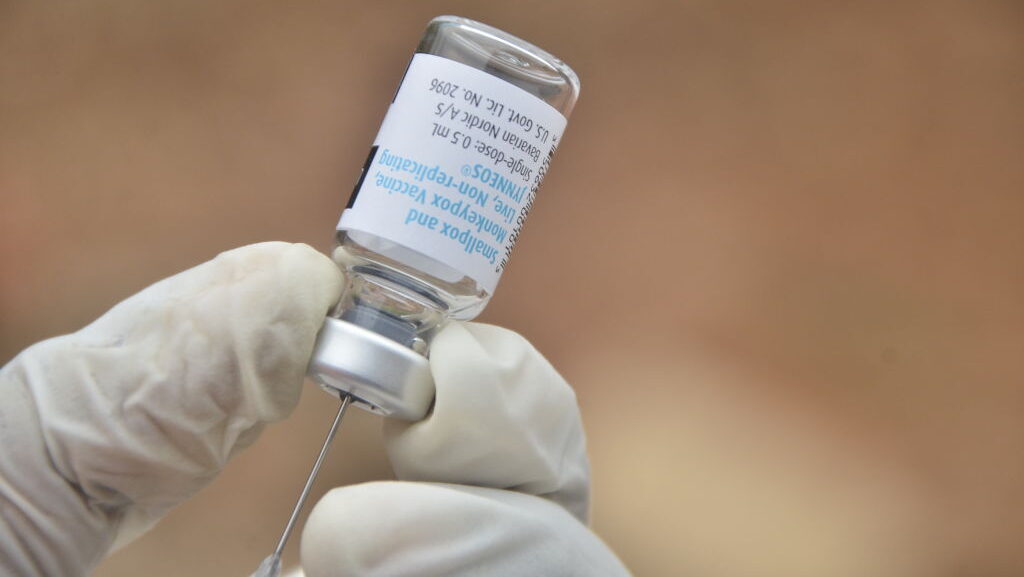
KAMPALA, UGANDA - FEBRUARY 01: Uganda launches the first phase of the vaccination campaign for high-risk groups and health workers as part of the fight against the M pox virus (Mpox) epidemic in Kampala, Uganda on February 01, 2025. The 2,000 doses of vaccine donated by the African Centres for Disease Control and Prevention (Africa CDC) are planned to be injected to 1,000 people by health workers. (Photo by Nicholas Kajoba/Anadolu via Getty Images)
(Photo by Nicholas Kajoba/Anadolu via Getty Images)
The Arizona Department of Health Services (ADHS) confirmed the first case of Clade I mpox in Arizona on Wednesday.
There are two types of mpox, Clade I and Clade II, and as of Tuesday 34 cases have been reported in the state between the two this year. In fact, there have been cases of Clade II mpox spreading in Arizona and the U.S. since 2022.
The department is monitoring them to try and understand the difference between the two types as they have similar symptoms and the same prevention measures are recommended for both.
ADHS was notified this month that a resident contracted the infection while traveling outside the country. The department and public health officials are doing their part to prevent spread of the virus by doing follow-ups with people potentially exposed.
It noted that there is currently no indication of local transmission connected to the case.
ADHS said that Clade I cases are typically found in parts of Africa and are less common in the U.S.
What are the symptoms of Mpox?
Mpox is caused by the monkeypox virus and spread through close contact with someone who is infected. That includes skin-to-skin contact with rash, sores, scabs or bodily fluids as well as sharing bedding, towels, clothing or other items.
It was also noted that mpox can be passed during pregnancy to a baby.
ADHS highlighted that the infection is unlikely to spread through casual contact at stores, offices or on airplanes.
One of the symptoms of mpox is a rash that looks like pimples or blisters, which can be painful or itchy. There are some who also get a fever, headache, muscles aches, swollen lymph nodes, chills, exhaustion or respiratory symptoms.
It was advised that people who believe they are at risk get the JYNNEOS vaccine, which requires two doses for the best protection. The vaccine is most effective within four days of exposure, but might still reduce the infection when received within 14 days.
Those who are exposed should contact a healthcare provider or local health department, get tested and check for symptoms for 21 days after the contact.
People who develop symptoms are also advised to isolate at home and avoid close contact with others.
Those who test positive for mpox are told to isolate at home and stay away from people until their sores have healed, scabs have fallen off and there is a fresh layer of skin. People who are infected that have to be around others should cover their rashes or lesions with clothing, gloves or bandages.
Related
 Arizona health officials issue orders to preserve timely access to flu and COVID vaccines
 Tempe developing first-of-its-kind dementia- and age-friendly park within Kiwanis Park
 State’s 1st primary care medical clinic for autism opens in Phoenix
 Phoenix Children’s uses model patients to teach healthcare workers new skills
 Barrow Neurological Institute gets $5M Arizona health grant for brain injury drug trial
 Mayo Clinic in Phoenix again makes U.S. News & World Report list of 20 best hospitals

Comments
1 Comments
They should have been vaccinated before they traveled to a region where this is more common. Selfish people shouldn't be allowed back in the country if contaminated.