
Task force pushes to scrap Arizona data center tax breaks as energy demand spikes
A task force is recommending Arizona eliminate its tax incentive for data centers to offset power grid demand.

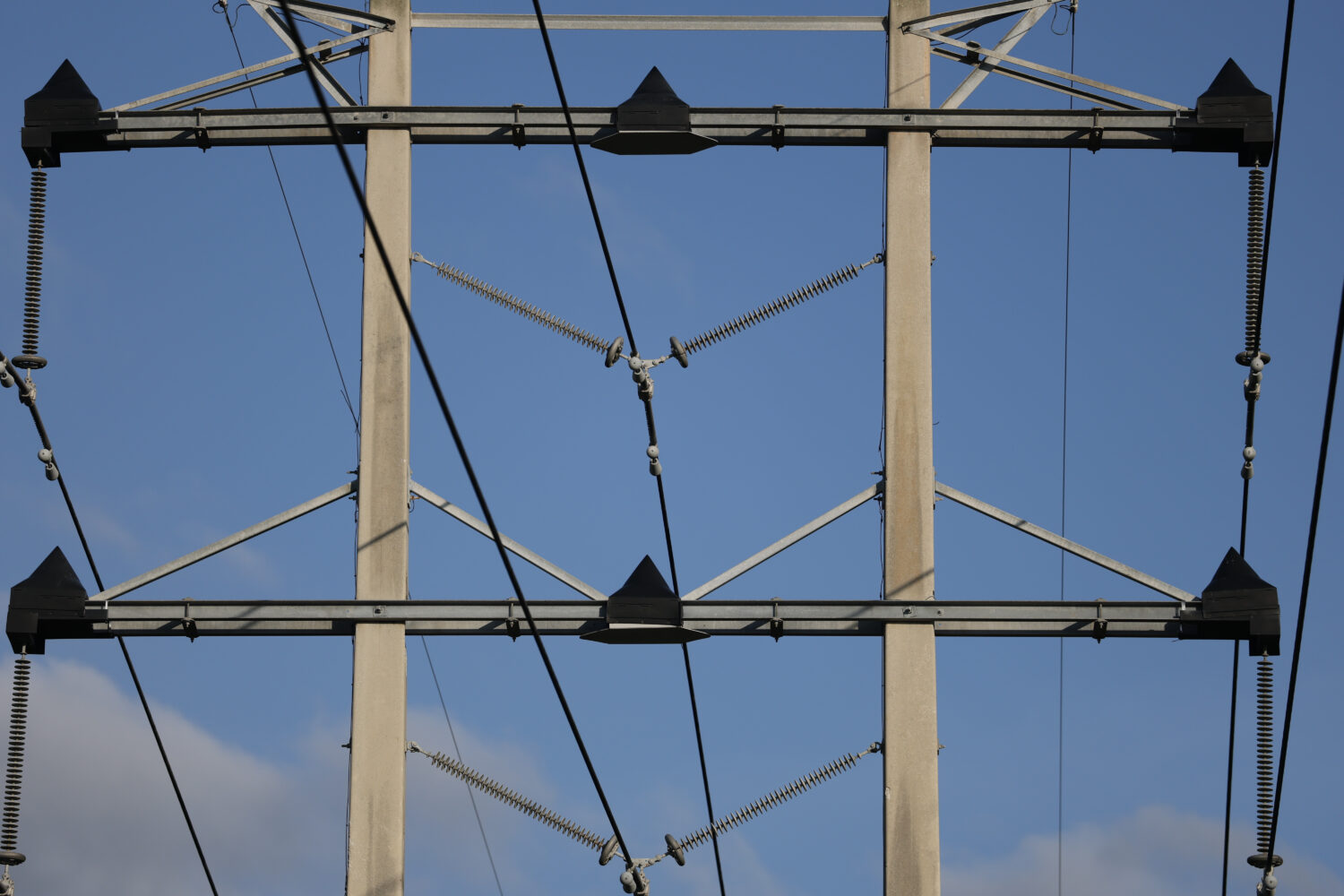
High voltage power lines run along the electrical power grid on January 14, 2026. Arizona data centers could raise tax grid demand by 40%. (Photo by Joe Raedle/Getty Images)
(Photo by Joe Raedle/Getty Images)
PHOENIX — A governor‑appointed task force wants Arizona to eliminate its sales tax incentive for data centers and shift more grid infrastructure costs onto large energy users.
Those two ideas are part of a broad report the Arizona Energy Promise Taskforce sent to Gov. Katie Hobbs on Wednesday.
“I convened this task force to chart a shared path for the affordable and reliable energy future Arizonans deserve, and this task force delivered,” Hobbs said in a press release. “Leaders from the nonprofit, public and private sectors came together and developed common-sense policies that lower costs, reduce bottlenecks and can help us deliver continued prosperity and economic growth.”
The report’s data center recommendations are nonbinding. Any changes to rates would have to be approved either by the state legislature, the Arizona Corporation Commission or public utilities such as Salt River Project.
Arizona’s energy demand is surging
The task force expects Arizona’s electricity demand to increase by 40% over the next 15 years. In August 2025, the state’s three largest utilities set new records for peak demand, higher than even their own forecasts.
Arizona Public Service, the state’s largest regulated utility, projects data centers and large industrial customers will account for nearly 80% of its expected load growth through 2038, adding roughly 2,240 megawatts of peak demand, equivalent to the output of several large power plants.
The plan to eliminate tax breaks for data centers
The task force’s most pointed recommendation is for the Arizona Legislature.
The report calls for state lawmakers to eliminate the current tax incentive for data centers. The current system exempts data centers from all state, county and city sales taxes on equipment purchased.
That incentive, first put in state law in 2013, saves data centers roughly 9 cents on every dollar spent in the Phoenix area. There is no cap on the total tax savings.
Three task force members – the Data Center Coalition, Microsoft and Google – dissented from the proposal.
Other recommendations urge the state to explore “bring your own capacity” programs, in which data centers fund or build their own power supply in coordination with utilities.
The task force also called for incentives for data center developers to engage with communities and invest in locally identified priorities, a response to growing backlash over data center projects in metro Phoenix and Tucson.
Who served on the task force?
Representatives of Google and Microsoft sat on the 36-member task force, which included utility executives, consumer advocates, university presidents, environmental groups, labor representatives and tribal affairs officials.
Maren Mahoney, who directs the Arizona Governor’s Office of Resiliency, said the task force’s work will have a massive impact on the state’s energy future.
“This taskforce and what it has achieved — a majority consensus on solutions for some of Arizona’s biggest energy system challenges and opportunities over the next 10 to 15 years — is an example of leadership with the public’s interest at the forefront,” Mahoney said.
What does the future hold for affordability?
The report arrives as Arizona households face mounting energy costs.
Some areas in the state carry an average energy burden, the share of household income spent on energy bills, as high as 15%, far exceeding the 6% threshold that signals serious affordability concern, explained the report.
Cooling during extreme heat is the single largest driver of Arizona utility bills.
Related
 Former Sen. Sinema warns Chandler to embrace AI data centers or face federal intervention
 As electricity costs rise, everyone wants data centers to pick up their tab. But how?
 Tempe becomes 1st Arizona city to enact strict ban on Automated License Plate Readers
 Phoenix Art Museum receives $5M gift for Asian art expansion
 White powder envelope prompts hazmat response at Arizona Secretary of State’s office
 Arizona gets $28.4M federal grant to help crime victims

Comments
2 Comments
Not only should they get no tax breaks they should have to supply their own power.
Beat me to the comment
Go somewhere that has more resources