
2nd measles case reported in Coconino County with public exposure details
Measles is now spreading in northern Arizona, according to Coconino County health officials.


A woman enters the Andrews County Health Department measles clinic carrying doses of the measles, mumps and rubella vaccine, Tuesday, April 8, 2025, in Andrews, Texas. (Associated Press Photo/Annie Rice)
(Associated Press Photo/Annie Rice)
PHOENIX — Measles is now spreading in northern Arizona, according to Coconino County health officials.
Two people in the county have tested positive. Coconino County Health and Human Services (CCHHS) announced the first case on March 20 and the second on Monday.
Officials with CCHHS are working with state and local partners to notify anyone who may have been exposed. They also released a list of locations and dates where exposure may have occurred.
Measles is also impacting residents in Maricopa County. And these two areas aren’t alone; Arizona is in the middle of a measles outbreak, according to the Arizona Department of Health Services. Arizona has had 280 cases since last June, with 20 hospitalizations.
Measles case reported: signs you could be infected
Anyone who was in one of the locations at the times CCHHS listed could have been infected, as the virus spreads through the air when an infected person breathes, coughs or sneezes.
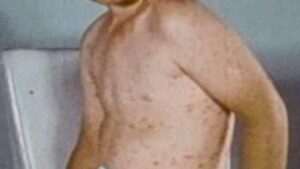
People who may have been exposed should keep an eye out for the early symptoms, which include fever, runny nose, cough, red eyes and a rash that usually appears three to five days later. The rash starts on the face and spreads downward.
Most people recover, but measles can cause serious complications.
Residents of Coconino County should be aware of dangers
About 1 in 20 children with measles develops pneumonia, and about 1 in 1,000 develop brain swelling, which may lead to long‑term problems, according to the Centers for Disease Control and Prevention.
The MMR vaccine is the best protection. Children should receive one dose at 12–15 months and a second at 4–6 years.
According to The Associated Press, vaccination rates have dropped nationwide since the COVID‑19 pandemic.
In Arizona, just over 88% of kindergarteners had both MMR doses in the 2024–25 school year, below the 95% level needed to prevent outbreaks.
The Associated Press contributed to this report.
Related
 Phoenix area’s 1st measles case of year confirmed by county health officials
 Officials confirm deadly case of plague in northern Arizona
 Trump announces that all 50 states are joining Medicaid drug pricing model
 Arizona health officials issue orders to preserve timely access to flu and COVID vaccines
 Tempe developing first-of-its-kind dementia- and age-friendly park within Kiwanis Park
 State’s 1st primary care medical clinic for autism opens in Phoenix

Comments
1 Comments
No problem, Kennedy says take two lee ches while standing on your left foot, watching Fox news and listening to Kid Rock and you'll be good by morning.