
Number of Arizona school districts at high financial risk levels doubles over last year
The number of Arizona school districts whose finances are considered high risk or approaching high risk doubled over the past year.

Watch: Arizona school districts considered at high-risk financially double since last year | 1 min
PHOENIX — The number of Arizona school districts whose finances are considered highest risk or approaching highest risk doubled from nine to 18 over the past year, according to the Arizona Auditor General.
The 2026 financial risk analysis of 207 districts was released on Jan. 23. It found nine districts in the highest financial risk category and nine more approaching that level.
The 2025 Arizona Auditor General analysis identified two highest risk districts and seven approaching that level.
The annual report analyzes a variety of financial risk measures to determine their levels and work out a plan for troubled districts to regain financial stability.
Enrollment, budget limits, revenue and expenses are among the factors considered.
Five of the districts flagged in the new report are in Maricopa County, with the Isaac and Wilson school districts considered highest risk and Balsz, Fountain Hills and Scottsdale Unified approaching highest risk.
Meghan Hieger, director of the Arizona Auditor General Accountability Services Division, said part of the issue is districts seeing students and budget reserves declining, but another factor is that COVID-19 relief funds ran out in 2024.
“Fiscal year 2025 was really the first year that I think we’re seeing some of the impact of districts not having those monies available any longer,” she said.
Will school closures help the districts’ financial risk status?
The new report comes as many districts around the Valley are closing schools as a way to address budget problems amid declining enrollment.
However, the projected savings from the closures might not show up in the financial risk analysis until next year, Hieger explained.
“If a district closed their school either in the end of fiscal year 2025 or they’re just now voting to make that closure, we won’t see the impact of that until we get the data from the year in which that impact or in which the closure is in effect,” she explained.
Hieger said the Auditor General’s office will work with the districts at the high risk levels to help change their financial status moving forward with a personalized action plan.
“What it does is really just walks them through a process of identifying the cause to the risks … and walking through an implementation plan of estimating the financial impact, setting out a timeline that they’re going to put those actions in place. And then, of course, following up and monitoring it,” she said.
Funding for this journalism is made possible by the Arizona Local News Foundation.
Related
 Mesa Public Schools leases vacant space to local private school for kids with autism
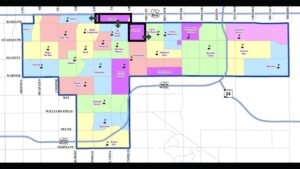 Gilbert, Balsz school districts vote to close schools before 2026-27 year
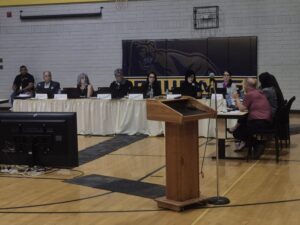 Isaac School District closing 2 Phoenix campuses after board vote overruled
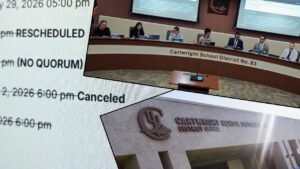 School board protest halts business in Phoenix district
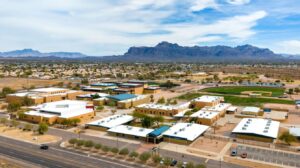 Apache Junction offers a la carte public school classes for ESA families
 Red Mountain High School stays open despite flooding, electrical issues

Comments
10 Comments
It's time to prioritize Education instead of engaging in political agendas and operating indoctrination centers, which includes skipping classes and walking out.
So you have no idea. Must be all of the ski trips being paid for via taxpayer funds. See you on the slopes.
"another factor is that COVID-19 relief funds ran out in 2024."
add that to the schools are losing the 2/3rds the money that is "supposed" to go to directly supporting the student in the classroom (because the kids are leaving) and it is quite obvious the school districts have not been using the funds for what they are supposed to be using the funds for...
there is a lot of talk of esa and fraud.....as their should be. ESA has exposed how fraudulent these schools have been with tax payer finances.