
Arizona groundwater deal stalls as frustration grows on both sides
Arizona's governor and the GOP-controlled Legislature are at odds over regulating groundwater pumping in the state's rural areas — and time is running out.

FILE - This April 18, 2022 photo provided by Mohave County shows orchards near Kingman, Ariz. where irrigation now has been limited. (Mohave County via AP, File)
(Mohave County via AP, File)
WENDEN, Ariz. (AP) — Arizona’s governor and the GOP-controlled Legislature are at odds over regulating groundwater pumping in the state’s rural areas — and time is running out.
Democratic Gov. Katie Hobbs stood with local Republican leaders at the start of this year’s session, optimistic that Republicans in the Legislature would embrace her proposal to create rural groundwater management areas. But almost four months later, talks have stalled and both sides have yet to find a solution to conserve water that’s increasingly becoming more scarce amid a prolonged drought.
Negotiators have not met since early April, Hobbs’ office said. Around the same time, Republicans and some interest groups grew frustrated with a separate proposal by the Arizona Department of Water Resources to reduce overpumping of the Willcox Basin by a percentage that is “unattainable,” said Sen. Tim Dunn, one of the Republican negotiators.
Hobbs has said that if lawmakers adjourn — typically in the summer — with no deal, she will take matters into her own hands.
Disagreements as groundwater supplies dwindle
Water basins in rural Arizona are largely unregulated, and Democrats and Republicans have different visions on how to slow depletion.
Negotiators with the governor’s office and lawmakers have clashed over proposed mandates for reducing groundwater pumping from aquifers. Republicans who introduced their own plan say the one from Democrats is too high. Democrats say the GOP proposal isn’t high enough.
Both sides also disagree on the makeup of local councils that would govern groundwater usage, the water basins that would be included and the pathway for future regulation.
Meanwhile, underground water supplies continue to shrink to the point that some wells in rural areas have gone dry. Residents are faced with the choice of drilling deeper, hauling water or moving, said Sarah Porter, director of the Arizona State University Kyl Center for Water Policy. Managing the groundwater won’t reverse the decline but can slow it, she said.
Arizona’s regulatory framework for managing groundwater was first enacted in 1980 and largely centers on the state’s most populous areas, including Phoenix and Tucson. Porter said the active management areas were designed for growing cities and are too burdensome to apply to rural areas where agriculture is at the heart of local economies.
The Arizona Department of Water Resources has proposed a reduction in pumping for the Willcox Basin, which caused uneasiness among Republicans and others who say that it could hurt businesses.
For years, legislators on both sides of the aisle have failed to get proposals to manage groundwater in rural Arizona to the governor’s desk or signed into law.
In 2022, voters approved a ballot measure to establish an active management area in Douglas, a rural city on Arizona’s southeastern edge. In recent months, Hobbs used executive authority to create the one in the Willcox Basin north of Douglas.
‘Negotiations are going nowhere’
Bipartisan negotiators have not met in several weeks on a framework that would significantly broaden the scope of the Groundwater Management Act, according to multiple people.
“I think it’s pretty clear that the rural groundwater negotiations are going nowhere,” said Democratic state Sen. Priya Sundareshan, one of the negotiators.
In a Tuesday statement, Hobbs accused GOP legislators of refusing to come to the negotiating table.
Dunn said since the last gathering, he’s been meeting regularly with people on what language they might find agreeable despite sour moods over the little time lawmakers have left to make a deal and the Department of Water Resources’ proposal for the Willcox Basin. He said the agency’s proposal doesn’t bode well for talks in the Legislature.
“If that’s their end game, we can’t get there,” Dunn said.
Philip Bashaw, CEO of the Arizona Farm Bureau, which has been involved in crafting the GOP rural groundwater bills the past two years, said the agency’s proposal further frustrated negotiations on the bills and fueled anxiety.
“It definitely took a lot of the air out of the balloon, that’s for sure,” Bashaw said.
Related
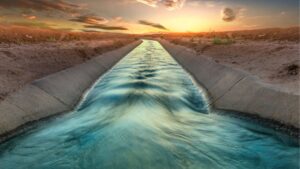 Phoenix is sinking into the ground due to groundwater pumping, new report says
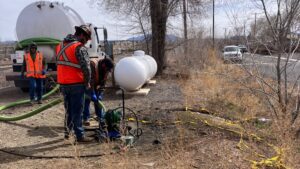 Environmental officials clean up contaminated groundwater aquifer in central Phoenix
 New rules for using purified wastewater give Arizona cities more options
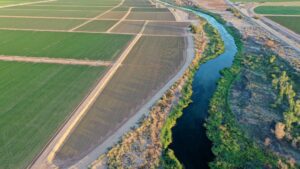 Proposed legislation aims to create Rural Groundwater Management Act
 Arizona joins lawsuit over Colorado River plan, warns of deep water cuts
 Is Arizona’s water supply getting boost from recent storms, El Niño?

Comments
6 Comments
I think many people believe in 100 years we’ll have discovered a viable alternative to fossil fuels (if we’re still able to live in Phoenix by then due to climate change) and thus see overcoming that problem as achievable.
Water shortage is different. Can’t make it, can’t transport it here in sufficient quantity. Our current rate of rise in water consumption is unsustainable. There’s no 100 year plan. No plan, no Phoenix in 2125.
But yeah, let’s worry about who uses the girls restroom.
Thanks for the info. The high cost of pumping out the last 25% of stored water may be the catalyst for desalination or something else.
This is from PBS: The total tab has topped $330 million for the state and the Central Arizona Project to design and build storage basins and recharge water in them by artificial means.
But all that work has left a key detail unsettled: how to withdraw the bank’s water when needed.
No wells or other infrastructure exists to pump the water from recharge sites where nearly 25 percent of the water-bank water is stored, including one of the system’s largest recharge facilities. While water is also banked in some of the cotton, alfalfa and grain fields served by CAP water, and they do have infrastructure to get the water out, many of these facilities are far from urban and tribal users.