
Trump administration says it’s deferring $1B in Medicaid payments to California and Minnesota
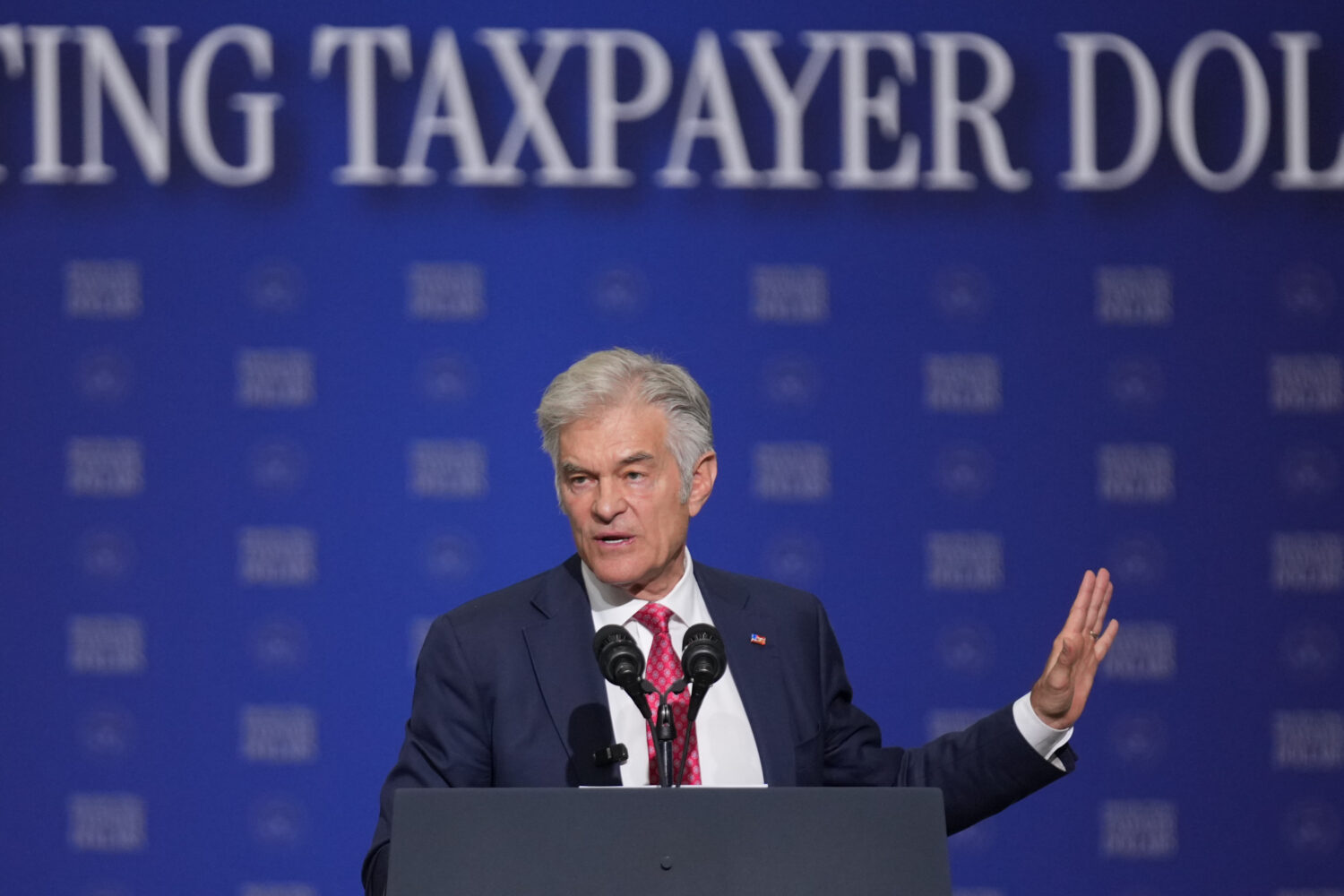
Centers for Medicare & Medicaid Services administrator Dr. Mehmet Oz speaks before Vice President JD Vance at the Wisconsin Air National Guard facility at Milwaukee Mitchell International Airport, Wednesday, July 8, 2026, in Milwaukee. (AP Photo/Mark Schiefelbein, Pool)
Credit: Mark Schiefelbein/Pool AP via AP
(AP Photo/Mark Schiefelbein, Pool)
The Trump administration on Tuesday said it was deferring more than $1 billion in Medicaid payments to Minnesota and California because of “suspected fraud and noncompliance,” the latest in a series of punitive steps it has linked to allegations of fraud in mostly Democratic-led states.
Health Secretary Robert F. Kennedy Jr. said the new actions — which come after previously announced Medicaid funding deferrals in those states — are part of the administration’s strategy to “stop the fraud before it happens” rather than claw back problematic spending after bad actors are prosecuted, as previous administrations had done.
“We have a duty to stop the payments, demand answers and then follow the evidence wherever it leads,” Kennedy told a news conference.
The tactic is part of the administration’s sweeping campaign to show it’s cracking down on fraud and saving taxpayers money when rising healthcare costs and other economic stressors have made affordability a top voter in November’s midterm elections.
California’s Democratic Gov. Gavin Newsom responded by accusing the Republican administration of targeting it for political reasons. Minnesota’s Democratic Gov. Tim Walz suggested the administration was deferring the funds to pay for Trump’s tax cuts to wealthy Americans.
In March, Vice President JD Vance launched a new anti-fraud task force at the request of President Donald Trump, bringing together officials from various departments to use data and technology to identify and investigate suspected wrongful use of federal dollars.
The Trump administration intensified anti-immigration efforts in Minnesota earlier this year, sending in a robust force of Immigration and Customs Enforcement officers whose actions there caused weeks of counterprotests and included the shooting deaths of two civilians. Trump himself has frequently denounced California as a badly governed state.
The strategy has led to some false starts and headaches for states.
In April, for example, the Centers for Medicare & Medicaid Services acknowledged to The Associated Press it made a significant error in figures it used to help justify a fraud probe in New York. Last month, California’s Medicaid director told a congressional committee that CMS had not yet provided “any instances of fraud, waste or abuse” to the state in its justification of a $1.3 billion Medicaid funding deferral announced in May.
And in Minnesota, state officials have been executing a thorough corrective action plan to defray CMS concerns that have led the agency to defer some $260 million in federal money and to threaten future cuts.
Kennedy didn’t specify in Tuesday’s announcement whether the new deferrals — $867.5 million in federal Medicaid payments to California and $199 million to Minnesota — are in addition to, or overlap with, earlier deferrals announced this year.
CMS Administrator Dr. Mehmet Oz didn’t provide any concrete examples of fraud in the two states in justifying the deferrals. He did mention some patterns the agency noticed that it found questionable, including that some providers were billing for four or more patients at the same time, or billing after the date of a Medicaid beneficiary’s death.
Oz also highlighted a fast rate of growth in California’s home care program as a reason for concern. California officials have disputed that idea, explaining that the state’s home care program has grown because of an intentional strategy to keep people out of more expensive nursing homes.
Kennedy and Oz said states could restart the flow of federal funding by providing documentation proving the payments in question were legitimate.
Representatives for California and Minnesota’s Medicaid programs didn’t immediately respond to requests for comment. Officials in both states have previously acknowledged they are working with the federal government to provide the requested information. Oz said Minnesota had already returned documents to the federal government and they were being “reevaluated very carefully.”
Kennedy also suggested Tuesday that he would extend the power to exclude providers from Medicaid, Medicare and other federal health programs to CMS. In the past, that authority has rested solely with his department’s Office of the Inspector General.
“This is going to be a full force multiplier,” HHS Inspector General Thomas March Bell told a news conference. “It’s going to create additional momentum, and it’s going to exclude additional bad actors.”
Related
 Live updates for Arizona’s 2026 primaries: DOJ says it’s watching polls in 3 counties
 Private mission launches to extend life of out-of-gas communication satellitesArson charge lodged against ex-Army soldier in fiery attack on Manhattan federal building
 Bystander severely wounded outside White House says Secret Service failed himClinic safety manager pleads no contest to involuntary manslaughter in boy’s oxygen chamber death
 Wisconsin Democrats want to allow absentee voters to cast a new primary ballot
Comments