
Painting Eisenhower Building would diminish historic character of White House complex, report says

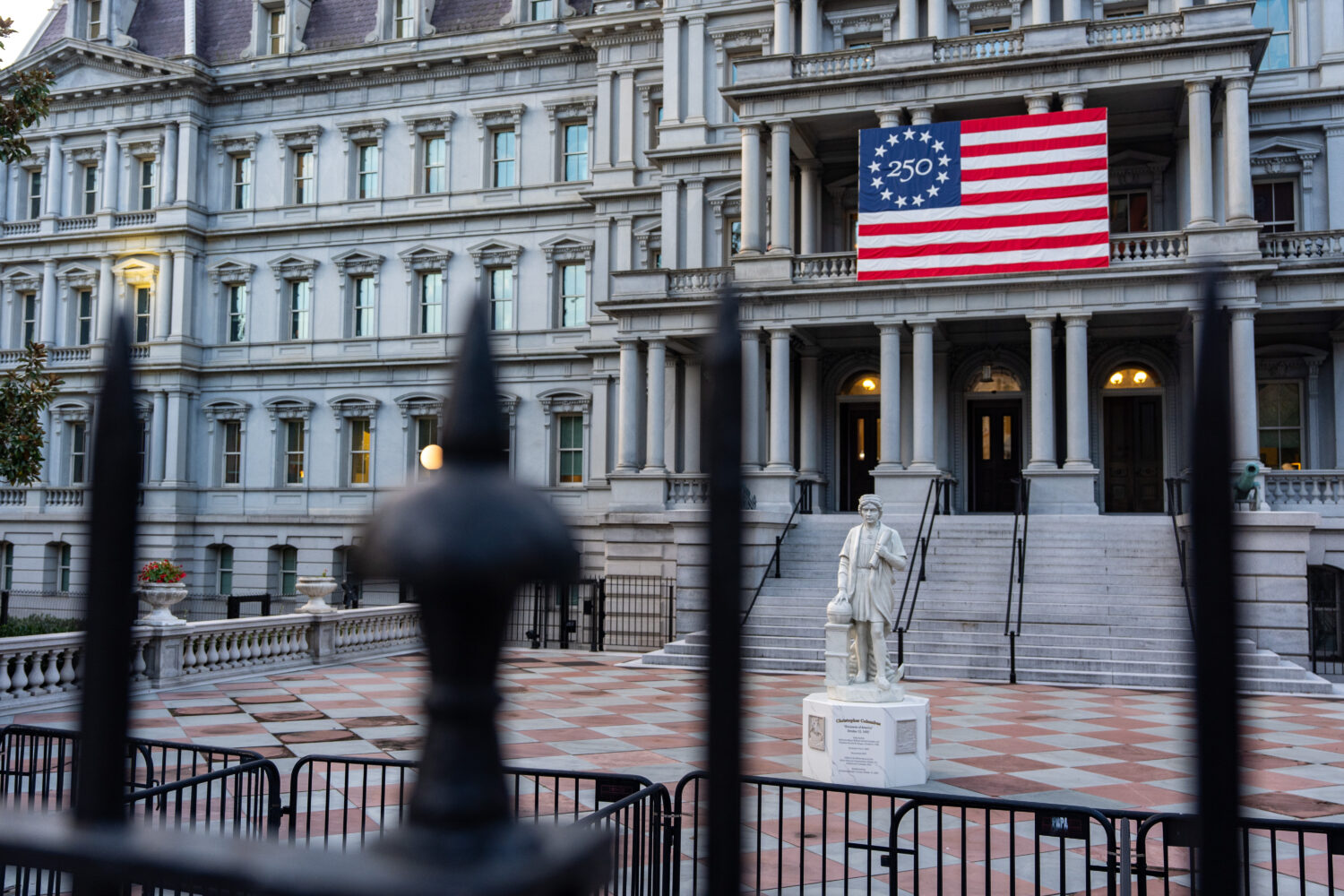
A statue of Christopher Columbus is seen in front of the Eisenhower Executive Office Building on the White House campus, Friday, Oct. 9, 2026, in Washington. (AP Photo/Alex Brandon)
Credit: AP Photo/Alex Brandon
(AP Photo/Alex Brandon)
President Donald Trump’s plan to paint a 19th-century historic landmark building next to the White House would diminish the historic character of the White House complex, the Trump administration concluded in a draft environmental assessment published Friday.
Trump has suggested the massive Eisenhower Executive Office Building be painted as part of his push to remake and beautify the nation’s capital. The plan, estimated to cost at least $7.5 million, has alarmed preservationists, architects, historians and others who argue that granite is not meant to be painted and that paint would trap moisture and degrade the stone.
Trump last year said the building’s gray exterior is a “really bad color.”
The building’s architect, Alfred B. Mullet, hand-selected the construction materials, which “are central to the building’s historic character and original design intent,” the environmental assessment concluded.
The EEOB and the Treasury building, a similarly massive and unpainted stone building on the other side of the White House, form a “visual hierarchy” at the seat of government, which has been in place for 125 years and would be disrupted by a paint job, the report said.
“The White House is by comparison much smaller in size and scale, but its placement at the center of the grounds and white color communicates its importance,” the report said.
The proposed white mineral silica paint is permeable enough that it would be unlikely to trap moisture and damage the stone, the report found. Preliminary tests suggested the paint could eventually be removed with minimal damage to the stone, but more testing is necessary, it said.
An alternative proposal to clean and restore the building while improving the exterior lighting would not affect its historic character, the report found.
Related
 Arizona joins lawsuit over Colorado River plan, warns of deep water cuts
 Four Seasons Resort Scottsdale sold as part of REIT spinoff
 California officials who process ballots from suspected noncitizens risk prosecution, US warns
 Florida art dealer gets nearly 4 years in prison for scheme to sell fake Andy Warhol artworks
 Maricopa County recorder says telling FBI about video was ‘exactly what we should have done’
 DOJ reaches settlement with Mississippi police department it found routinely violated civil rights
Comments
0 Comments