
Sewage spilled into Oak Creek twice during Sedona flooding, officials said
The Bear Wallow Pump Station was overwhelmed by rising floodwaters once Sunday morning and again that night.

Watch: Flash flooding on Oak Creek forced residents in several zones to evacuate. | 18 seconds
A pump station that was overwhelmed by flooding spilled sewage into Oak Creek twice Sunday, authorities said.
Initial reports indicated that about 2,700 gallons of untreated liquid sewage spilled into Oak Creek near the Rancho Sedona RV Park on Bear Wallow Lane about 9:45 a.m., according to city officials.
The Bear Wallow Pump Station was unable to keep up with the flow rate amid heavy rainfall, the city said.
Pumper trucks were sent to the station to help, and operations returned to normal by 11:15 a.m.
More liquid sewage was spilled into Oak Creek about 7 p.m. when the pump station was completely submerged in floodwaters, the city said Monday. The amount of sewage from the second spill is unknown.
Pumper trucks again were deployed, and the station was operating normally by 10 p.m.
Land surface disinfection is underway. Water and soil testing will be completed when it is safe to do so, the city said.
The city said it will provide community updates when more information is available.
Evacuation orders were issued Sunday morning for several neighborhoods and resorts along Oak Creek as the water rose to dangerous levels.
Related
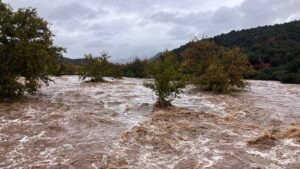 Katie Hobbs declares state of emergency after intense storms, flash flooding across Arizona
 Two 18-year-olds killed in rainy Mesa crash, police seek dark sedan
 Weather suspected in death of man found in Flagstaff stormwater drainage area
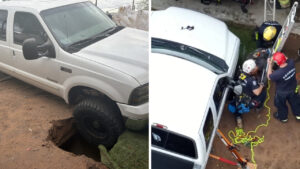 Backyard sinkhole traps Phoenix man, triggering dramatic rescue
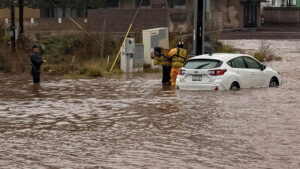 Body of man swept away by floodwaters found in Flagstaff
 Multiple highways across Arizona remain closed after potent weekend storms

Comments
3 Comments
Stop the climate change and prepare, it is here.
Ironic that Oak Creek is flowing sewage on the eve of the election.
Melting glaciers changed the ocean salinity. More water vapor in the air means larger rain events.