
ASU launches first-of-its-kind study of Phoenix-area monsoon
The 2026 monsoon season is underway, but the skies above metro Phoenix are largely dry. A new weather balloon program from ASU tracks storms.

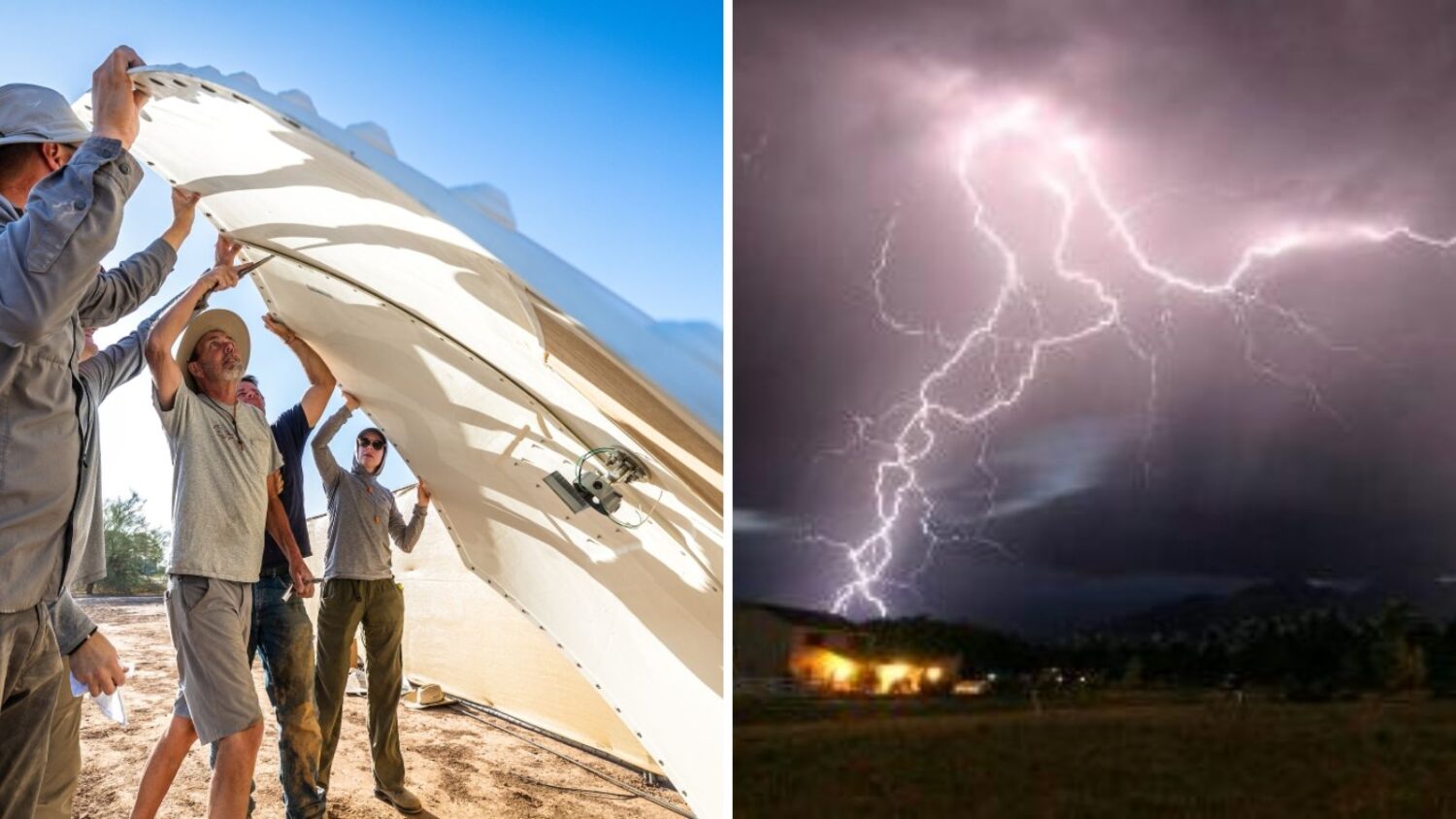
(Photos: ASU News, left; National Weather Service, right)
(Photos: ASU News, left; National Weather Service, right)
With the monsoon season underway, Arizona State University is launching a Department of Energy-funded project to study how extreme heat, urban growth and dust influence storm intensity.
The 16-month project will collect about 50 types of measurements, from soil moisture just below the ground to atmospheric conditions as high as the stratosphere.
Weather balloons, radar and other tools will be used to improve forecasting for some of the monsoon’s most dangerous impacts, according to Vernon Morris, senior associate dean at ASU’s New College of Interdisciplinary Arts and Sciences.
“Our models miss a lot when it comes to rain. We don’t have long lead times when it comes to really severe weather,” Morris told KTAR News 92.3 FM.
Morris said it is the first time researchers have collected this many types of detailed weather and atmospheric measurements in the Phoenix area — and possibly anywhere in the Southwest.
ASU project aims to improve monsoon forecasting in Phoenix area
The study will focus on the Salt River Valley, where urban growth, industry, agriculture and wildfires can all affect weather patterns. The findings will be shared publicly to help scientists, the National Weather Service and the Energy Department increase warning time for severe monsoon-related hazards.
“So dust events, flash flooding events, heavy rain, virga, lightning, extreme winds that come and are associated with both the monsoon and dust storms, air quality aspects as well,” Morris said.
The models created from the data could also help residents, businesses, energy providers, developers and farmers make decisions tied to water shortages, future growth and severe weather risks.
ASU using new radar to study 2026 monsoon season
The project also uses a new, state-of-the-art precipitation radar.
“I think that’s critical just because of the way systems develop here,” Morris said. “A dust storm can spin up and the monsoon may be coming or synoptically coming from a different direction. Fires are always sort of pocketed around us … So, how do these sort of spatial arrangements of environmental phenomena affect the Valley?”
Morris said newer technology is making it possible to combine data from satellites, ground-based radar, drones and weather balloons.
“We’re just now coming into technologies that we can stitch all the data together, space-based technologies, sort of surface-based technologies with our radars, and then these sort of autonomous technologies in terms of the sensors that we can put on drones and on balloons,” Morris said.
The project’s full name is Desert-Urban SysTem IntegratEd AtmospherIc Monsoon. It is shortened to DUSTIEAIM and pronounced “dusty aim.”
“We’re the hottest, largest, fastest growing metropolitan area in the nation,” Morris said. “But there has been no detailed look at how this space is evolving and how do we predict monsoons, and we have a complex monsoon system because it can come from the Gulf of Mexico or it can come and or it comes from the Pacific Ocean.”
KTAR News 92.3 FM’s Balin Overstolz McNair contributed to this report.
Related
 KTAR News Weather Center
 Navajo Nation declares state of emergency over the 'severe' drought conditions
 Parts of metro Phoenix see showers before evening lull, overnight ramp up
 Ground stop issued for Phoenix Sky Harbor due to thunderstorms
 Possibility of showers remains in Phoenix-area forecast after wet weekend
 Storms to continue in Valley with winds causing delays at Phoenix Sky Harbor

Comments
3 Comments
Good answer. Although I never had a big issue with the re-naming, it was the way Napolitano went about it that torqued my jaw. With no disrespect to Lori Piestewa and her sacrifice, it's still The Mountain FKA Squaw Peak to me thanks to Napolitano's strong arm tactics.
I do something similar whenever the subject of Squaw Peak comes up in conversation.
When someone attempts to "correct" me - I then refer to it as "The Mountain Formerly Known as Squaw Peak .."
Kudos to associate dean Morris for referring to the Gulf of Mexico by it's proper, legitimate name.