
Scottsdale Police to roll out AI system for non-emergency calls later this year
Scottsdale Police will roll out an AI dispatch system to handle non-emergency calls, with keywords like "gun" and "help" triggering a live dispatcher.

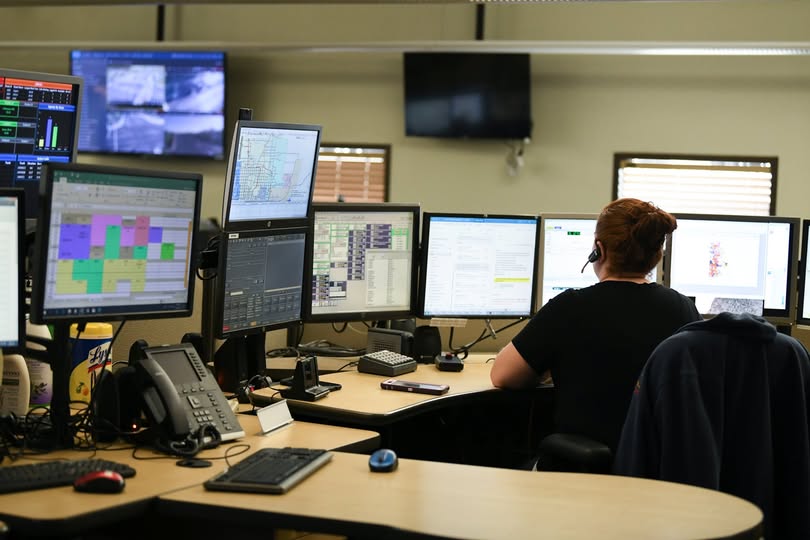
Scottsdale 911 dispatch. (Photo via Scottsdale Police Facebook page).
(Photo via Scottsdale Police Facebook page)
The Scottsdale Police Department is launching an artificial intelligence-assisted call system later this year to handle routine, non-emergency inquiries, city officials announced.
The technology, called Motorola HYPER, will help route non-emergency callers without requiring them to wait for a dispatcher, according to the department.
“Scottsdale has built a reputation for embracing innovation in ways that improve city services and enhance the resident experience,” City Manager Greg Caton said in a news release. “This technology helps us modernize public safety communications while ensuring our dispatch professionals remain focused on emergency response and critical calls for service.”
The rollout comes as the city’s communications center handles a growing volume of non-emergency calls, many involving routine requests that do not require immediate dispatch but can lengthen hold times, police said.
The Phoenix Police Department adopted a similar system for non-emergency calls last year.
How will the AI know when a caller needs to speak to a human dispatcher?
The system is designed to detect emergencies and transfer callers to a live dispatcher when certain keywords are spoken, including “emergency,” “help,” “gun,” “knife,” “weapon,” “fight,” “suicide,” “overdose,” “not breathing,” “shot,” “stabbed,” “rob” and “rape,” among others. Words indicating impairment, such as “drunk,” “intoxicated” or “on drugs,” will also trigger an immediate transfer, according to information provided by the department.
Calls will also be routed to a dispatcher if a caller’s responses indicate the need for an officer, firefighter or paramedic, or if the AI agent cannot understand or hear the caller.
Callers may also request to speak with a dispatcher directly at any time.
Joe LeDuc, a department official, said the platform is meant to assist dispatchers, not replace them.
“Our dispatchers handle an incredible volume of calls every day, and this system is intended to support their work, not replace it,” LeDuc said. “Using technology strategically allows us to improve service for routine requests while ensuring our communications professionals can focus their expertise where it’s needed most.”
Police said the AI platform is expected to reduce hold times, improve access to online reporting tools and streamline navigation of non-emergency services.
Next steps include staff training, testing and a phased deployment.
The department said it will monitor system performance and public feedback throughout the rollout.
Related
 Phoenix Police to begin using AI to help handle calls to nonemergency line
 Phoenix Police Department to launch AI tool to manage nonemergency calls
 4 hospitalized, 1 detained after ‘isolated’ shooting in Mesa, police say
 Valley restaurant group reveals plans for new Italian chophouse
 Parents ask Scottsdale Unified Governing Board to choose least impactful school closure option
 Phoenix man sentenced to 9 years for selling meth on San Carlos Apache Reservation

Comments
0 Comments