
With Valley rattlesnake season starting, here’s how to stay safe around the venomous creatures
Rattlesnakes are a part of life in the desert, so wildlife officials want the public to be informed about how to stay safe around them.

Watch: As temperatures begin to rise, it's that time of year to remember snake safety while out on the trails | 5 mins
PHOENIX — As temperatures rise in the Valley, rattlesnakes start becoming more active as they slither out of their holes after hibernating for the winter.
The venomous creatures are cold-blooded, meaning they rely on warm weather to regulate their body temperatures, digest food and gestate.
They are typically active from March to October, with April being a particularly active time, according to the Arizona Game and Fish Department (AZGFD).
Arizona has 13 rattlesnake species, more than any other state, according to AZGFD. Since it’s hard to live in Arizona for long without hearing that iconic rattle, it’s important to know what to do if you should stumble across one.
Rattlesnakes generally aren’t dangerous unless they are disturbed
Thomas Jones, AZGFD program manager for amphibians and reptiles, said if you do hear or see a rattler, give it plenty of room.
“They’re not out to hurt you,” he said. “They’re out to defend themselves and keep themselves safe. They want pretty much nothing to do with humans, because they basically see humans as giant predators.”
Jones said to watch your step whether you’re at home or outside. And if you’re hiking, make sure to stay on the trail.
While many people fear rattlesnakes, Jones said they are not generally dangerous if they are left alone.
“Most of the bites we hear about in Arizona take place or occur because of someone messing with the snake — trying to move it, trying to kill it or trying to handle it for some reason,” he said.
What to do in the event of a rattlesnake bite
Over 180 rattlesnake bites were reported in the Grand Canyon State last year, according to the Arizona Poison and Drug Information Center. A 3-year-old boy who was on a Scottsdale hiking trail with his grandfather was among the victims.
Three-quarters of the bites were inflicted at residential sites, while more than half occurred in Pima County.
Here are some do’s and don’ts about how to respond in the event of a bite:
- Do call 911 immediately.
- Don’t try to suck out the venom.
- Do stay calm and decrease movement as much as possible.
- Don’t put a tourniquet around the bite.
- Do remove watches and other jewelry from the bite area.
- Don’t use ice or electric shock treatment.
- Do immobilize the bitten extremity and keep it below the heart.
- Don’t administer alcohol or drugs.
Related
 Arizona Human Society offers snake avoidance training for dogs
 Rattlesnake bites 3-year-old boy on Scottsdale hiking trail
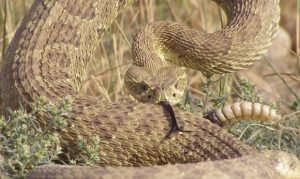 Phoenix man makes medical history as rattlesnake bite patient
 Phoenix-area dog goes viral after saving owner from rattlesnake bite
 Lin’s Grand Buffet opening Gilbert location later this year
 Lawsuit alleges Phoenix police killed father defending his home

Comments
0 Comments