
Phoenix adopts new plan to fight food deserts as nearly half the city lacks fresh-food access
Nearly half of Phoenix residents live in a food desert. The City Council's new five-year plan tackles access, zoning, urban farming and waste reduction.


A shopper browses fresh vegetables at a Market 32 supermarket in South Burlington, Vermont, on June 4, 2026. Nearly half of Phoenix's population lives within a food desert, where access to fresh produce like this is limited. (Robert Nickelsberg/Getty Images)
(Robert Nickelsberg/Getty Images)
The Phoenix City Council on Tuesday adopted a new five-year plan to address food access across the city, replacing an earlier strategy that was largely completed despite being adopted weeks before the COVID-19 pandemic upended supply chains.
The new 2030 Food Action Plan covers 10 broad areas, from healthy-food access and zoning updates to local food production and waste reduction.
More than 2,300 people weighed in on the plan through surveys, focus groups and public workshops, according to the city.
“The 2030 Food Action Plan will not only enhance access to fresh, nutritious food, but will also empower entrepreneurs and businesses to expand our food system and reduce waste,” said Phoenix Mayor Kate Gallego in a statement. “By bolstering partnerships across sectors, the city of Phoenix is creating new opportunities to support urban agriculture, promote locally grown food and strengthen our economy.”
The new plan updates the 2025 Food Action Plan, adopted in March 2020. City officials said the earlier plan was partially propped up by $14 million in American Rescue Plan Act funding that helped launch food distribution, urban farming and waste reduction programs during the pandemic.
Nearly half of Phoenix’s population lives within a food desert, according to city data. Officials said the updated strategy tries to strengthen local food networks while accounting for the city’s fast-paced growth and limited water supply.
Related
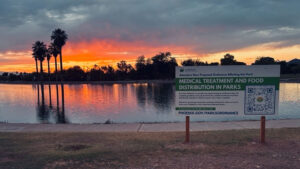 In 6-3 vote, Phoenix City Council adopts regulations on food distribution in parks
 Arizona congressional candidate arrested for alleged threats against judge, attorney’s office
 What’s on your ballot? Prop 318 would restrict transgender athletes in Arizona schools
 Chandler Fashion Center expanding dining lineup with La Popular Cocina Mexicana
 East Valley gym owners opening Arizona’s 1st Mahana Fresh restaurant next door
 Tucson gang member gets nearly 28 years in racketeering case tied to 2 murders

Comments
1 Comments
I hear the problem stated and many meetings, but few actual solutions. If you are going to zone in more smaller grocers, you also need to get rid of the parking minimums that hide them behind acres of parking lot.