
Arizona confirms state’s first New World screwworm case
The confirmation marks the state's first case for New World screwworm, which is known for infesting livestock, pets and wildlife.

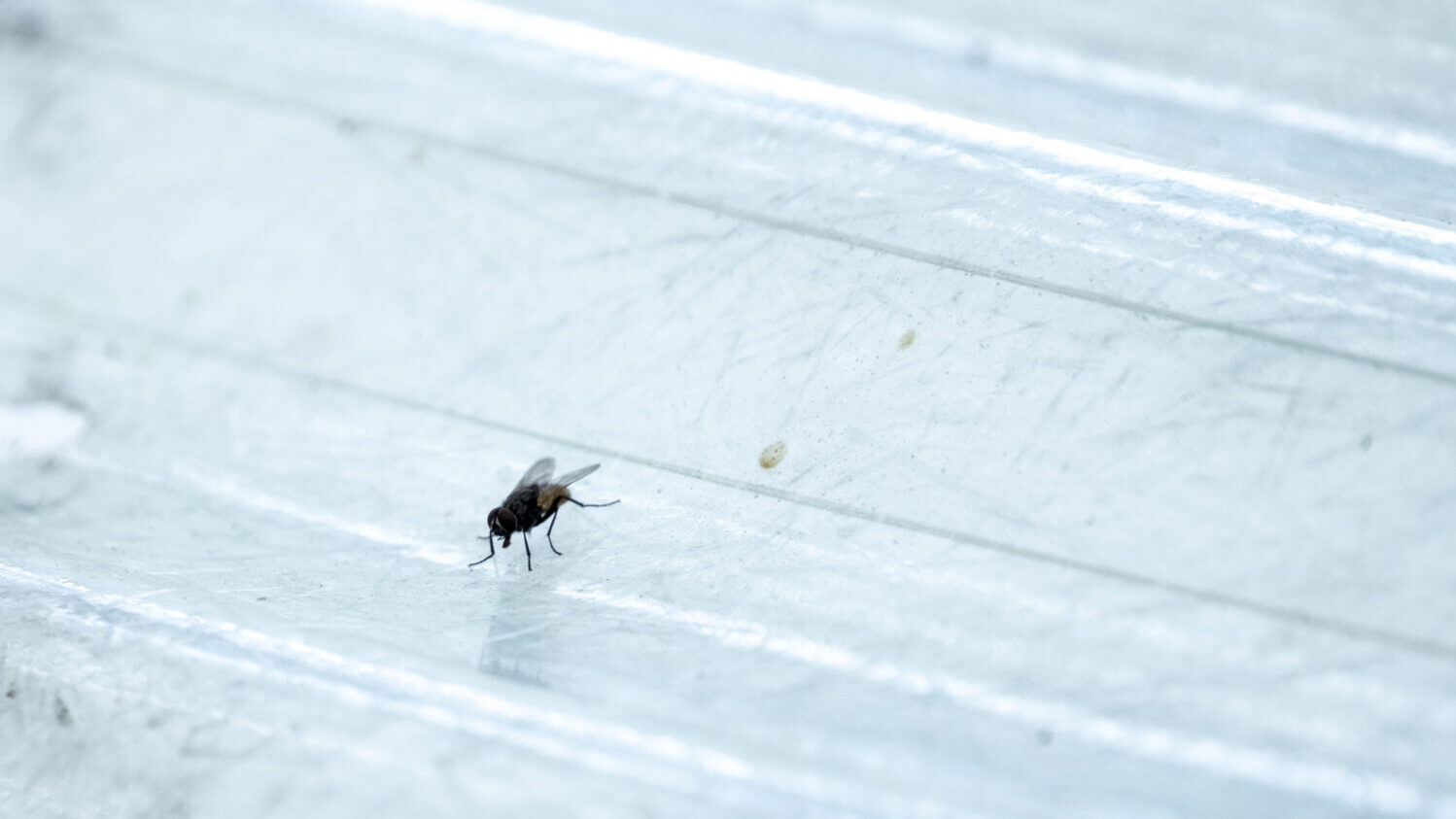
A fly, not known if a New World screwworm, lands on a crate of 80,000 sterile NWS pupae installed at Chapparosa Ranch on June 11, 2026 in La Pryor, Texas. The first case of New World screwworm infection, since its eradication from the country in 1966, was reported in Texas last week by the United States Department of Agriculture. Female NWS flies only mate once in their lifespan, so releasing sterile flies in the affected areas will help suppress their ability to reproduce, according to the USDA. (Photo by Joel Angel Juarez/Getty Images)
(Photo by Joel Angel Juarez/Getty Images)
Arizona agricultural officials confirmed the state’s first case of New World screwworm on Wednesday, identifying the parasitic infestation in a dog in Cochise County.
The infestation was discovered on Monday evening when a local veterinarian examined the dog and found a wound on its back “heavily infested” with maggots consistent with screwworm characteristics. Subsequent scientific testing conducted with federal partners confirmed the species, according to the Arizona Department of Agriculture (AZDA).
The confirmation marks the state’s first case for the parasite, which is known for infesting livestock, pets and wildlife. AZDA is working alongside federal and regional partners to prevent the pest from spreading.
The affected dog remains under veterinary care as state officials work with the attending veterinarian and the owner to gather details for an epidemiological investigation and local response strategy.
The Arizona Department of Health Services later released a statement Wednesday saying there have not been any human cases in the United States, and that the risk to the general public is “very low.”
“The Arizona Department of Health Services (ADHS) is working closely with partners at the Arizona Department of Agriculture, Cochise County Health and Social Services and Arizona Game and Fish Department to monitor the situation and coordinate preparedness efforts to protect the health of Arizona residents,” the public health department said in a statement.
The screwworm — actually a fly larva that burrows into the flesh of livestock, pets and even humans — has threatened the $113 billion U.S. cattle industry.
Containment efforts have cost jobs and trade in border communities, cutting off a source of cattle as the U.S. struggles to rebuild drought-depleted herds. Reopening crossings could help ease that squeeze, although experts caution that shoppers shouldn’t expect quick relief on beef prices.
The parasite was an annual livestock scourge before being largely eradicated in the U.S. in the 1960s. It reappeared in Mexico in 2024, and the first confirmed U.S. case was in Texas in June.
More than 60 cases have been confirmed in Texas and New Mexico, with infestations of cattle, sheep, goats, horses and dogs. Last week, the first case in U.S. wildlife was confirmed after a hunter found screwworm in an elk.
“We have been preparing for this possibility for a long while and are acting swiftly,” Arizona veterinarian Dr. Ryan Wolker said in a news release. “Because of the extensive outreach, coordination and surveillance already in place, Arizona producers, veterinarians and pet owners know what to look for and how to report suspected cases. That preparation is allowing us to move quickly to protect animal health in the state.”
How state, federal authorities are responding
The United States Department of Agriculture (USDA) is initiating federal protocols, which include establishing an Infested Zone, expanding animal surveillance and conducting local outreach.
AZDA is coordinating its efforts with the USDA, neighboring states and Mexican officials to integrate the case into broader regional containment plans. State officials have also requested the release of sterile flies in Cochise County to suppress the fly population and prevent the parasite from establishing itself.
Plans to build a Sterile Fly Dispersal Facility in Douglas, Arizona, remain on track.
Over the past year, AZDA has monitored cases in Texas, New Mexico and Sonora, Mexico. In partnership with the University of Arizona’s Arizona Livestock Incident Response Team (ALIRT), the state has hosted more than 60 workshops, tabletop exercises and training sessions for livestock owners, animal shelters, tribal partners and health professionals.
How to spot and report suspected cases
State officials urge pet owners, livestock operators, hunters and wildlife recreationists to check animals closely for unusual, maggot-infested wounds.
For pets, livestock or sheltered animals: Suspected cases should be reported immediately to AZDA by emailing diseasereporting@azda.gov or calling 602-542-4293 during business hours (Monday through Friday, 8 a.m. to 5 p.m.).
For wildlife: Hunters and outdoor enthusiasts who spot infected wildlife should contact the Arizona Game and Fish Department at 623-236-7201. Callers should note the approximate GPS coordinates of the sighting.
The Associated Press contributed to this report.
Related
 Westbound I-10 closed in Goodyear following multi-vehicle crash, vehicle fire
 AZ Political Podcast: Could Arizona’s midterms bring a Democratic shift?
 Brother-vs-brother knife fight in west Phoenix leaves both hospitalized. Police say one started it
 Outside spending surges in Arizona’s final week as GOP groups pile into Feely, Ciscomani races
 NCAA Women’s Final Four generates ‘momentous’ economic impact
 Calvin Harris to headline final night of 2027 Coors Light Birds Nest

Comments
0 Comments