
MCSO remains under federal oversight. Here’s why Sheriff Jerry Sheridan sees positives
"It's a matter of us making a pitch to the court directly, not through the monitor," Sheridan said. "We're in the process of getting that ready, to ask for a hearing."

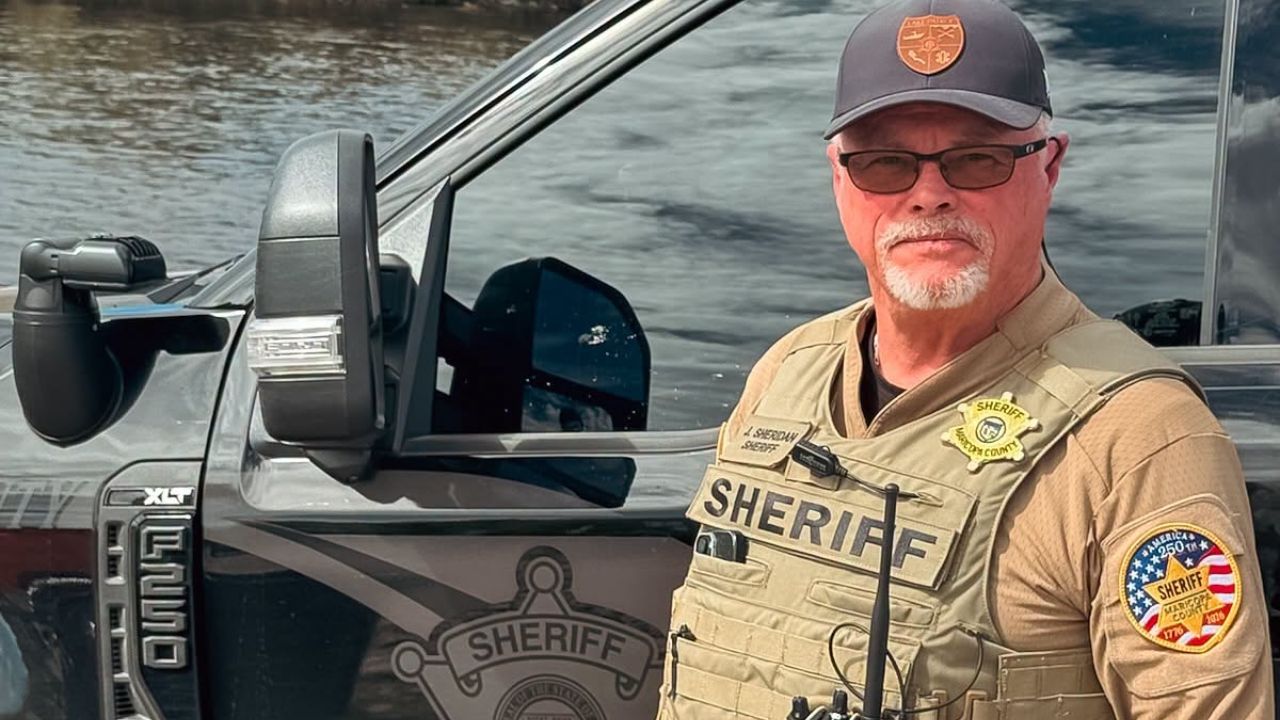
Maricopa County Sheriff Jerry Sheridan is pictured above. (Maricopa County Sheriff's Office file photo via Facebook)
(Maricopa County Sheriff's Office file photo via Facebook)
Although a federal judge rejected Maricopa County’s request to end years of costly federal oversight, Sheriff Jerry Sheridan said he still sees positives in the ruling.
“I’m the eternal optimist, so I saw some good things in the judge’s order, this denial,” Sheridan told KTAR News 92.3 FM’s Arizona’s Morning News on Tuesday. “The positive thing that I got out of it [is that] he recognized that there are many paragraphs the sheriff’s office is in compliance with.”
By “paragraphs,” he meant individual requirements outlined in the court orders.
Last week, U.S. District Judge G. Murray Snow denied a request to end nearly 13 years of federal court oversight of the Maricopa County Sheriff’s Office. The motion was initially filed by the Maricopa County Board of Supervisors.
“Of course, the sheriff’s office and the Department of Justice supported it after the county filed it,” Sheridan said.
Why is Maricopa County under a federal monitor?
The oversight stems from a racial profiling lawsuit filed in 2007 under former longtime Sheriff Joe Arpaio that challenged MCSO’s treatment of Latino drivers during immigration enforcement.
Snow rejected the request in part because the county had not demonstrated compliance with all requirements in the court orders, explaining that MCSO had not done enough to ensure racial profiling would not recur during traffic stops.
“Of course, we at the sheriff’s office feel we’re in compliance with all the paragraphs, but the court-appointed monitor does not believe so,” Sheridan said. “And that lies in the rub.”
Why is it hard for Maricopa County to get out from under the federal monitor?
Sheridan said another challenge is reaching agreement with the ACLU on which court-ordered requirements the sheriff’s office has satisfied.
“The ACLU originally brought this case, and then the Department of Justice, under the Obama administration, joined in on this lawsuit,” Sheridan said. “And so now the Department of Justice is agreeing that we are in compliance and we should be let out of this court order.”
Sheridan said he was encouraged by the judge’s recognition that MCSO is complying with many parts of the order, but he questioned whether the sheriff’s office and the ACLU could reach agreement.
“What he asks is something that — I don’t know how well this is going to work, because he wants the ACLU to agree with us on these paragraphs, and the history of the ACLU has been denial of everything that we’re doing,” Sheridan said.
What does Sheridan say about internal investigations?
Sheridan said dedicated county funding has helped MCSO expand its internal affairs work and sharply reduce its investigation backlog.
“When I took over sheriff, we had about 2,000 backlog internal investigation cases,” he said. “We’ve gotten that down to about 250 now.”
He pointed to that reduction and changes to agency policies and practices as evidence of progress toward compliance.
Sheridan also disputed the ACLU’s concerns about the adequacy of investigations involving Hispanic and Latino drivers.
“There’s a lot that goes into an internal investigation. There’s about a 300-point checklist that we’re required by the court order to go through on each and every internal investigation. … Very, very few of these cases are actually resulting from traffic stops of Hispanic drivers,” Sheridan explained. “And I would say we don’t have any of those in the backlog case, and if they do come in, they get first priority.”
Sheridan said the office is preparing to request a hearing to present its case directly to the judge.
“It’s a matter of us making a pitch to the court directly, not through the monitor,” Sheridan said. “We’re in the process of getting that ready, to ask for a hearing.”
Related
 Federal judge denies request to end federal oversight of Maricopa County Sheriff’s Office
 U.S. Rep. Andy Biggs calls federal oversight of Maricopa County Sheriff's Office a 'grift'
 Maricopa County files motion to end costly federal court oversight of sheriff’s office
 Federal oversight of MCSO is tyrannical, chairman of county board of supervisors says
 Sheriff Sheridan questions accuracy of audit that accuses MCSO of overreporting oversight costs
 Maricopa County Supervisor Thomas Galvin urges DOJ to end direct oversight of Phoenix PD
 Thomas Galvin says he'll prioritize fiscal conservatism, bucking expensive federal monitors

Comments
2 Comments
p.s.
Nice Glamour Shot...the only thing missing is the cowboy hat!
(picture above)
My, how times have changed--along with administrations, for better or worse!?!
The new ICE, along with Phoenix PD's Felix and Vasquez, now make this outfit look like Cub Scouts.