
5 new jaguar detections confirmed in southern Arizona
There were five new jaguar detections confirmed last week in southern Arizona, experts said.

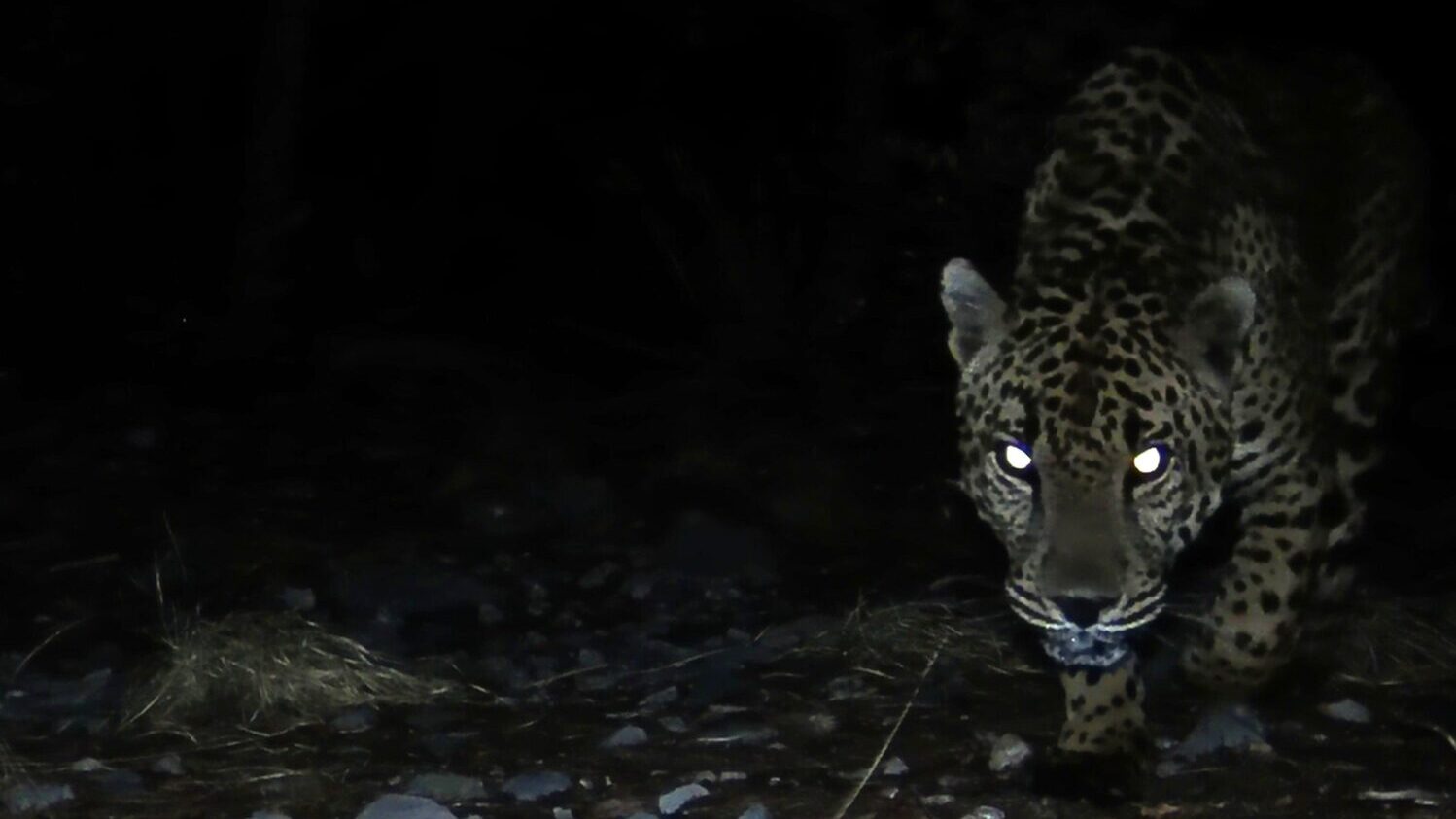
There were five new jaguar detections confirmed last week in southern Arizona, experts said. (Photo via University of Arizona's Wild Cat Research and Conservation Center)
(Photo via University of Arizona's Wild Cat Research and Conservation Center)
PHOENIX — There were five new jaguar detections confirmed last week in southern Arizona, experts said.
The detections of the big cat were made by the University of Arizona’s Jaguar and Ocelot Monitoring Project, which is part of the university’s Wild Cat Research and Conservation Center (WCC).
“This is the fourth jaguar that this project specifically has monitored, with the first one going back to 2011,” WCC biogeographer and coordinator Susan Malusa told KTAR News 92.3 FM on Wednesday. “This is … exciting as it’s our 220th detection.”


The adult male jaguar, known to the science community as Jaguar number four, was first detected in 2023, before he popped back up this summer.
“This most recent one was in the mountains south of Tucson and the specific location isn’t being released for the protection of the animal,” Malusa said.
Why are these jaguar detections important?
Malusa explained that the detections of the big cat show that they are still moving through corridors that connect the borderlands.
“Our research provides data for land managers and other decision-makers to respond to the importance of keeping these pathways open, for jaguars and for many other species that rely on them, especially those that are threatened or endangered,” Malusa said in a press release.
She noted that over 100 years ago jaguar detections used to be as far north as the Grand Canyon, but the species’ range has significantly shrunk and the big cat is now listed as threatened and endangered.
Malusa cited human development and past persecution of predators as the reason for the species’ shrinkage.
She emphasized the importance of the landscape connectivity between Mexico and southern Arizona to the species’ long-term recovery and ecological resilience.
“It speaks well to the fact that this biologically rich region, the Sky Islands, are healthy with these species coming across the border,” Malusa said.
Malusa added that the jaguars are an integral part of the ecosystem as they help regulate prey species.
“These edge population, which is when these northern Jaguars reach into the U.S. are also important for adaptation,” Malusa said. “They’re the only Jaguars we know that can live in both the snow and the extreme heat.”
The project is expanding its monitoring with eDNA, also known as environmental DNA.
“We can collect a sample of water or sediment and get a profile of what species went through the area,” Malusa said.
Since 2011, the project has also tracked three other jaguars in southern Arizona, including the Santa Rita Jaguar, the Huachuca Jaguar and the Chiricahua Jaguar. Unfortunately, the Huachuca Jaguar was found dead in Sonora, Mexico in 2018.
Monitoring for the project is done year-round by scientists, students and trained citizen scientists.
KTAR News 92.3 FM’s Heidi Hommel contributed to this report.
Related
 Say cheese: Rare jaguar sighting caught on camera in southern Arizona mountain range
 Newest Arizona jaguar named by members of Tohono O'odham Nation
 Say hello to Arizona's newest jaguar, Center for Biological Diversity says
 2 in custody after vehicle crashes through gate, hits small plane at Scottsdale Airport
 Scottsdale ranked as best city in U.S. to drive in
 Investigation underway after woman found dead in Phoenix

Comments
5 Comments
"She emphasized the importance of the landscape connectivity between Mexico and southern Arizona to the species’ long-term recovery and ecological resilience."
I'm quite sure UC1 and DHS Barbie will address this border incursion posthaste.
Guess trump needs to get busy securing that stretch of border!
I live south of the 101 near 51st Ave.
Neighbor's camera filmed a bobcat across the street!
Never seen one around here in 35 years...Yikes!