
Scottsdale Unified broke open meeting law during school closure process, prosecutors say
The district's board will vote Oct. 6 on closures. Parents say the committee overlooked financial data and alternatives to shutting down area schools.

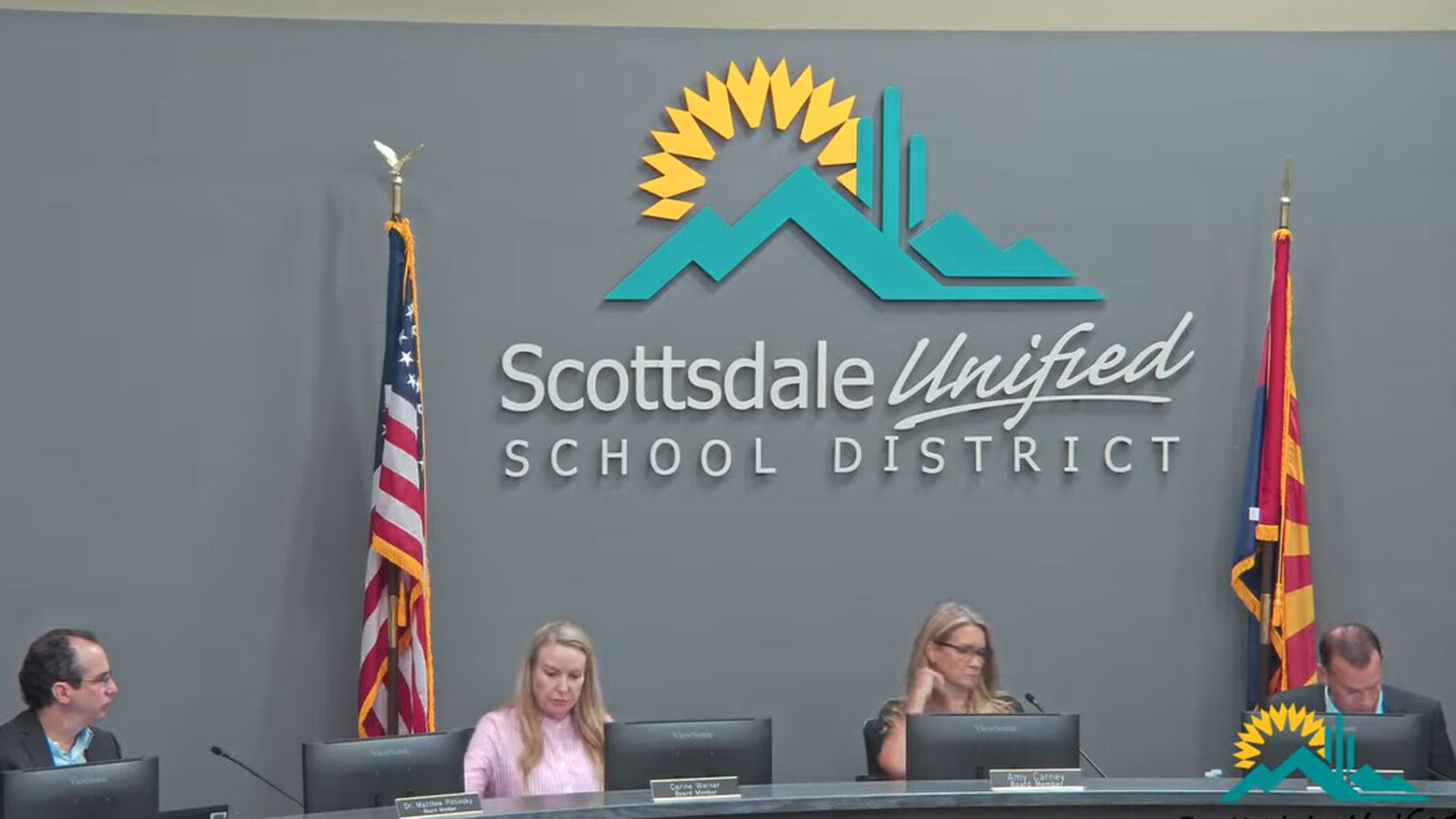
The Scottsdale Unified School District is seen during its Sept. 8 meeting. (Screenshot)
(Screenshot)
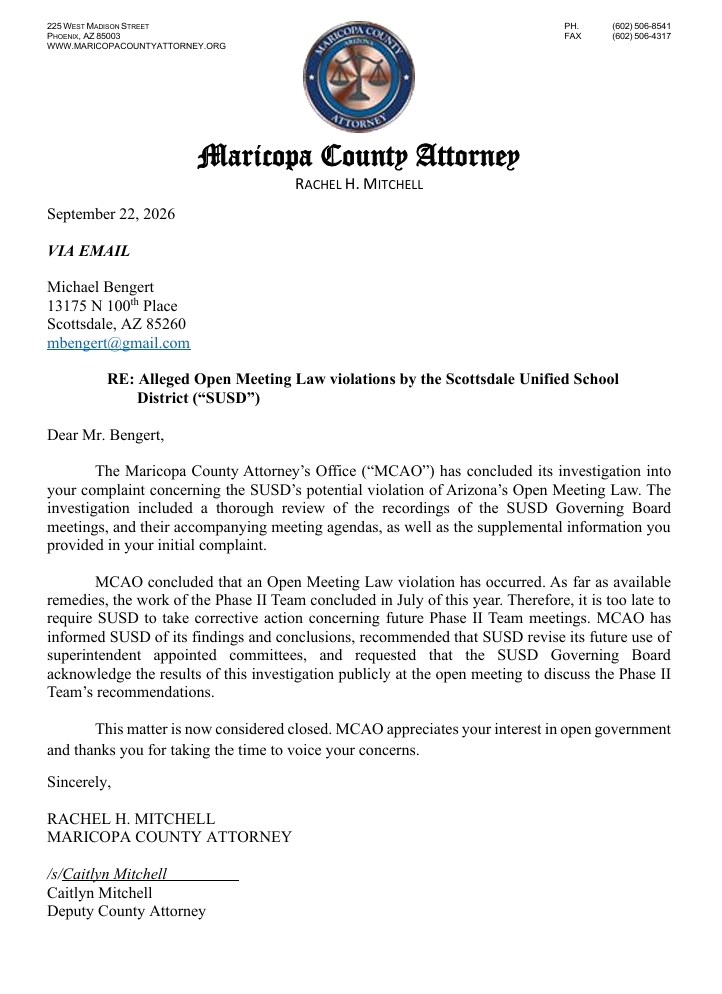
The Maricopa County Attorney’s Office says the Scottsdale Unified School District violated open meeting laws when drawing up options for closing schools.
The finding comes days before the district’s governing board votes Oct. 6 on closing multiple schools because of declining enrollment.
The Phase 2 committee, which developed the three closure options before the board, was led by people the superintendent appointed and included representatives from each school in the district.
The county attorney’s office responded to a complaint from a committee member, but said it could not order the district to fix the problem because the committee had already finished its work.
“The work of the Phase II Team concluded in July of this year. Therefore, it is too late to require SUSD to take corrective action concerning future Phase II Team meetings,” the office wrote.
In a separate letter, the office urged the governing board to reconsider using advisory groups appointed by the superintendent.
Committee member Ellen Douglass said the question of public access came up early, when members asked whether their meetings would be recorded.
“We had a whole conversation about should the meetings be recorded and the answer was no and that they would be posting the links and various things on the website,” she said.
Which data decided Scottsdale school closures?
Some committee members say the problem went beyond who could attend the meetings to what was considered in them.
Samantha Fahndrich, a Laguna Elementary School parent and Phase 2 committee member, said the committee reviewed data from every school in the district, but not the full picture.
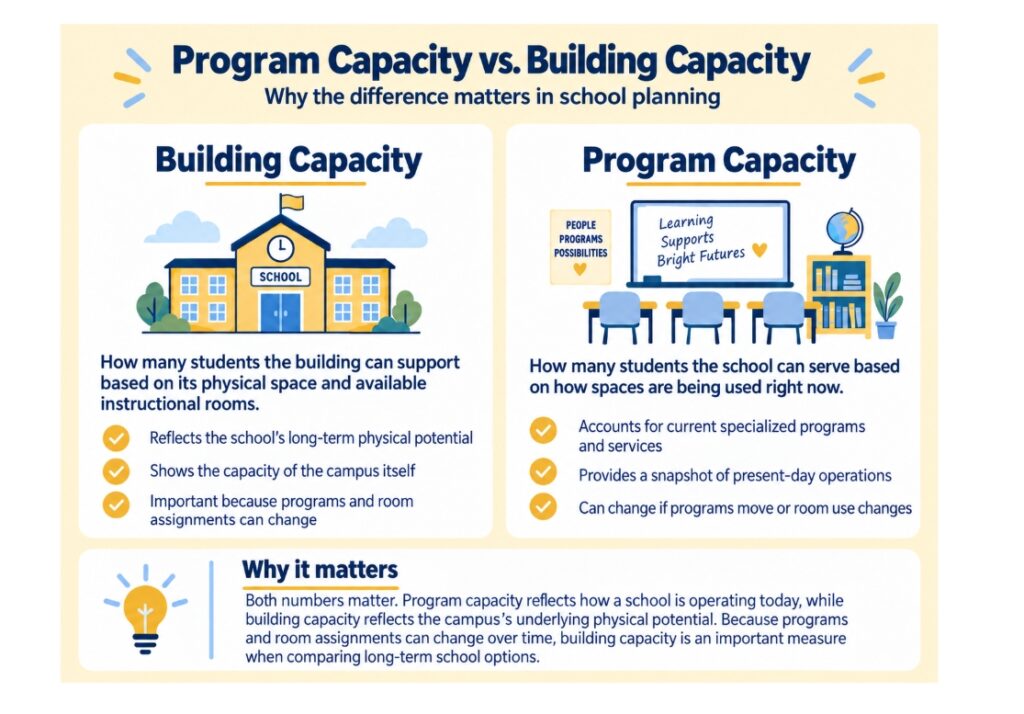
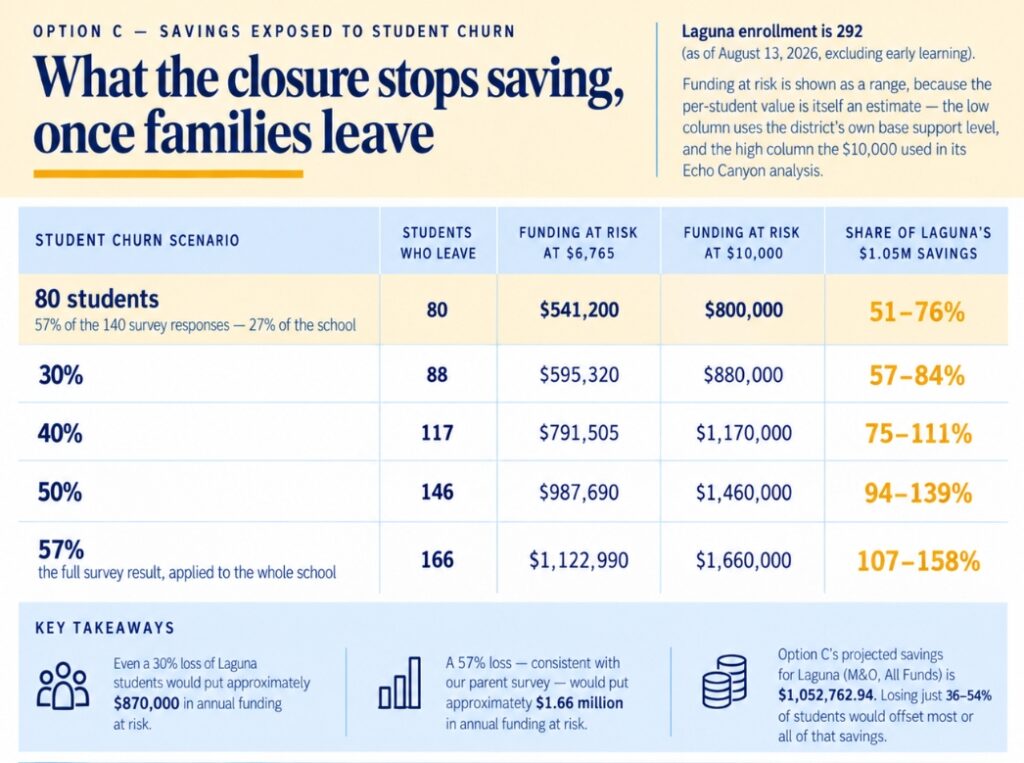
“When they came to us with those options, it was only based really on capacity numbers. They did not use the financial numbers at all,” she said. “They also didn’t … let us come up with ideas of what else can we do so that we don’t need to close schools.”
Fahndrich said that if operating costs had been part of the analysis, Laguna could have been considered as a place to send students from other closed schools. Instead, it appears on all three closure options before the board.
A Scottsdale Unified spokesperson said the district looked at the future of every school, along with current enrollment trends.
“The team carefully considered enrollment trends and projections, facility utilization, operational and financial impacts, academic programs, geography, transportation and the potential effects on students, staff and families. … Disagreement with an option should not be confused with an absence of process or analysis,” the spokesperson said.
Funding for this journalism is made possible by the Arizona Local News Foundation.
Subscribe to the KTAR Eyes on Education newsletter to get our top education stories, exclusive guest interviews and more to your email inbox.
Related
 KTAR’s October ‘Pay Tribute to a Teacher’ award goes to Gilbert first-grade teacher
 New state assessment program helps Arizona teachers use data to personalize lessons
 Arizona ESA parent charged with submitting forged receipts for musical instruments
 $600,000 NASA grant to help Arizona universities teach AI for aerospace jobs
 Arizona Supreme Court approves GCU College of Law without ABA accreditation
 Peoria Unified faces $650K claim over alleged sexual misconduct by Mr. ORNG
Comments
0 Comments