
Arizona’s Hermosa mine becomes first in US to finish new fast-track federal permitting
South32's Hermosa mine cleared federal permitting in just two years, spotlighting a mining boom and a lone critic fighting to slow it down.

Watch: South32 Hermosa mine in Arizona becomes 1st in US to finish FAST-41 federal permitting | 4 mins
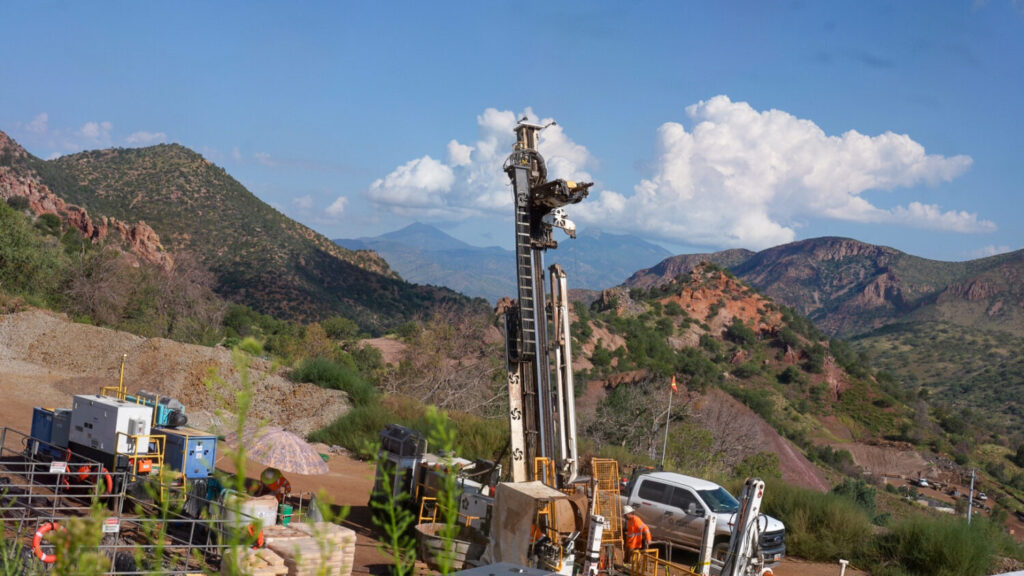
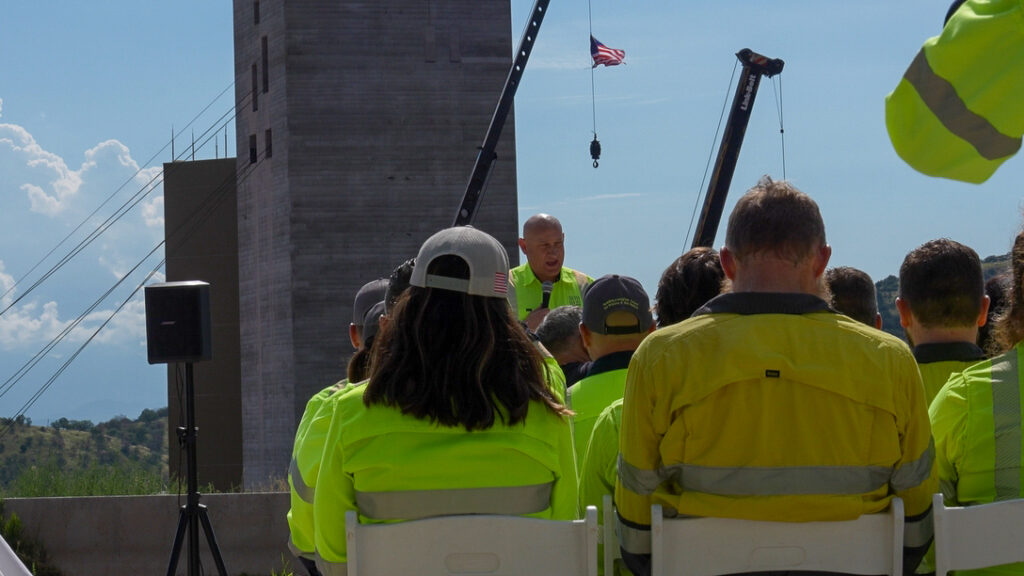
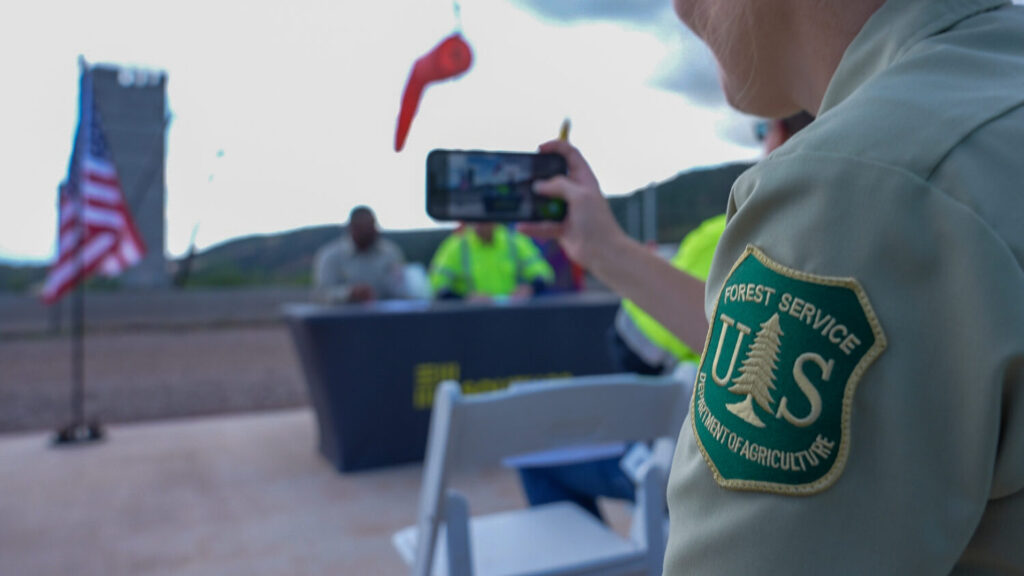
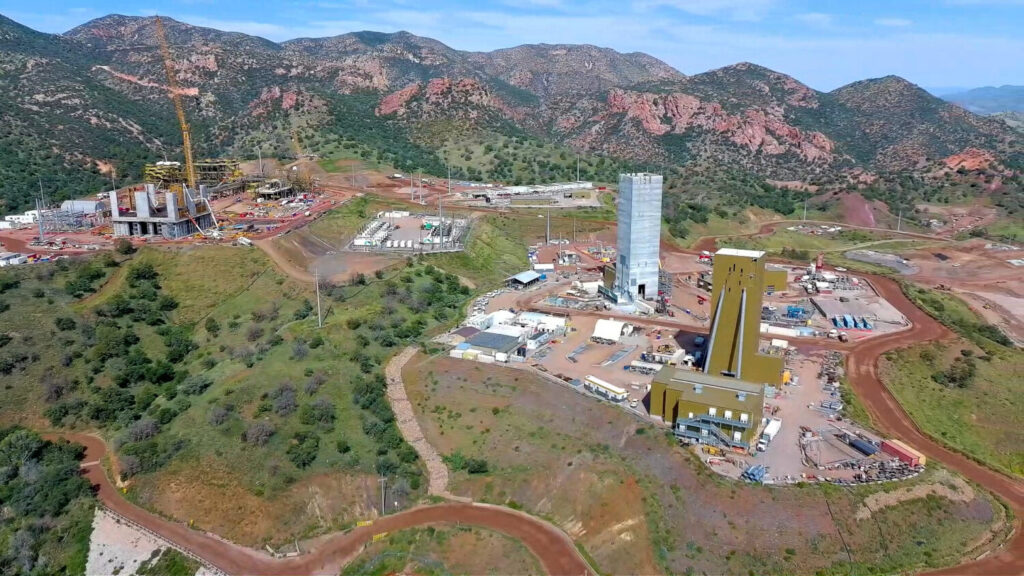
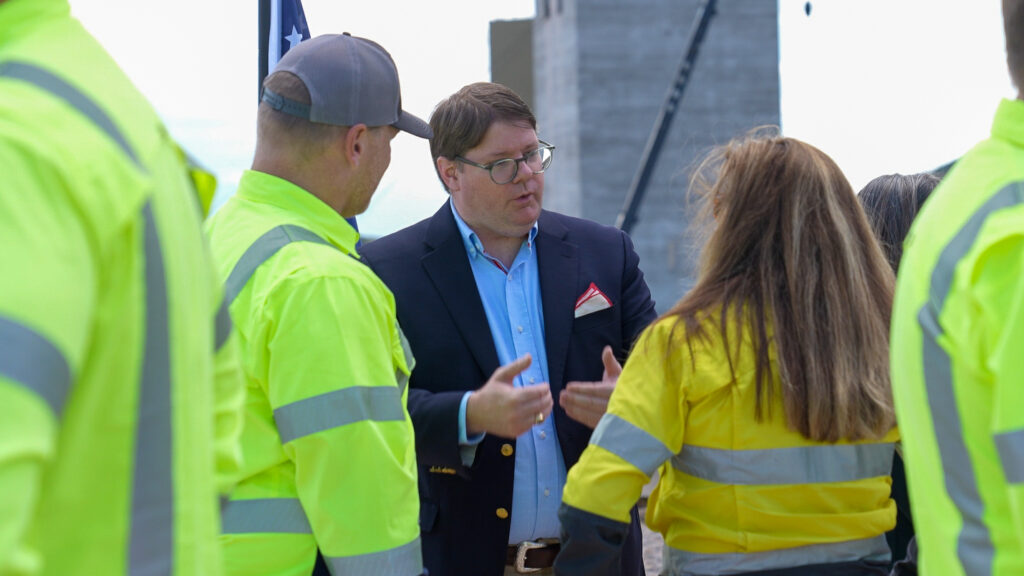
PATAGONIA — Buses unloaded groups of visitors at the South32 Hermosa mine site Wednesday. Employees filled a landing pad with a view overlooking the Patagonia Mountains. The throngs of mine employees and their high-visibility gear made the visitors stand out.
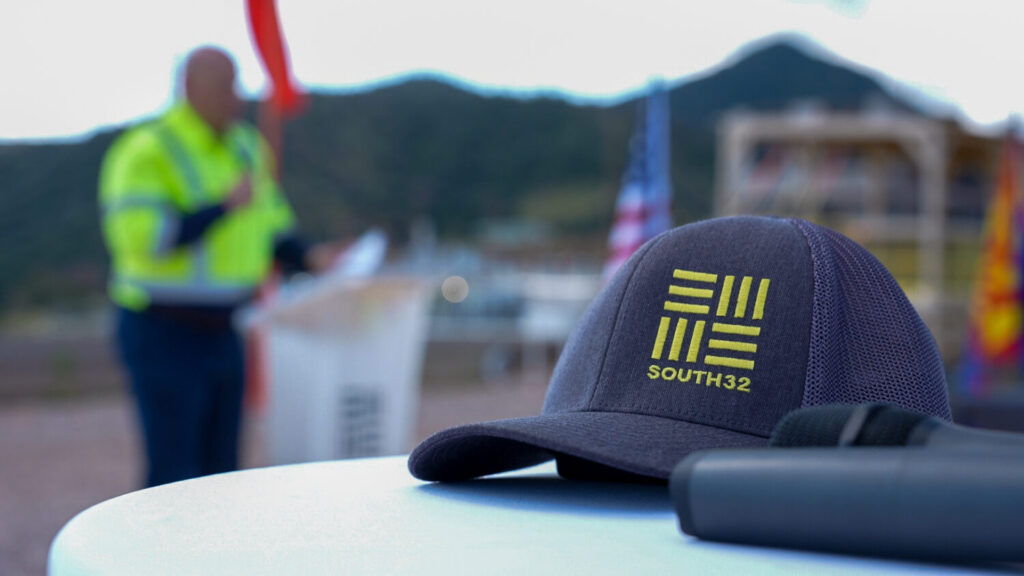
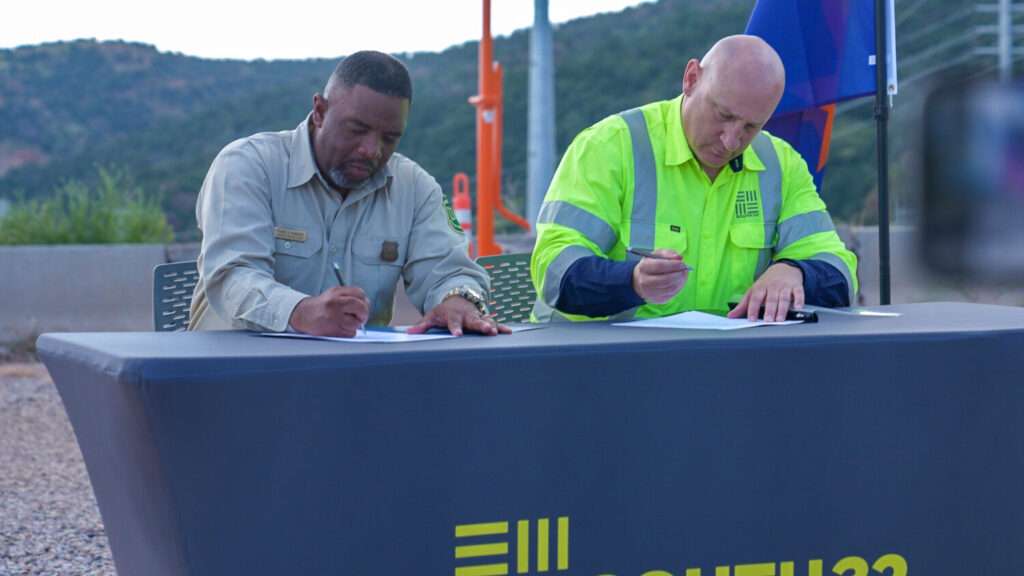
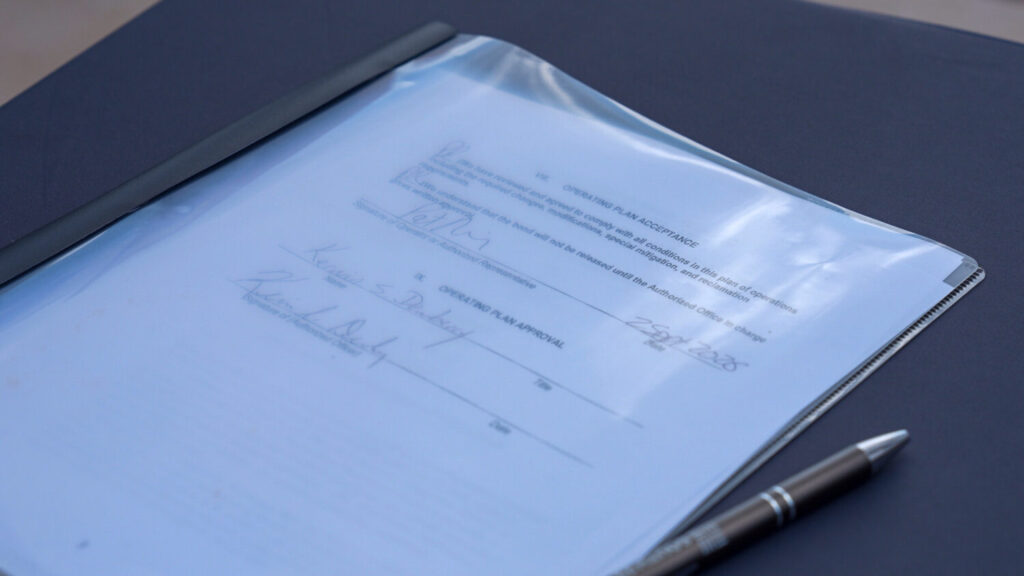
Officials from federal agencies were here in southern Arizona for a signing ceremony that some mining employees see once or twice in their careers.
Mining projects in the U.S. typically take 25 to 30 years to go from discovery to production, tangled up for decades in federal permitting and lawsuits. South32’s Hermosa mine just did the federal part in a little over two years.
The U.S. Forest Service signed off Wednesday on the last permit South32 needed to build its zinc, silver and manganese mine on national forest land in the Patagonia Mountains, about a 90-minute drive south of Tucson. This is the nation’s first mining project to make it through a federal fast-track permitting program called FAST-41 from start to finish.
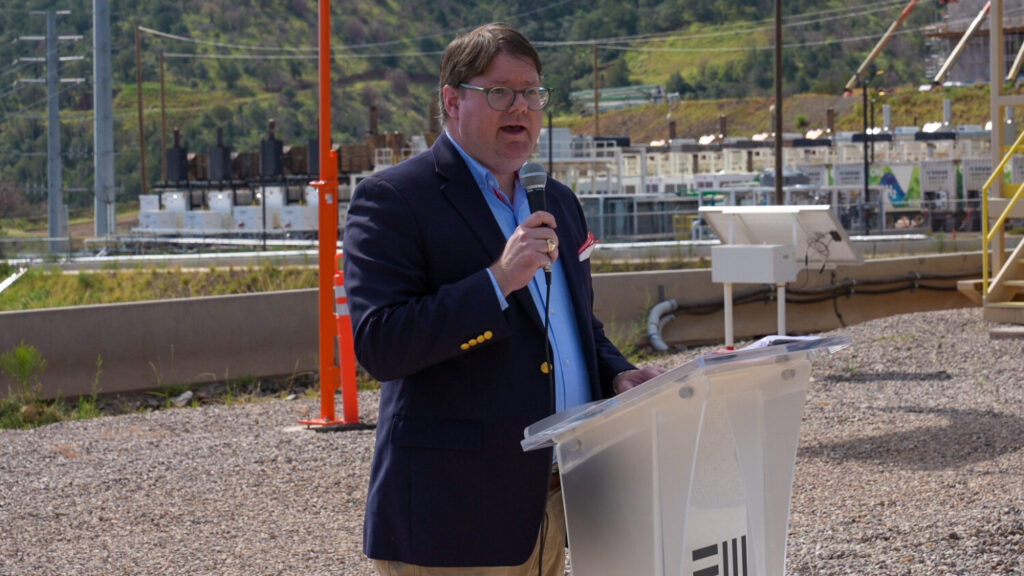
“This is the moment when years of planning, environmental study, consultation and permitting turn into action,” South32 Hermosa President Pat Risner told the crowd, calling it a watershed for an industry that has struggled for years to prove big mining projects can move through federal review on a defined timeline.
USDA Deputy Secretary Stephen Vaden, who traveled from Washington for the signing, framed it as a national security need.
“We have not in the United States mined manganese since the 1970s,” Vaden said, noting the metal is essential for steel and EV batteries. “There is nowhere in the continent of North America where manganese is currently mined,” he added.
The U.S. currently imports all of what it uses.
Hermosa is the only U.S. project with a credible path to changing that, though even optimistic projections show the country will keep needing manganese imports for years after the mine opens.
What FAST-41 is and how it’s changing Arizona mining
FAST-41 is Title 41 of the 2015 Fixing America’s Surface Transportation Act. It puts a small group of major infrastructure projects on one federal deadline, instead of making them wait in line at every agency separately.
Hermosa joined that program in 2023, under President Biden. It was the first mining project ever let in. Then in March 2025, President Donald Trump signed an order telling federal agencies to fast-track mining projects specifically and post their progress publicly, so anyone could track how quickly they were moving.
Vaden told the crowd Wednesday that Hermosa is just the opening move.
“While this is the first mining announcement that we are making under the FAST-41 protocols … this is by no means the last one,” Vaden said. “This is the first of many as we work now to solve the problems that companies like South32 have been aware of for far too long.”
While outside groups worry about the environmental impact, Vaden rejected the idea that speed and environmental protection are in tension.
“It is possible for us to have sustainable development that’s environmentally sensitive while working on a time frame that makes practical sense,” Vaden said. “It is possible to walk and chew gum at the same time.”
Congress is moving to lock that approach in
The day before the ceremony, the House passed the Protecting Domestic Mining Act, which would make mining and mineral processing projects automatically eligible for FAST-41 treatment going forward, instead of the White House waving through each mine one at a time.
It’s one of several fast-tracking measures moving through Congress.
Another, directing the Interior Department to identify and expedite priority mining projects on federal land, passed the House in February and got a Senate hearing this summer.
Rep. Adelita Grijalva, whose southern Arizona district includes the Hermosa project, spoke against the FAST-41 bill on the House floor. She said her amendment requiring consultation with tribal nations before a mining project could qualify for expedited permitting was blocked from consideration.
“At a time when we should be strengthening environmental protections, respecting Tribal sovereignty, and ensuring communities have a meaningful voice in decisions that affect their land and water, this bill moves us in the wrong direction,” Grijalva said in a statement.
Grijalva has separately pressed the U.S. Forest Service about Hermosa, noting the town of Patagonia twice requested a comprehensive groundwater study of the Patagonia Mountains that was never completed.
Gov. Katie Hobbs, asked Thursday whether she supports fast-track permitting for Arizona mines, stopped short of endorsing the expedited process but welcomed the project itself.
“It’s good to see that this project is moving forward,” Hobbs told KTAR News 92.3 FM. “We’ve worked really hard to address a lot of the environmental concerns specific to this mine, and there’s certainly more to come.”
Not happening in a vacuum
Hermosa isn’t an isolated story. It’s the latest example of what people who track Arizona mining call an unprecedented moment.
“This is the most positive and the most optimistic I have seen in Arizona mining” in 50 years, said Les Przemek, Arizona’s state mine inspector.
Steve Trussell, executive director of the Arizona Mining Association, said the same.
“In the 30 years I’ve represented mining, I’ve never seen a resurgence like this.”
A new S&P Global study projects global copper demand will jump 50% by 2040 as AI data centers, defense spending and electrification collide with a mining sector that can’t keep up. The study forecasts a supply deficit of 10 million metric tons by 2040.
The federal government’s list of critical minerals has swollen to about 35, from five or 10 a few years ago. That list now includes copper, lead and zinc alongside Hermosa’s minerals.
Companies are consolidating old mining districts and drilling deeper than ever, from Resolution Copper near Superior to new projects near Casa Grande, Florence and south of Tucson, where Hudson Bay Minerals’ Copper World is expected in production within two to three years.
In the hallway leading to the mining inspector’s office, Przemek keeps a map of Arizona dotted with yellow sticky notes. Each one marks an active exploration project, from lithium prospecting near the California border to deep copper drilling.
The existing mines, he noted, aren’t even marked.
“A decade ago, most of these yellow sticky notes would not be on here,” he said.
A small group pushing back
Not everyone celebrated Wednesday’s ceremony.
Anna Darian, executive director of the Patagonia Area Resource Alliance (PARA), has spent years fighting to slow down a project she says is winning politically on both sides of the aisle. Arizona’s Democratic senators and governor have all embraced the project, while her environmental questions get steamrolled.
Darian’s biggest objection is that the Forest Service granted 31 exceptions to its own Coronado National Forest management plan in order to approve Hermosa, according to the agency’s own project records.
Those exceptions cover components including a mining waste storage facility, a transmission line and a new access road.
The approval also allows the mine to discharge treated water from underground dewatering directly into Goldbaum Canyon and Mowry Wash South, on top of existing discharge into Harshaw Creek.
Darian said regulators have acknowledged the mine will affect local waterways for 150 years but concluded they can’t require more protection.
“What we have seen is that this agency has basically been reduced to a rubber-stamping organization where no is not an option,” Darian said.
Darian’s group is now weighing legal options, though FAST-41 narrows that path too.
It cuts the window to sue over Wednesday’s decision to two years, down from six, and limits standing to groups that filed formal objections during the review, which PARA and its allies did.
“The question at stake here is not whether we need these mines,” Darian said. “But the question is, what are we losing in this process in rushing these?”
What comes next?
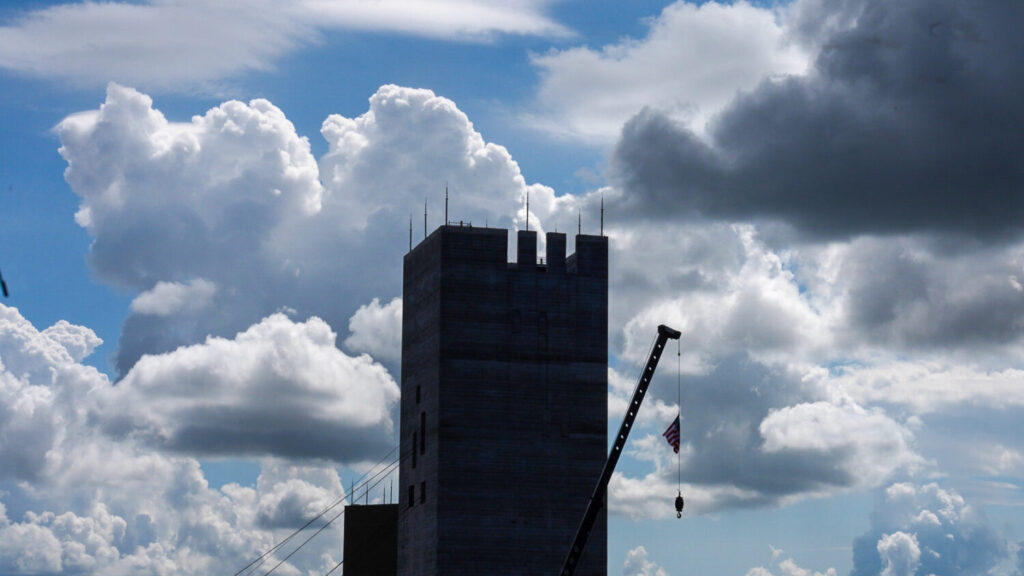
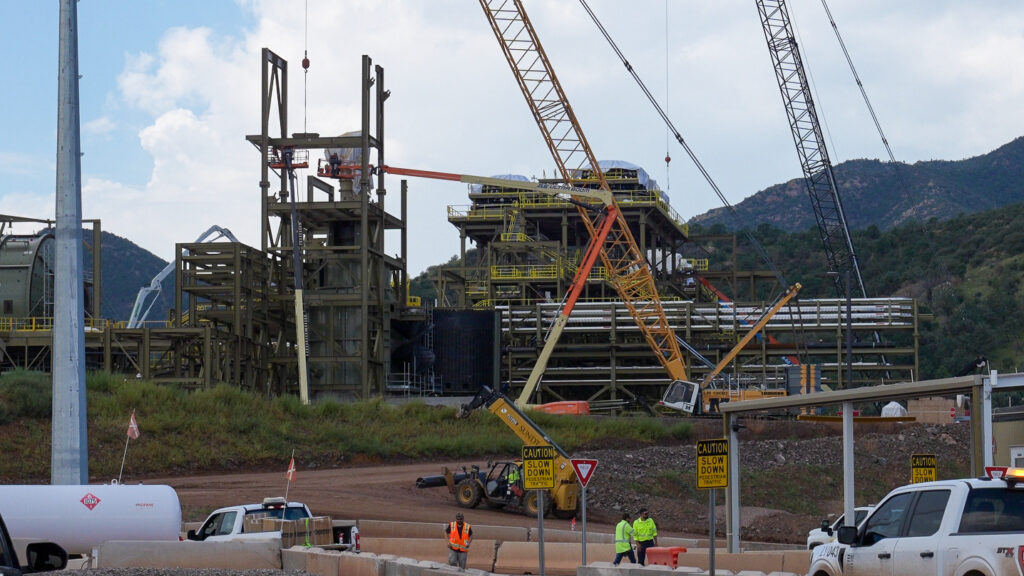
Construction on private land is about half done. South32 said in an April project update that contractor delays on shaft construction have pushed back the mine’s timeline.
“First production is expected in the first half of 2028 and nameplate capacity by June 2031,” said South32 CEO Graham Kerr.
That same update extended Taylor’s expected mine life by five years, to roughly 33 years, and raised the project’s construction budget to about $3.3 billion.
Manganese, the mineral officials leaned on hardest to sell the project as a national security win, is on a separate and slower timeline than the mine’s zinc production.
South32 has completed early testing infrastructure for the mineral, but the company has not made a final decision on whether to build the commercial-scale processing facility that would turn it into a usable product.
Subscribe to the KTAR Political Brief newsletter to get our top political stories, exclusive guest interviews and more to your email inbox.
Related
 Time Mission to bring 25-plus themed game rooms to Scottsdale
 Project Paperclip eyes nearly 5,000-acre Arizona site
 Vestar moves ahead with Gateway Crossing, a mixed-use project in southeast Mesa
 Fujifilm plans $18 million Mesa expansion to boost semiconductor materials production
 Several brands set up shop in Arizona exclusively at Scottsdale Fashion Square
 Salad and Go is coming back to Arizona as judge OKs sale of 22 more stores

Comments
3 Comments
I don't think they should have to wait 25-30 years to get approval or rejection, but they should put a large stack of money into a trust, so when they leave a mess, we don't have to use public funds to clean it up.
More arsenic and Chromium VI has been fast tracked into Patagonia's ground water.
Good if not GREAT news. We, the USA, have the resources here to mine for our own critical minerals and not rely so heavily on China. I commend the Biden Admin for starting this and for Trump to get it through the approval process. Win for everyone.