
Strategy for combating bird flu outbreaks evolves in Arizona, nationwide
As farmers in Arizona and across the U.S. continue losing chickens to the bird flu by the millions, the strategy to increase egg production is evolving.

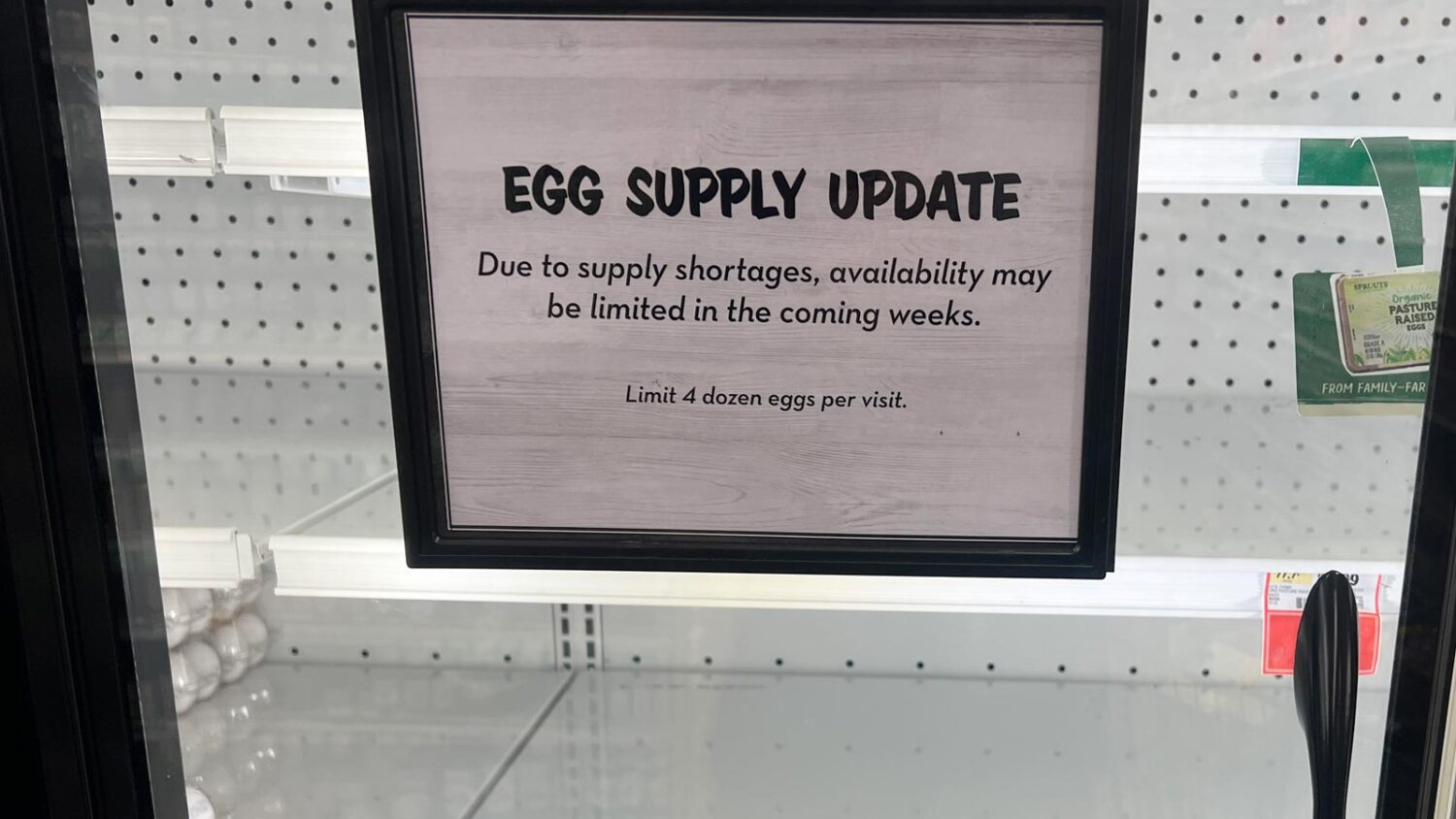
The bird flu outbreak has created egg shortages and driven up prices across the U.S. (Photo by Joe Raedle/Getty Images)
(Photo by Joe Raedle/Getty Images)
PHOENIX – As farmers in Arizona and across the U.S. continue losing chickens to the bird flu by the millions, the strategy to increase egg production is evolving.
“For instance, in our company, we’re no longer celebrating chicken retirements; we’re celebrating chicken birthdays. We’re keeping the flock laying longer,” Glenn Hickman, president and CEO of Buckeye-based Hickman’s Family Farms, told KTAR News 92.3 FM’s The Mike Broomhead Show on Thursday.
“They’re not quite as productive, but at least they’re alive and they’re laying eggs.”
In another development, about 33 million pounds of eggs are on their way from Turkey by ship after the U.S. Department of Agriculture approved their importation.
“They’re too old to end up on our grocery shelves, but what they’ll do is they’ll get processed into industrial uses — probably dried eggs and those kind of things. That will free up some eggs that are going into those channels right now,” Hickman said.
Bird flu wreaks havoc on egg industry
When a farm chicken gets the H5N1 avian flu, which is spread by wild birds, the standard method to stamp it out is to cull the entire flock.
The egg industry lost over 40 million birds to disease since October, including 6 million in the last three weeks, Hickman said. The resulting egg shortage is driving prices to record levels and leaving shelves bare at some stores.
Hickman said he can’t remember a week without a new outbreak among egg-laying chickens or turkeys in the U.S. since November.
“It shows no sign of letting up, and hopefully we’re doing something about it,” he said.
One thing the industry is doing is urging federal officials to authorize the use of a bird flu vaccine on chickens.
It was initially believed the outbreak would recede when the weather warms up, but that’s no longer the case.
“We know now … it’s endemic in the native bird population — the population that doesn’t migrate,” Hickman said. “So, we now know that this is not going to go away with the season change.”
That makes vaccines a crucial tool in the fight against bird flu, Hickman said.
Federal government hasn’t authorized vaccines for chickens
The vaccines are made in the U.S., but the federal government doesn’t allow their use here. Other countries, however, have used them to protect flocks.
One obstacle, domestically, has been the opposition of farmers who raise poultry for meat, not eggs. Many trading partners won’t accept exports from countries that allow vaccinations due to concerns that vaccines can mask the presence of the virus.
“Not all of our poultry industry is on board with vaccinating all the chickens because it could impact trade,” Hickman said. “We don’t ship any eggs out of this country, but they do ship a lot of broiler meat out of this country, and that could have a negative impact.”
However, the egg industry appears to be making progress on the vaccination front. Hickman said the Trump administration recently gave conditional approval to vaccinate domestic birds.
“The parameters around how that gets distributed, how it gets applied, all those kind of things, that’s still to be worked out,” he said. “But it’s absolutely a move in the right direction.”
Donald Trump is doing NOTHING to fix egg prices and shortages, so I’m assuming he doesn’t know where to start… I’ll offer some help. pic.twitter.com/ZySMnYr3RE
— Senator Ruben Gallego (@SenRubenGallego) February 11, 2025
Hickman credited the Trump administration and U.S. Sen. Ruben Gallego for that movement. Earlier this month, the Arizona Democrat released a video on social media urging President Donald Trump to address soaring egg prices through vaccines.
“I think they are hearing the message that we’ve got to get something going to stop this because nature will not take its course on this in a positive way,” Hickman said.
The Associated Press contributed to this report.
Related
 Arizona egg farmer wants to vaccinate chickens from bird flu, but government won’t allow it
 Arizona farmer says politicians are exacerbating avian flu, driving up egg prices
 Bird flu detected in milk produced by Arizona dairy herd for 1st time
 Pinal County rezones 4,695 acres of state land for potential massive employment hub
 Arizona TikTok lawsuit alleges app hooks kids, hides risks from families
 True Food Kitchen files for Chapter 11 bankruptcy, closes 12 restaurants

Comments
0 Comments