
AMWUA (AZ MUNICIPAL WATER USERS ASSOC)
Colorado River crisis: Time is running out
The future of the Colorado River — a vital water source for 80% of Central and Southern Arizona — is more uncertain than ever.

The future of the Colorado River — a vital water source for 80% of Central and Southern Arizona — is more uncertain than ever. The seven Colorado River Basin states and the federal government have failed to reach an agreement on how to manage the river after 2026, leaving Arizona cities uncertain about how much water they’ll receive starting in 2027.
Regardless of what is eventually decided for the Colorado River’s operations or how Arizona manages its anticipated cuts, all parties must ensure that municipal water providers in Central and Southern Arizona can meet their communities’ water needs. Anything less will damage Arizona’s and the nation’s economies.
A river in trouble
The Colorado River isn’t producing as much water as it used to, which means less water needs to be delivered to agricultural, industrial, and municipal users that rely on it.
• A 25-year megadrought and higher temperatures have led to less water reaching the river, a process known as aridification.
• Even with near-average snowpack this year, Lake Powell received only half of its usual runoff.
• Lake Mead and Powell continue to drop toward “dead pool,” where water can no longer pass through the dams, cutting the water supply to millions.
Why negotiations stalled
After two years of talks, the seven states – Arizona, California, Nevada (Lower Basin States), and Colorado, New Mexico, Utah, Wyoming (Upper Basin States) – still can’t agree on how to share the reductions needed to protect the river.
• Upper Basin states argue the Lower Basin should take all cuts.
• The Lower Basin offered to take the first and largest hit but asked the Upper Basin to reduce use when the combined capacity of the river’s reservoirs falls to critically low levels, below 38%.
• Currently, the Colorado River system is at a mere 37% capacity.
Arizona’s position
Governor Hobbs says Arizona can’t accept a plan that leaves our state with all the pain while Upper Basin states avoid proportional reductions. Now, a group of Arizona bipartisan leaders is calling on the federal government to step in and ensure:
• Fair and equitable across-the-board cuts for all seven states, while recognizing the existing reductions Arizona has taken and Arizona’s voluntary efforts to conserve water in Lake Mead.
• Reliability to protect Arizona’s crucial role in the national economy, especially with its high-tech manufacturing sector and the agriculture industry that supplies the nation’s winter leafy greens.
What this means for the AMWUA cities
The AMWUA cities have spent over forty years investing in diverse water supplies, including utilizing Colorado River water, while reducing their dependence on groundwater. Now, they are anticipating at least a 20% cut to their Colorado River supplies, and possibly more, which creates numerous challenges, from operating treatment plants and other infrastructure to offsetting those reductions with other water supplies.
• Initially, municipalities may need to recover and pump groundwater stored underground, but they know relying on aquifers isn’t a long-term solution.
• Long-term water security depends on developing new supplies to offset Colorado River cuts, protect aquifers, and support growth, all of which require significant investments.
The bottom line
The Colorado River crisis isn’t just a water problem—it’s an economic, environmental, and community challenge. Each delay worsens the situation, and the consequences become more serious. Action is needed. Only a fair, sustainable agreement among all seven Basin states can secure the river’s future—and ours. Additionally, regardless of how Arizona manages less water from the Colorado River, it must guarantee that municipal water providers in Central and Southern Arizona can meet their communities’ water needs. Anything less will undermine Arizona’s water security, which is the foundation of our communities and economy.
For 56 years, the Arizona Municipal Water Users Association has worked to protect our member cities’ ability to provide assured, safe, and sustainable water supplies to their communities – Avondale, Chandler, Gilbert, Glendale, Goodyear, Mesa, Peoria, Phoenix, Scottsdale, and Tempe. For more water information, visit www.amwua.org.
Related
 Arizona’s new water reality: Preparing for historic Colorado River cuts
  Advanced water purification: Creating Arizona’s next water supply
 Colorado River shortage: Preparing for less available water in the Phoenix metro area
 Securing Arizona’s water: Public calls for action and investment
  How the AMWUA cities are saving water: Conservation in action
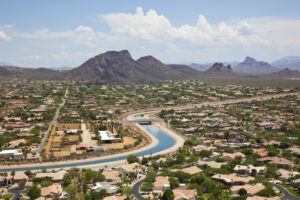 Colorado River crisis: Why Arizona can’t bear the burden alone
Comments
0 Comments