
Arizona voting law heads to Supreme Court with registration rules at stake
SCOTUS hears arguments Dec. 8 on Arizona voting laws requiring proof of citizenship to register and checks of voter rolls. A ruling is expected by June.

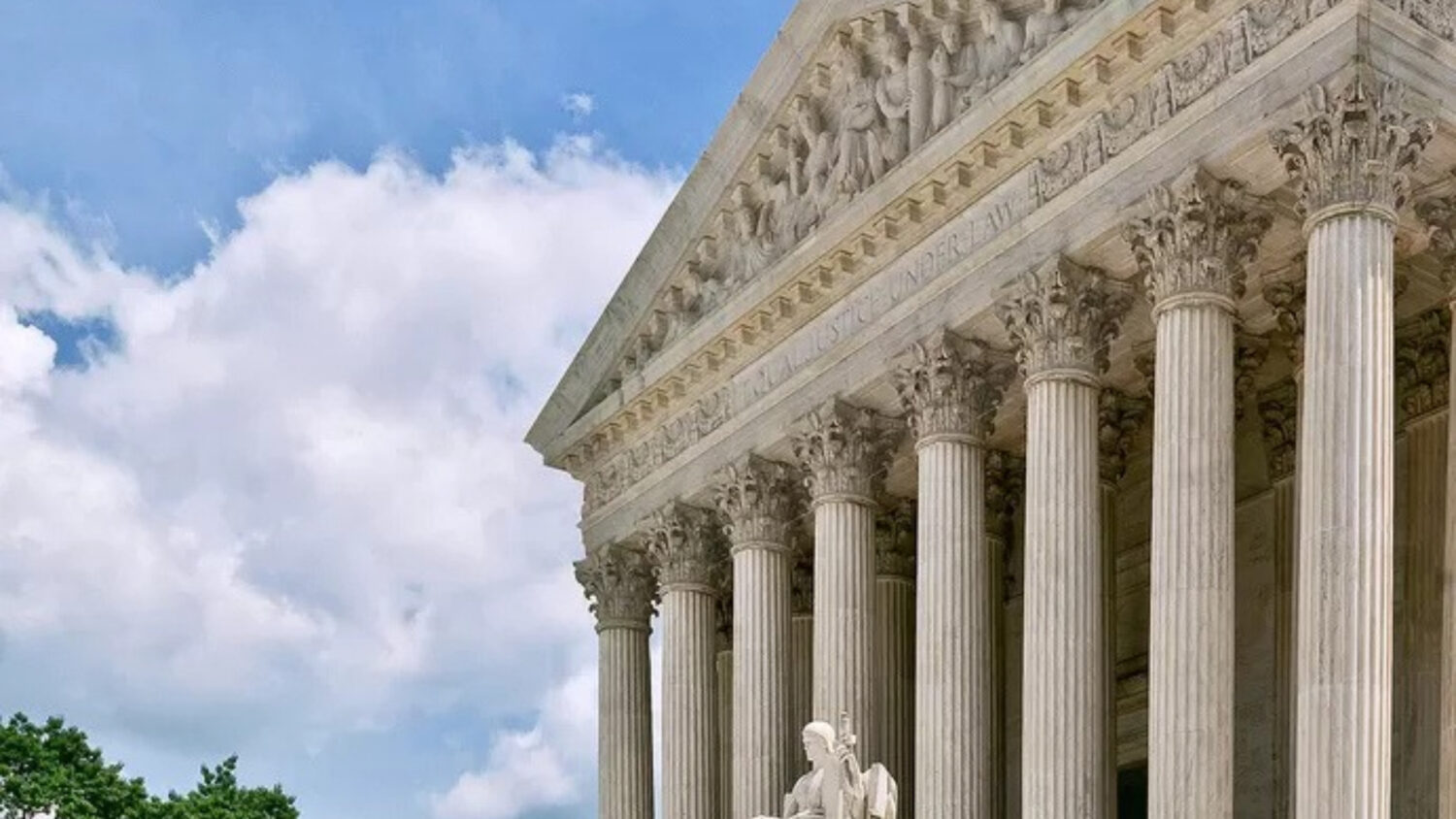
Supreme Court exterior
The U.S. Supreme Court will hear a fight over two Arizona voting laws on Dec. 8. The ruling could change how Arizonans register to vote and how counties remove voters from the rolls.
Lawmakers passed the laws in 2022, but lower courts blocked much of them for conflicting with federal voting law. Now the Republican National Committee, backed by the Trump administration, wants two parts restored in Republican National Committee v. Mi Familia Vota.
What the Arizona voting laws requires to register
If you register using Arizona’s state form, you have to show proof you’re a U.S. citizen, such as a passport, a birth certificate or an Arizona driver’s license number. Without it, your application is rejected.
That rule has been in effect since 2024, when the Supreme Court let Arizona enforce it while the case played out. If the RNC loses, people who apply without proof would go back to being “federal-only” voters, who can vote for president and Congress but not in state or local races.
About 43,900 Arizonans were federal-only voters as of June, according to the Arizona Secretary of State’s Office. That’s less than 1% of the state’s voters.
The RNC also has to get past a 2018 settlement in which the state agreed to register those applicants for federal elections.
How the Arizona voting laws would change voter roll checks
The second part would have counties check voter rolls against government records to find noncitizens. If you’re flagged, you’d have 35 days to prove you’re a citizen, or your registration would be canceled.
Courts said federal law bars that kind of check in the 90 days before a federal election. The RNC wants that limit lifted.
Who is backing the Arizona voting laws at Supreme Court
Senate President Warren Petersen said in a February news release that Arizona requires proof of citizenship “because only American citizens should decide American elections.
Arizona’s Democratic officials are split. Attorney General Kris Mayes filed a brief partly backing the RNC, defending the state’s power to require proof of citizenship on its own form.
Secretary of State Adrian Fontes’ office has said the laws could keep eligible voters from voting.
Justice Department switches sides in SCOTUS voting case
In 2022, under President Joe Biden, the Justice Department sued Arizona over the proof-of-citizenship law, calling it a “textbook violation” of federal voting law.
Under President Donald Trump, the department is now backing the RNC.
Who is challenging the Arizona voting laws
The challengers include Latino and voting rights groups, students, tribes and Democrats. Mi Familia Vota and Voto Latino first sued in 2022.
“This case is not about election security,” Mi Familia Vota President and CEO Hector Sanchez Barba said in June, comparing proof-of-citizenship rules to poll taxes and literacy tests.
Supporters say signing a statement that you’re a citizen isn’t enough proof. Challengers say federal law limits what states can demand, and that database checks often wrongly flag naturalized citizens.
A federal judge found that noncitizen voting in Arizona is rare.
When SCOTUS is expected to rule
The justices won’t consider two other parts of the laws, which would have kept federal-only voters from voting by mail or for president.
Those remain blocked.
A ruling is expected by the end of June.
Subscribe to the KTAR Political Brief newsletter to get our top political stories, exclusive guest interviews and more to your email inbox.
Related
 Dave Ramsey says: The nerd meets the free spirit
 Carjacking suspect flips car on Loop 101 as Peoria police track him from above
 Looking to eat out on Turkey Day? These Valley restaurants are open, serving Thanksgiving dinner or brunch
 U.S. Sen. Ruben Gallego lays out AI priorities for new Congress
 Arizona Democrats accuse President Donald Trump of corruption after his Nvidia intervention
 Man burned in his own bomb blast at SRP substation powering data center, prosecutors say

Comments
0 Comments