
Anthropic expands AI support for nonprofits as it files to sell shares to the public

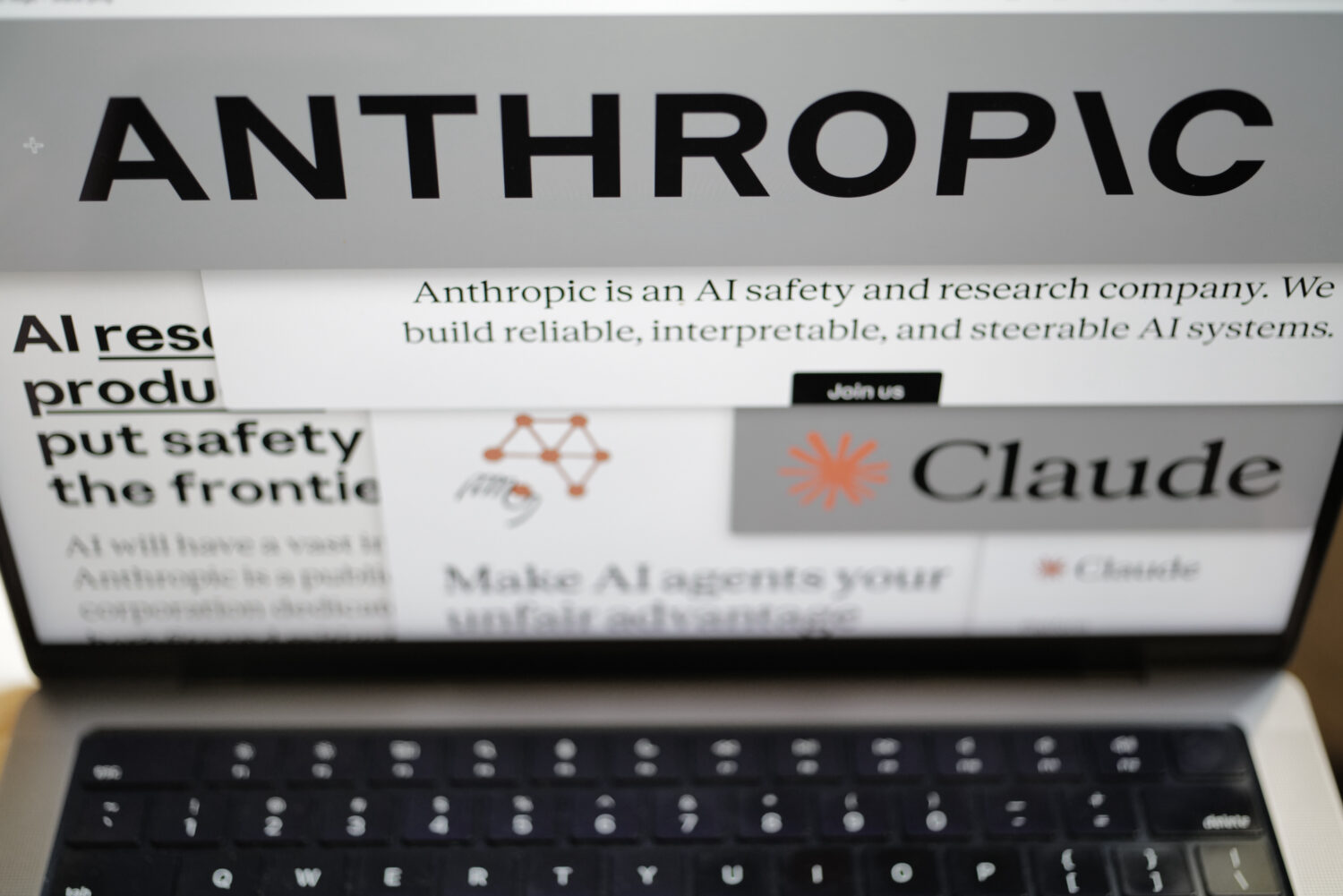
FILE - Pages from the Anthropic website and the company's logos are displayed on a computer screen in New York on Thursday, Feb. 26, 2026. (AP Photo/Patrick Sison, File)
Credit: AP Photo/Patrick Sison
(AP Photo/Patrick Sison, File)
Anthropic expanded its support for the nonprofit sector Monday, even as the artificial intelligence company filed to sell shares to the public for the first time. The maker of the AI assistant Claude said the moves are all part of its broader strategy for “compounding good.”
Anthropic launched a new Claude for Nonprofits plugin created with 30 nonprofits to be more responsive to their specific needs. It will also broaden its Claude Corps program that embeds fellows with nonprofits to help them better utilize AI by also making consultants available to help organizations with smaller, shorter-term projects.
“This work is so core to who we are as a public benefit corporation,” Elizabeth Kelly, Anthropic’s head of beneficial deployments, told The Associated Press. “We were founded to ensure that we’re both developing AI safely and responsibly and that we’re deploying it in a way that really benefits everyone, including those who are too often left behind.”
Earlier this month, Anthropic announced plans to commit 5% of its shares to a new Anthropic Public Benefit Fund that could be used for large scale donations to nonprofits or directly distributed to groups of people adversely impacted by AI. The fund still needs to be approved by shareholders once Anthropic completes its IPO, which could come as early as November.
Critics say AI companies are using donations and nonprofit pledges as an attempt to generate goodwill with the public at a time when so many are worried about the potential dangers of the technology and its impact on jobs.
However, Anthropic says that as a public benefit corporation, it balances its commercial interests with the interests of the public good. Anthropic President Daniela Amodei told The Associated Press in a May interview that the company works to make that balance clear. “I think there’s something really valuable about that as a construct just to help investors and employees and outside people understand what our intentions are and hold us accountable to them,” she said.
Other public benefit corporations include eyeglass maker Warby Parker, insurance company Lemonade, and Amalgamated Bank.
Bella DeVaan, director of the Charity Reform Initiative at the Institute for Policy Studies, said that public benefit corporations can be meaningful, but the federal government doesn’t currently properly regulate corporations. Without tax reform and a change in what she calls “the public permissiveness toward billionaire power in America,” DeVaan said there is no guarantee that even public benefit corporations will act in the public interest.
“Their wealth belongs to the public in the first place — it’s created by the country and there’s a sort of social wage owed to people who use their products,” she said. “I hope that when people use the ethos of Silicon Valley that gave birth to these companies that have grand designs of changing the world that they’ll also think about how philanthropy could actually achieve charitable aims.”
Kelly said Anthropic’s work with the nonprofit sector is part of the company’s mission. The bulk of the 25,000 nonprofits currently using Claude for Nonprofits have less than 10 people on staff, so its impact on the organizations is often great. She points to Allies Against Slavery, the Texas-based nonprofit fighting human trafficking, as an example of what is possible, after its only government affairs staffer used Claude to analyze more than 750 state-level anti-trafficking policies and turned them into recommendations for advocates.
“This is basically compounding good,” she said. “That’s the kind of work that we’re so excited to support here at Anthropic.”
Montgomery County Food Bank President and CEO Scott Burns said his organization’s use of Claude has already generated significant savings that allow it to provide food to more people in his Texas county north of Houston.
“Costs have gone up for fuel,” Burns said. “Costs have gone up in every area – for proteins, in particular… I still want to be able to do more without adding a bunch of additional resources and (Claude) will enable me to do that.”
The Montgomery County Food Bank is one of the 30 nonprofits that has been working with Anthropic to better customize Claude for its specific needs. Burns said his team has already used it to optimize scheduling for food pickup and delivery and keeping better contact with donors.
He is looking forward to welcoming two Claude Corps fellows into the organization soon to tackle its outdated inventory system and the scheduling of its volunteers. Burns said he is also hoping to share his findings with other food banks.
“Nonprofits – we’re kind of an open book,” he said. “Why would I not share? It’s only going to help get more people fed, right?”
Taproot Foundation CEO Cat Ward said her nonprofit is excited about working with Anthropic to provide pro bono expertise to nonprofits for specific projects.
“Nonprofits are as lean as they come,” Ward said. “They’ve got the ambition. They’ve got the vision. This is about empowering them with tools that’ll help them go further faster.”
______
Associated Press coverage of philanthropy and nonprofits receives support through the AP’s collaboration with The Conversation US, with funding from Lilly Endowment Inc. The AP is solely responsible for this content. For all of AP’s philanthropy coverage, visit https://apnews.com/hub/philanthropy.
Related
 What is Refractive Lens Exchange? KTAR’s Mike Broomhead shares his RLE experience
 What’s next for Arizona’s schools and water? Andy Biggs makes his case 8 days before the election
 Arizona man pleads guilty to charges related to monkey torture videos
 Home or car damaged in Arizona storms? What to know before seeking a payout
 Flood warning lingers in Four Corners as soaked towns face sewage-tainted waters. 1 death reported
 Trump heads to Mississippi as the two parties prepare for final sprint ahead of midterm Election Day
Comments
0 Comments