
Scottsdale police make case for keeping Flock cameras: ‘ALPR saves lives’
The City Council did not make any decisions about Flock during Tuesday's meeting but will revisit the issue Dec. 1.

Watch: Scottsdale Mayor Lisa Borowsky on the debate over Flock cameras | 11 mins
The Scottsdale City Council heard the police department’s side Tuesday in the ongoing debate over the use of Flock Safety surveillance technology.
The City Council did not make any decisions about Scottsdale’s contract with Flock but will revisit the issue at a Dec. 1 meeting.
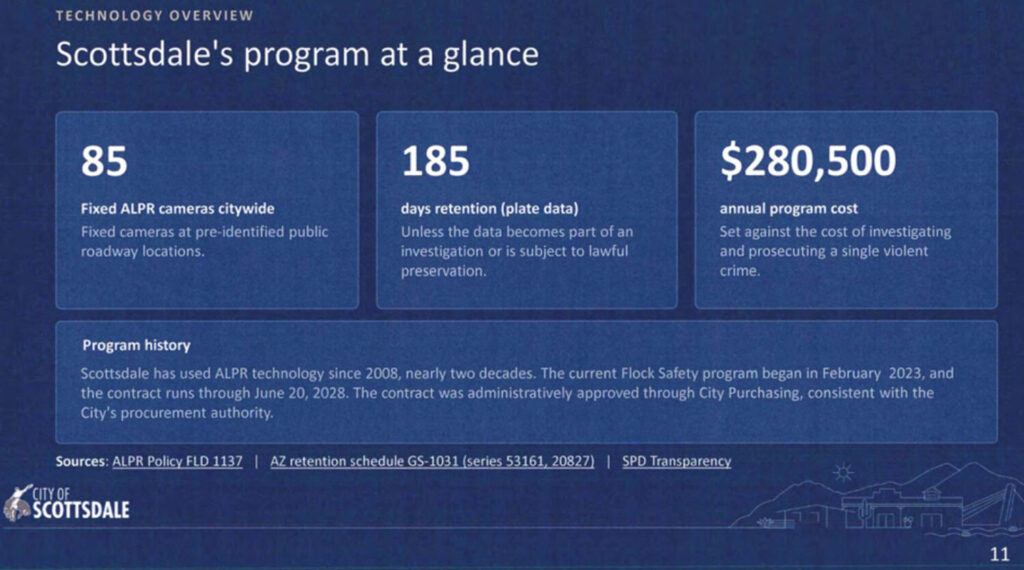
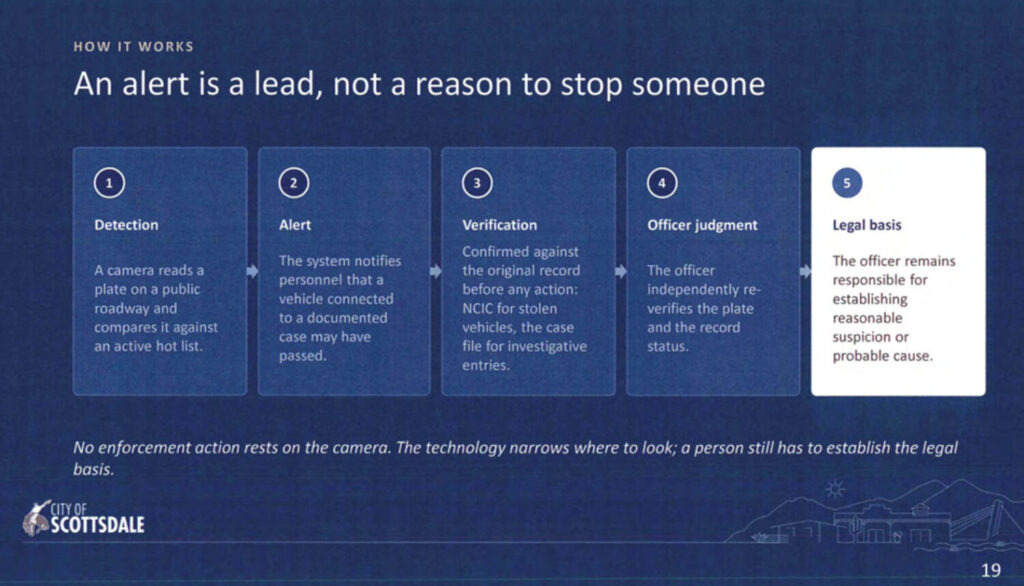
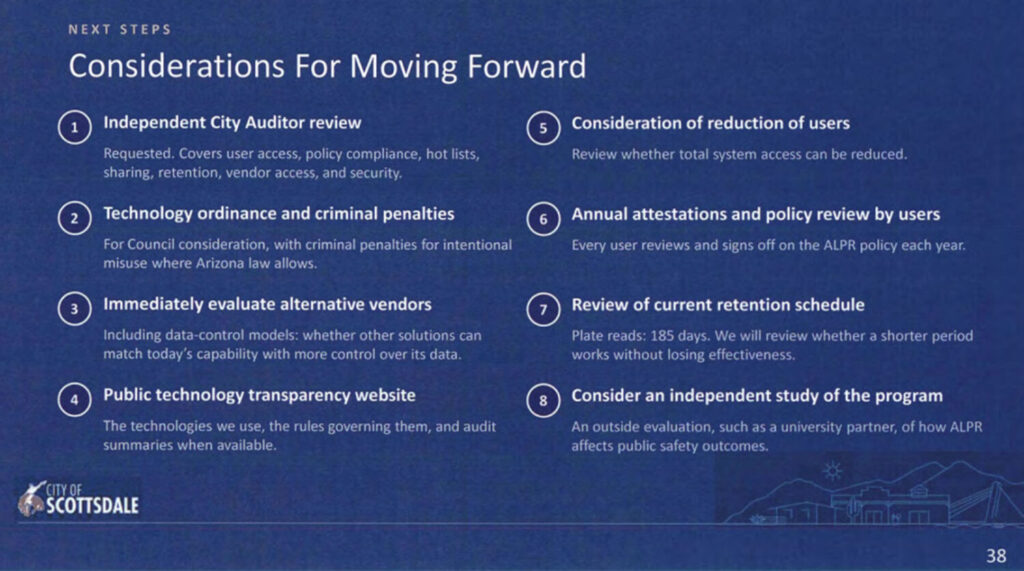
Assistant Chiefs Chris Watson and Lee Campbell explained how Flock’s automated license plate reader, or ALPR, system is used in Scottsdale and argued it makes the city safer.
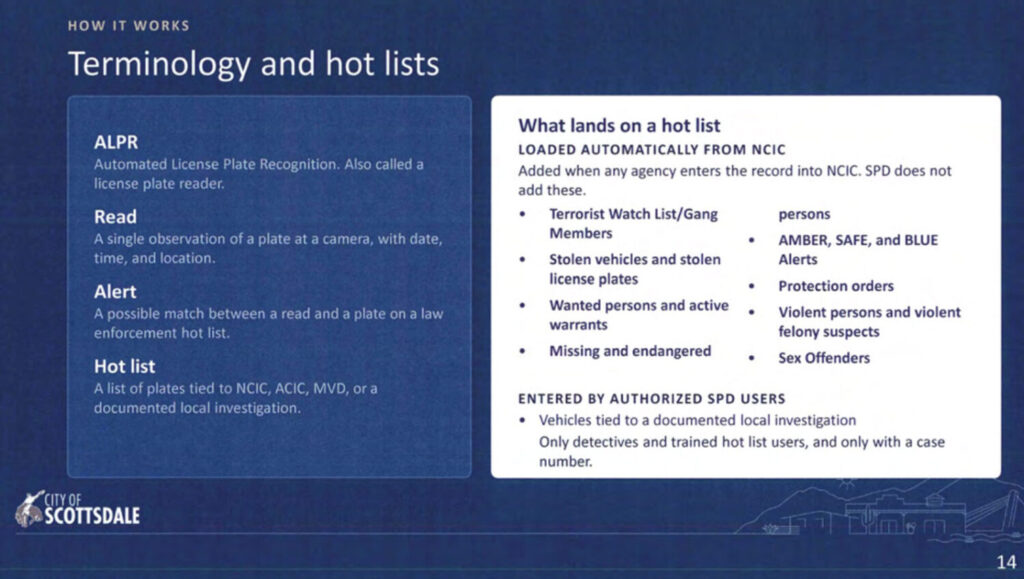
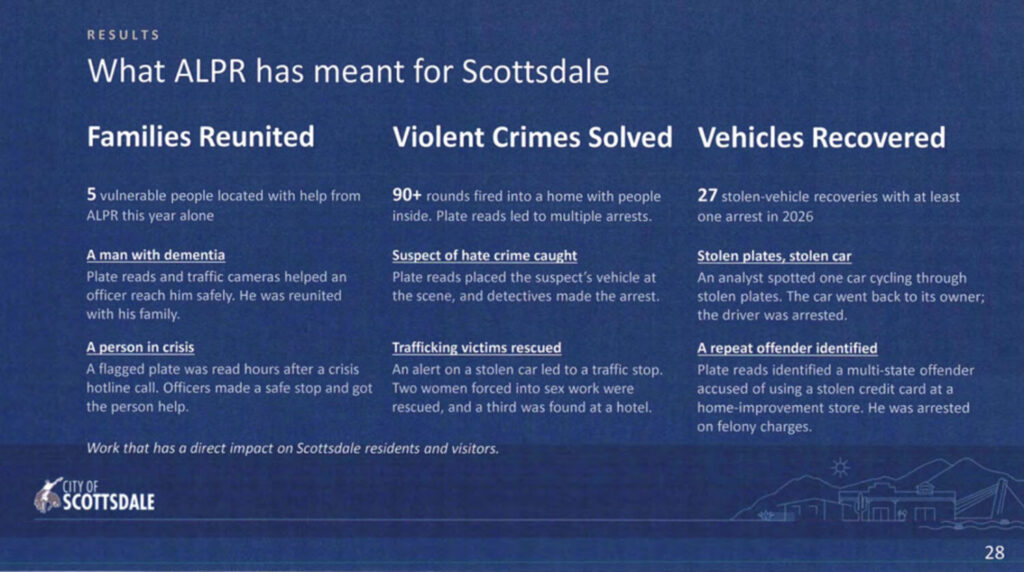
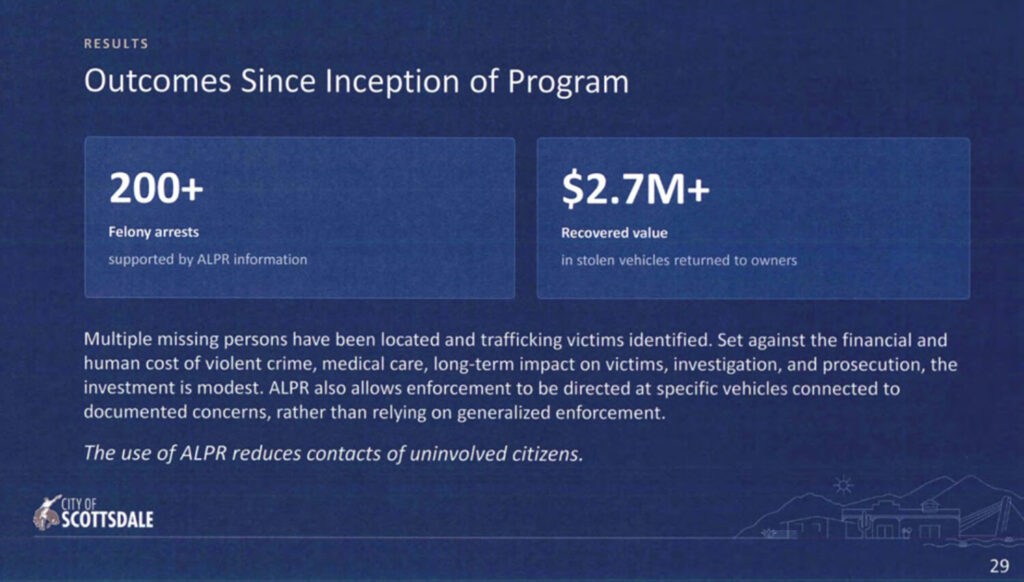
“ALPR saves lives. It helps find missing and endangered people. It helps us identify violent offenders, locate stolen vehicles, connect serial crimes and solve cases that would otherwise go unsolved,” Watson said.
ALPRs have become controversial as citizens push back against mass surveillance and the potential for it to be misused, leading multiple Arizona cities to pull the plug on Flock.
What do Scottsdale’s Flock ALPRs do?
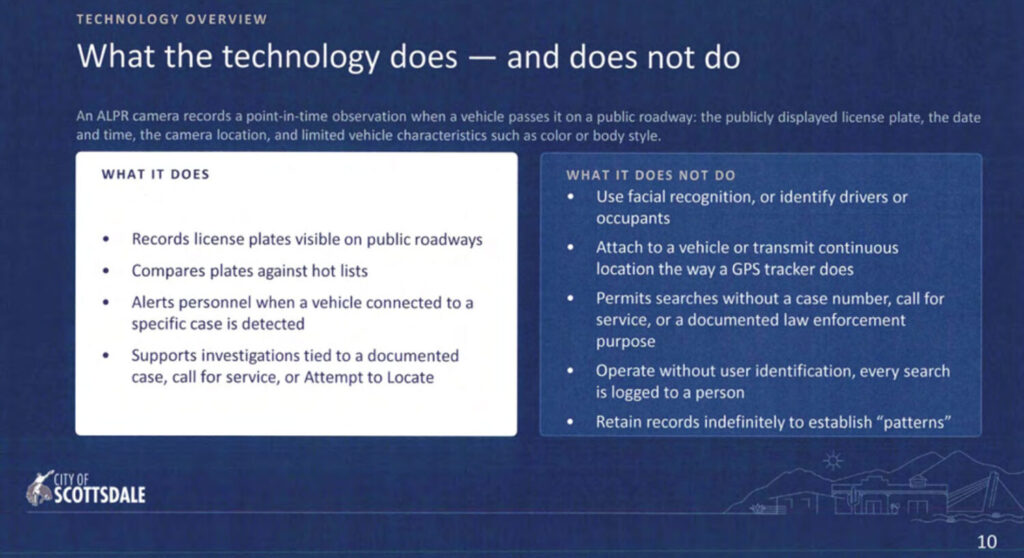
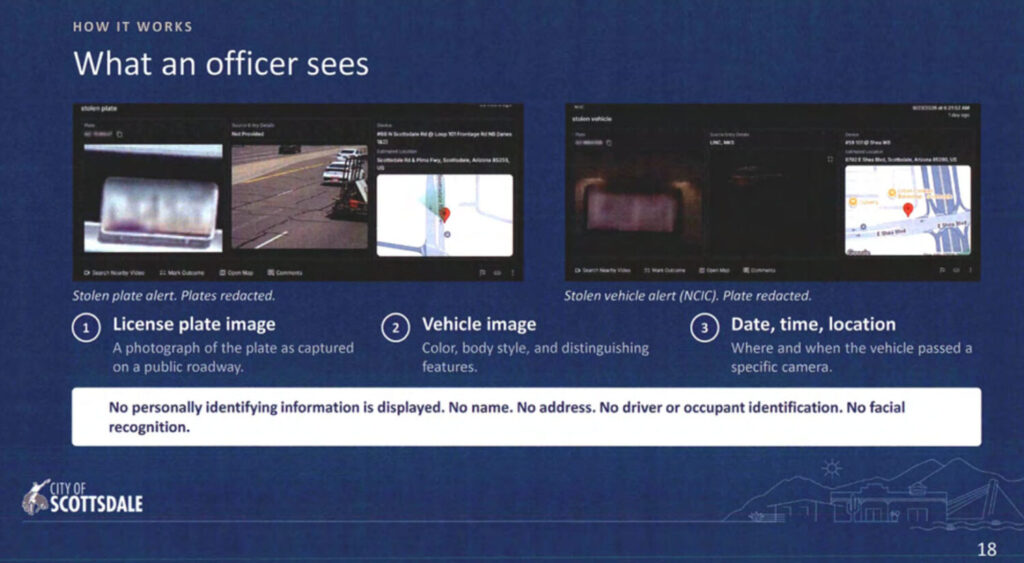
Watson said the narrative is inaccurate, explaining that Scottsdale’s Flock system does not use facial recognition to identify vehicle occupants.
“It captures a license plate and limited vehicle information on a public roadway,” he said.
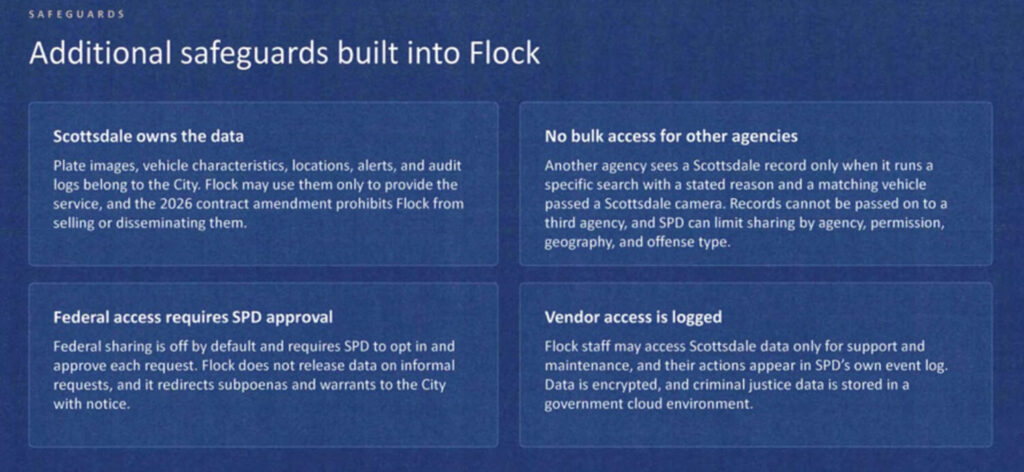
He also said the department has safeguards in place to prevent potential misuse.
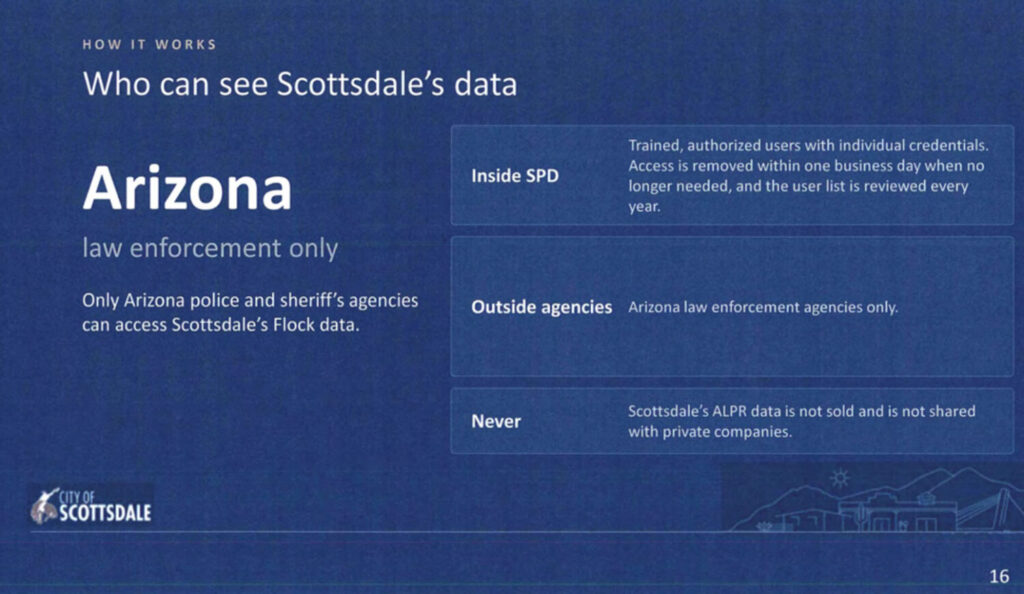
“Our data is retained for a limited period. Searches must be conducted for legitimate criminal justice purposes only. Access is controlled, and that use is governed by our policy and we audit it,” he said.
Scottsdale Mayor Lisa Borowsky concerned about privacy rights
After the police presentation, Mayor Lisa Borowsky, who requested putting Flock on the agenda, said she is concerned the surveillance technology violates Fourth Amendment privacy rights.
“The case law has evolved to where there’s an expectation that intermittent observation is acceptable. This is not intermittent. If there’s 83 cameras that are on 24/7 that are observing vehicles going through intersections and following them based on criteria, that sounds good in this presentation, but we all know that there can be an abuse of that,” she said.
Borowsky argued that the quest for safety should not override personal rights.
“What’s next? Why don’t we put readers in every single person’s car, right, and require that? That would make our streets even safer. Let’s keep going,” she said.
Related
 Car hits, kills 78-year-old woman on mobility scooter in Phoenix
 Talyn Vigil, a defendant in 2023 murder of Preston Lord, is back in jail
 Here are all the Phoenix-area schools closed since 2024 or scheduled for closure
 Your guide to Arizona’s 2026 general election debates: Political faceoffs continue
 Scottsdale considers new restrictions for large water users as demand rises
 AZ Political Podcast: MCCCD board candidates make case for return of JUCO football

Comments
0 Comments